Energy Weekly Review 2026-09-24

Week In Review
The week’s strongest theme was getting more out of what already exists. The U.S. Department of Energy’s Speed to Power grid investments fund reconductoring and grid-enhancing technologies rather than new corridors, promising over 23 gigawatts of additional capacity on wires that are already in the ground. Georgia Power and Google took the same logic to nuclear, agreeing to uprate the Vogtle and Hatch plants by roughly 96 megawatts through turbine, pump, and cooling upgrades. Ontario Power Generation began the Pickering refurbishment, which will retube four CANDU reactors to run for decades more. In each case, the cheapest new capacity turned out to be a better version of the old capacity.
A second thread concerned where new nuclear capacity should actually go. A University of Michigan technoeconomic study in Nature Communications argues that small modular reactors belong in industry, not the wholesale power market, with ammonia, refining, and steel offering far better margins than selling electrons. Kairos Power’s Hermes 2 partnership with Samsung C&T shows the demonstration pipeline for exactly those high-temperature reactors is filling in, with a major engineering firm now inside the construction team. On the fusion side, the IAEA General Conference gave ITER a platform to argue that fusion is gathering momentum, with the project increasingly positioning itself as a knowledge supplier to private developers rather than a rival.
Three research and deployment stories broadened the picture beyond nuclear. A University of Maryland-led team in Nature Energy showed that sulfur can exchange three electrons instead of two, raising both the voltage and the capacity of lithium-sulfur cells. A Chinese Academy of Sciences group, also in Nature Energy, ran a pilot that produces hydrogen and fresh water from seawater in one process by recycling electrolysis waste heat into distillation. And the Department of Energy put $99 million into 21 geothermal projects, most of them exploration drilling to find resources that enhanced geothermal systems could tap.
Finally, a note of useful skepticism. Canary Media’s Jeff St. John asks whether California’s newest virtual power plant will become real grid infrastructure or one more pilot that gets quietly retired. Home batteries have already demonstrated they can deliver hundreds of megawatts on demand. The open question, as with much of this week’s news, is whether the institutions around the technology can move as fast as the hardware.
Items
DOE Funds 31 Grid Upgrade Projects Across 26 States
The U.S. Department of Energy’s Office of Electricity announced on September 24 that it will fund 31 grid-improvement projects in 26 states under an initiative it calls SPARK, short for Speed to Power through Accelerated Reconductoring and other Key Advanced Transmission Technology Upgrades. According to the announcement, the federal contribution is $1.9 billion, with recipients adding $3.35 billion of their own money, for a combined program of $5.25 billion.
The projects share a design philosophy: upgrade the wires and the controls on existing transmission corridors rather than fight for permits on new ones. The announcement describes three families of technology. Reconductoring replaces existing conductors with advanced ones that carry more current at the same tower spacing. Grid-enhancing technologies such as dynamic line ratings and power-flow controllers squeeze more throughput from lines that are conservatively rated today. Advanced transmission technologies cover the broader category of hardware and software that raises line capacity without new rights of way.
DOE expects the program to reconductor or rebuild more than 1,500 miles of transmission line and to deploy grid-enhancing technologies across nearly 21,000 miles, adding what it states is more than 23 gigawatts of capacity. The department claims the work will improve reliability and lower electricity costs for roughly 100 million Americans, and that several projects also reduce wildfire hazards. Energy Secretary Chris Wright framed the investments as a way to “get more out of existing infrastructure, move more electricity across the grid, and help deliver affordable power.”
The significance is in the ratio. Building new high-voltage lines in the United States routinely takes a decade, and the interconnection queue for new generation is measured in years. Twenty-three gigawatts unlocked on existing corridors is comparable to a large fleet of new power plants, delivered in a fraction of the time. The release did not list individual projects, but the emphasis on reconductoring suggests the program is betting on a technology that has been commercially proven abroad and only slowly adopted by American utilities.
Source: U.S. Department of Energy
Google Backs Uprates at Georgia’s Vogtle and Hatch Nuclear Plants

Georgia Power and Google announced a partnership in which the technology company will support extended power uprates at the state’s two nuclear stations, Vogtle near Waynesboro and Hatch in Baxley. According to Nuclear Newswire’s report, the uprates together add approximately 96 megawatts of electrical capacity to the grid, achieved through improvements to turbines, pumps, motors, and cooling systems rather than any change to the reactors themselves.
The commercial structure is the interesting part. Google will subscribe to a new tariff Georgia Power calls NU-1 and will receive zero-emissions credits for the incremental power. The report states that this arrangement shields non-participating customers from the cost of the uprates, and that Google’s participation is expected to produce roughly $900 million in benefits to Georgia Power’s other customers over the operating lives of the units. In other words, a data-center operator with a clean-energy target is paying for capacity that the utility might otherwise have struggled to justify to regulators.
The regulatory path is already partly cleared. The Georgia Public Service Commission approved an extended power uprate for Vogtle units 1 and 2 in 2025, and Georgia Power must still seek approval for Hatch units 1 and 2. Nuclear Regulatory Commission applications are expected in the second quarter of 2027 for Hatch and the fourth quarter of 2028 for Vogtle. Hatch’s two units currently produce a combined 1,793 megawatts and Vogtle’s older two units 2,338 megawatts, according to the report.
Uprates are the least glamorous form of nuclear growth and among the most cost-effective. The plant, the site, the licence, and the transmission connection all exist. What this deal adds is a template for how hyperscale electricity buyers can finance those increments directly, a model that other utilities with aging but sound reactors will be watching closely.
Source: ANS Nuclear Newswire
Ontario Begins Canada’s Largest Clean Energy Project at Pickering

Ontario Power Generation has formally launched the refurbishment of the Pickering nuclear station, a project the province is calling Canada’s largest clean energy infrastructure undertaking. According to Nuclear Newswire, the work will extend the operating lives of four CANDU reactors, units 5 through 8, by up to 38 years. The reactors are to come out of service by the end of September 2026, with physical refurbishment beginning in early 2027 on unit 5, subject to approval by the Canadian Nuclear Safety Commission.
The scale of the work is a reminder of what refurbishing a heavy-water reactor actually involves. The report lists 1,520 fuel channels and 48 steam generators to be replaced, plus a new 1.5-kilometer deep-water intake. The refurbished station is expected to supply 2,200 megawatts, enough for about 2.2 million homes and roughly 14 percent of Ontario’s electricity. More than C$3 billion in contracts have already been awarded to Ontario and Canadian suppliers, including a C$1.7 billion contract to Aecon and Candu Energy for retubing and boiler replacement on unit 5, and C$1.3 billion to Aecon and Siemens Energy Canada for turbine generator replacement covering 14 steam turbine rotors and four generator overhauls.
Ontario has done this before, which is why the project is credible. The report notes that the Darlington refurbishment finished ahead of schedule and that Bruce Power’s refurbishment is expected to complete in 2033. A 200,000-square-foot training facility with full-scale mock-ups is being built so that crews can rehearse the retube and boiler replacement before touching the real reactors. Provincial energy minister Stephen Lecce said 90 percent of project spending would stay in Ontario.
There is a medical dividend too. Pickering’s CANDU reactors produce cobalt-60, used for cancer treatment and for sterilizing medical equipment, and the province plans to double its medical isotope output within four years. For a technology often described as slow to build, the CANDU refurbishment program is turning into one of the more reliable ways to add decades of firm, low-carbon generation at a known cost.
Source: ANS Nuclear Newswire
Study Argues Small Reactors Should Serve Industry, Not the Grid

A technoeconomic analysis from the University of Michigan, published in Nature Communications, reaches a conclusion that cuts against the usual pitch for small modular reactors. Rather than competing in wholesale electricity markets, where their higher per-megawatt cost is a handicap, SMRs could profitably serve as heat and power sources for industrial sites that currently burn natural gas. The study models deployment across the U.S. industrial sector and finds the economics depend heavily on which industry is the customer.
Ammonia production comes out far ahead, with the study estimating profit margins around 300 percent, largely because an SMR can supply both the electricity for electrolytic hydrogen and the heat for synthesis. Refining shows margins above 50 percent at most sites, steel around 20 percent, and general process-heat facilities under 10 percent, which the authors characterize as mostly unprofitable. The distinction matters because it tells developers where to look for early customers.
The headline numbers hinge on policy. With the federal clean hydrogen production tax credit of $3 per kilogram in place, the study estimates a profitable first wave of 91 gigawatts of SMR capacity, growing to 171.9 gigawatts after a 20 percent cost reduction, which the authors note is 1.8 times the current U.S. nuclear fleet. Without the credit, the same analysis yields only 4 and 7.8 gigawatts respectively. The associated emissions reductions for industry are estimated at 8 percent in the first wave and 14 percent in the second, against a 2020 industrial baseline of 1,360 million metric tons of carbon dioxide.
Whatever one thinks of the tax credit, the study makes a clarifying point. Nuclear heat delivered directly to a chemical plant avoids the conversion losses and market exposure of selling electricity, and the customers with the best economics are precisely the ones that are hardest to decarbonize any other way. The reactor developers pursuing high-temperature designs, including the one in the next item, are implicitly betting on this reading.
Source: Tech Xplore
Samsung C&T Joins Kairos Power’s Hermes 2 Build

Kairos Power has signed a binding term sheet with Samsung C&T’s engineering and construction group covering the Hermes 2 demonstration plant in Oak Ridge, Tennessee. According to Nuclear Newswire, Samsung C&T will provide up to $100 million through a combination of direct investment and in-kind engineering services, and has joined Kairos’s engineering, procurement, and construction team, initially focusing on the power generation systems and balance of plant.
Hermes 2 is Kairos’s first plant intended to produce electricity. The design is now a single 50-megawatt-electric unit, revised from an earlier plan for two 35-megawatt-thermal reactors. It uses Kairos’s fluoride salt-cooled high-temperature reactor, which pairs TRISO fuel pebbles with a molten salt coolant that operates at atmospheric pressure. The fuel is high-assay low-enriched uranium at 19.75 percent, with the plant designed to run on lower-enrichment LEU+ if HALEU supply is tight. Kairos has a DOE contract for HALEU and is working with BWX Technologies on TRISO fabrication.
The project’s milestones are unusually concrete for an advanced reactor. The NRC issued a construction permit in November 2024 and ground was broken in April 2026 at the East Tennessee Technology Park. Hermes 2 also carries the first power purchase agreement for a Generation IV reactor with a U.S. utility, signed with the Tennessee Valley Authority and Google in August 2025. The non-power Hermes test reactor, which broke ground in July 2024, is targeting operation in 2028.
Kairos chief technology officer Ed Blandford said the expanded EPC team brings the “complementary technology, engineering, manufacturing, and project-delivery capabilities needed to advance Hermes 2.” The arrival of a large Korean construction group is a signal that the advanced reactor sector is moving from venture-funded prototypes toward the industrial supply chains that will decide whether these plants can be built on schedule.
Source: ANS Nuclear Newswire
Three-Electron Sulfur Chemistry Lifts Lithium-Sulfur Battery Performance

Lithium-sulfur batteries have long promised more energy per kilogram than lithium-ion, using a cathode material that is cheap and abundant. In practice, they have been held back by low operating voltage and by sulfur compounds that dissolve and migrate across the cell. A team from the University of Maryland, Vanderbilt University, and Brookhaven National Laboratory, publishing in Nature Energy, reports a way around both problems by getting each sulfur atom to exchange three electrons rather than the conventional two.
The trick is a chloride-containing ionic liquid electrolyte. During charging, chloride ions react with sulfur to form disulfur dichloride, which stays put inside the porous carbon cathode instead of shuttling toward the lithium metal anode. That confinement suppresses the capacity fade that has plagued lithium-sulfur cells, while the extra electron transfer raises the amount of charge stored per gram of sulfur by about 58 percent, according to the report.
The performance figures are notable. The average operating voltage rose from 2.05 to 2.54 volts, and the sulfur-carbon cathode material delivered more than 1,700 watt-hours per kilogram. A pouch-cell prototype retained 78 percent of its capacity after 100 charge-discharge cycles. That cycle life is far short of commercial requirements, but the point of the paper is that high-valent sulfur redox is reversible at all, which the authors say opens a route to much higher energy density from inexpensive materials.
Battery chemistry advances tend to arrive as incremental gains on known reactions. This one changes the reaction itself, and it does so with an electrolyte formulation rather than an exotic cathode. If the cycle life can be extended, sulfur’s combination of low cost and high capacity makes it one of the more plausible successors to nickel and cobalt cathodes for weight-sensitive applications like aviation and long-range vehicles.
Source: Tech Xplore
Pilot Plant Makes Hydrogen and Fresh Water from Seawater in One Process

Electrolyzing seawater directly is attractive on paper and destructive in practice, since chloride ions corrode the electrodes. Purifying the seawater first costs energy. A group at the Dalian Institute of Chemical Physics of the Chinese Academy of Sciences, publishing in Nature Energy, reports a process that turns this trade-off into a synergy. Their system couples a conventional alkaline electrolyzer with low-temperature vacuum distillation, and uses the electrolyzer’s waste heat to drive the distillation. The distilled water feeds the electrolyzer, and the surplus is fresh water.
The team ran a 20-kilowatt pilot continuously for 100 days, producing 3.8 normal cubic meters of hydrogen and 1.2 kilograms of fresh water per hour, according to the report. They then scaled to a 250-kilowatt system that yields 48 normal cubic meters of hydrogen and 31.6 kilograms of fresh water per hour. Because the heat that would otherwise be dumped is doing useful work, the group reports a 14.4 percent improvement in electrical efficiency compared with conventional electrolysis of fresh water.
Professor Deng Dehui, who led the work, said the approach “addresses two key challenges in seawater-based hydrogen production”: wasted heat and electrode damage. The concentrated brine left behind is itself a feedstock, and the report notes it could support recovery of salt, uranium, and bromine.
The broader idea is one that recurs across this week’s items: treat energy conversion as a system and capture the byproducts. For coastal regions with abundant sunshine and scarce fresh water, an electrolyzer that also desalinates is a more compelling proposition than either machine alone.
Source: Tech Xplore
DOE Commits $99 Million to 21 Geothermal Projects
The U.S. Department of Energy announced on September 21 that it will provide $99 million for 21 projects aimed at reducing the technical risk of next-generation geothermal development. According to the announcement, five of the projects will run field-scale tests of enhanced geothermal systems under real-world conditions, and the remaining 16 will conduct exploration drilling to identify and characterize promising resources.
Enhanced geothermal systems create their own reservoirs by fracturing hot dry rock and circulating water through it, which in principle makes geothermal power possible far beyond the volcanic regions where it is found today. The main obstacles are the cost of drilling and the uncertainty of what lies underground. Both halves of this program address those obstacles directly: the field tests validate the engineering, and the exploration wells reduce the geological uncertainty that makes private capital hesitate.
A distinctive feature of the program is the data requirement. The announcement states that project results will be published through DOE’s Geothermal Data Repository, so that the subsurface information gathered with public money benefits the whole industry rather than a single developer. Under Secretary Kyle Haustveit said the projects “will empower American innovators to unlock the tremendous geothermal resources beneath our feet.”
Geothermal is the one renewable that is firm, compact, and available around the clock, and enhanced systems borrow directly from the drilling and fracturing expertise of the oil and gas industry. Nearly $100 million is modest against the scale of the opportunity, but exploration drilling is precisely where public funding does the most good, because a dry hole is a loss to one company while a mapped resource is an asset to everyone who comes after.
Source: U.S. Department of Energy
At the IAEA, Fusion Positions Itself as a Shared Enterprise
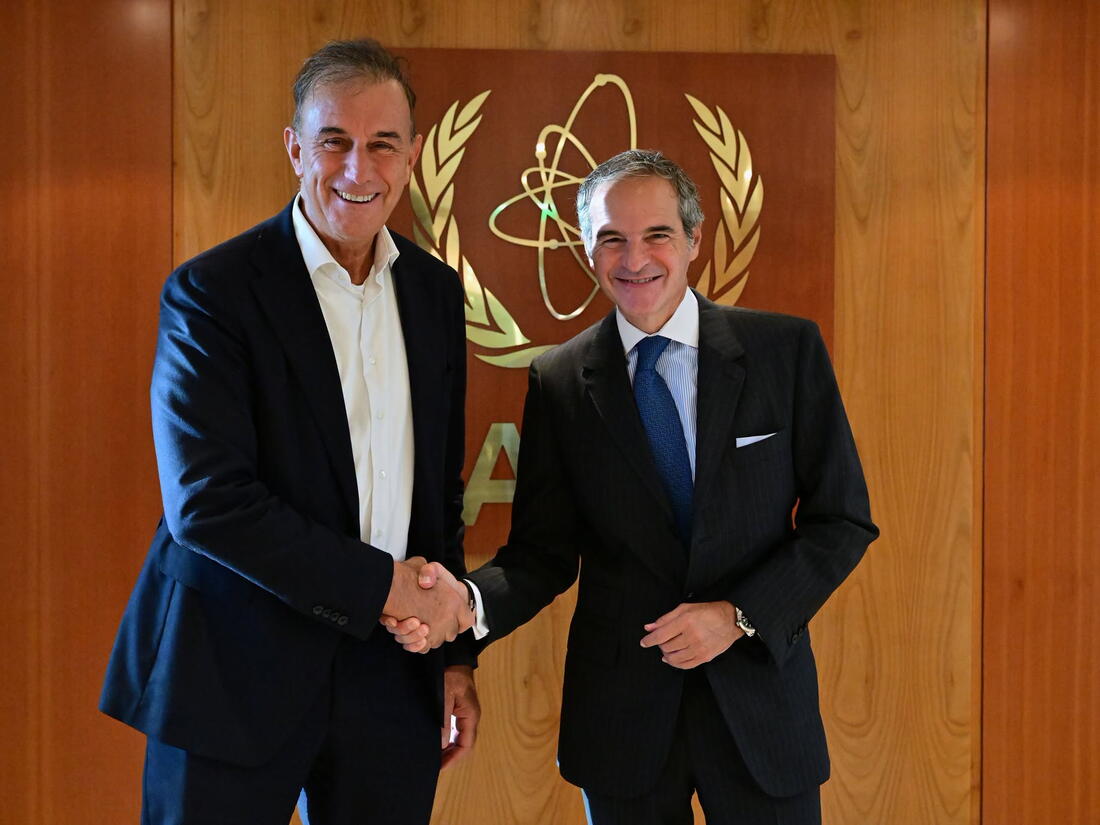
The 70th General Conference of the International Atomic Energy Agency, held in Vienna from September 14 to 18, drew more than 3,000 participants from what became 182 member states when Timor-Leste was admitted on the opening day. ITER’s account of the week records IAEA Director General Rafael Mariano Grossi’s assessment that “Fusion has made strides and is gathering momentum,” and describes how the international project used the conference to reframe its role in a field now crowded with private companies.
The shift in emphasis is telling. ITER’s head of communication, Deepti Choubey, stressed that the project’s mission includes sharing what it has learned with the broader fusion sector, through collaboration with private firms, release of technical documentation, and exchange of operational experience. ITER Director-General Pietro Barabaschi spoke at a side event on technical lessons from international fusion projects, focusing on design, construction, systems integration, and industrial production, the practical engineering challenges that demonstration plants will face regardless of their confinement concept.
Two concrete developments were reported. ITER signed a memorandum of understanding with China Fusion Energy Co., Ltd., a newly prominent player in China’s push for commercial fusion. And Grossi announced that the third high-level meeting of the World Fusion Energy Group will convene in Vienna on November 12 to coordinate research and deployment. Euratom, for its part, described ITER as the cornerstone of its fusion research.
The subtext is that ITER, long criticized for cost and delay, is increasingly valuable as the one place where the hardest engineering problems of a tokamak have been worked through at full scale. As private developers race toward pilot plants in the 2030s, the accumulated documentation of how to build superconducting magnets, vacuum vessels, and tritium systems may be the project’s most transferable product.
Source: ITER Organization
Should California’s Newest Virtual Power Plant Impress Anyone?
Pacific Gas & Electric has launched a program called SHARE, for Smart Home Assets for Reliability and Efficiency, that aims to enroll more than 20,000 customers who own Sunrun or Tesla home batteries or Renew Home smart thermostats, and to dispatch those devices when the grid is stressed. According to Canary Media’s Jeff St. John, Google has pledged roughly $14 million for the initial phase, and Carrier is offering discounts of $5,000 on battery-equipped heating and cooling units, rising to $10,000 for the first 25 customers. The utility says the costs will not fall on its other ratepayers.
St. John’s piece is less a celebration than a cross-examination. He notes that PG&E has a history of launching virtual power plant pilots and then cancelling them, and quotes clean energy investor Jigar Shah’s characterization of the state’s record on the topic as “not a success story” but “an indictment.” The technical case for distributed batteries is no longer in doubt: the report cites a Tesla and Sunrun dispatch in which more than 110,000 home batteries delivered a record 580 megawatts of peak power. The question is whether utilities will treat that resource as infrastructure they can plan around or as a demonstration to be repeated indefinitely.
There is a data center subplot. Google is planning a 250-megawatt cloud research and testing facility in San Jose, and California legislators are considering bills that would impose obligations on data centers of 25 megawatts or more. Both Google and PG&E deny that SHARE is connected to offsetting the new load, though St. John observes that the timing invites the inference.
The piece earns its place here for the discipline it brings to a topic that usually gets uncritical coverage. Aggregated home batteries are genuinely useful, and the record dispatch proves it. But a resource that only exists as a series of pilots is not a resource a grid planner can count on. Whether SHARE becomes something more durable is the real test, and St. John is right to withhold judgment until it does.
Source: Canary Media