Space Weekly Review 2026-09-23

Week In Review
This week’s strongest thread is the expanding toolkit for reading distant worlds. Astronomers reported the first radio detection from an exoplanet, using South Africa’s MeerKAT array to pick up auroral bursts from the gas giant β Pictoris b and to make the first direct measurement of an exoplanet’s magnetic field strength. A separate team combed archival Keck, ALMA, and VLT data to confirm the youngest exoplanet yet found, a world under a million years old that is still gathering material. Both results came from existing facilities and existing data, and both point toward the far larger surveys ahead: NASA formally selected PRIMA, a far-infrared telescope, as the first of its new Probe Explorer class, with exoplanet origins among its top science goals.
A second thread concerns the raw ingredients and limits of life. NASA-funded researchers described an amoeba from a California hot spring that reproduces at a temperature no complex organism was thought to tolerate, widening the envelope astrobiologists use when judging where life could persist elsewhere. Chemists reading the isotopes of the interstellar comet 3I/ATLAS found an extreme enrichment in heavy water, evidence that it formed in a metal-poor environment very different from the one that produced our own comets. Together these items remind us that the chemistry and biology we sample in the solar system are a small part of what the galaxy can produce.
High-energy astrophysics supplied two firsts of its own. An international team identified the Milky Way’s first microblazar, a stellar-mass black hole whose jet points almost straight at Earth and appears to accelerate particles to energies far beyond any terrestrial collider. Meanwhile Hubble marked its 200,000th orbit by staking out a gravitationally lensed supernova whose delayed reappearance could sharpen the measured expansion rate of the universe.
Closer to home, the week delivered practical milestones for human spaceflight and lunar operations. SpaceX stacked Starship and Super Heavy for the vehicle’s first orbital flight, carrying the first batch of larger Version 3 Starlink satellites. A Mayo Clinic-led team reported the first diagnostic X-rays ever taken in orbit, a capability future Moon and Mars crews will need. And scientists published details of McGetchin, the largest fresh impact crater found on the Moon in modern times, a sobering data point for anyone designing lunar habitats.
Items
Astronomers Detect Radio Emission From an Exoplanet for the First Time

For decades, astronomers have predicted that giant exoplanets with strong magnetic fields should broadcast at radio wavelengths, just as Jupiter does. Confirming that prediction has proved stubbornly hard. This week a team led by Kevin Ortiz Ceballos of the Center for Astrophysics | Harvard & Smithsonian reported the first such detection, from β Pictoris b, a massive gas giant orbiting a young star roughly 64 light-years away.
The team used the MeerKAT radio telescope in South Africa and compared the position of the signal against background quasars to pin down its origin at the planet rather than the star. The emission showed up as repeating radio bursts across four observing sessions in two frequency bands. The pattern is consistent with auroral emission, the same physical process that produces Jupiter’s radio noise, in which charged particles spiral along magnetic field lines and radiate.
The physics of that emission lets the team infer the field strength directly. They report a magnetic field of at least 1,250 gauss at the emitting region, far stronger than Jupiter’s. According to the phys.org report, this is the first direct measurement of an exoplanet’s magnetic field strength. Magnetic fields matter for habitability because they shield atmospheres from stellar winds, so a technique that measures them from tens of light-years away is a significant addition to the exoplanet toolkit.
The work is currently posted as a preprint on arXiv. If it holds up, it opens a new observing window on exoplanets that is largely independent of the transit and radial-velocity methods that dominate the field today.
Source: Phys.org
Astronomers Directly Image the Youngest Exoplanet Ever
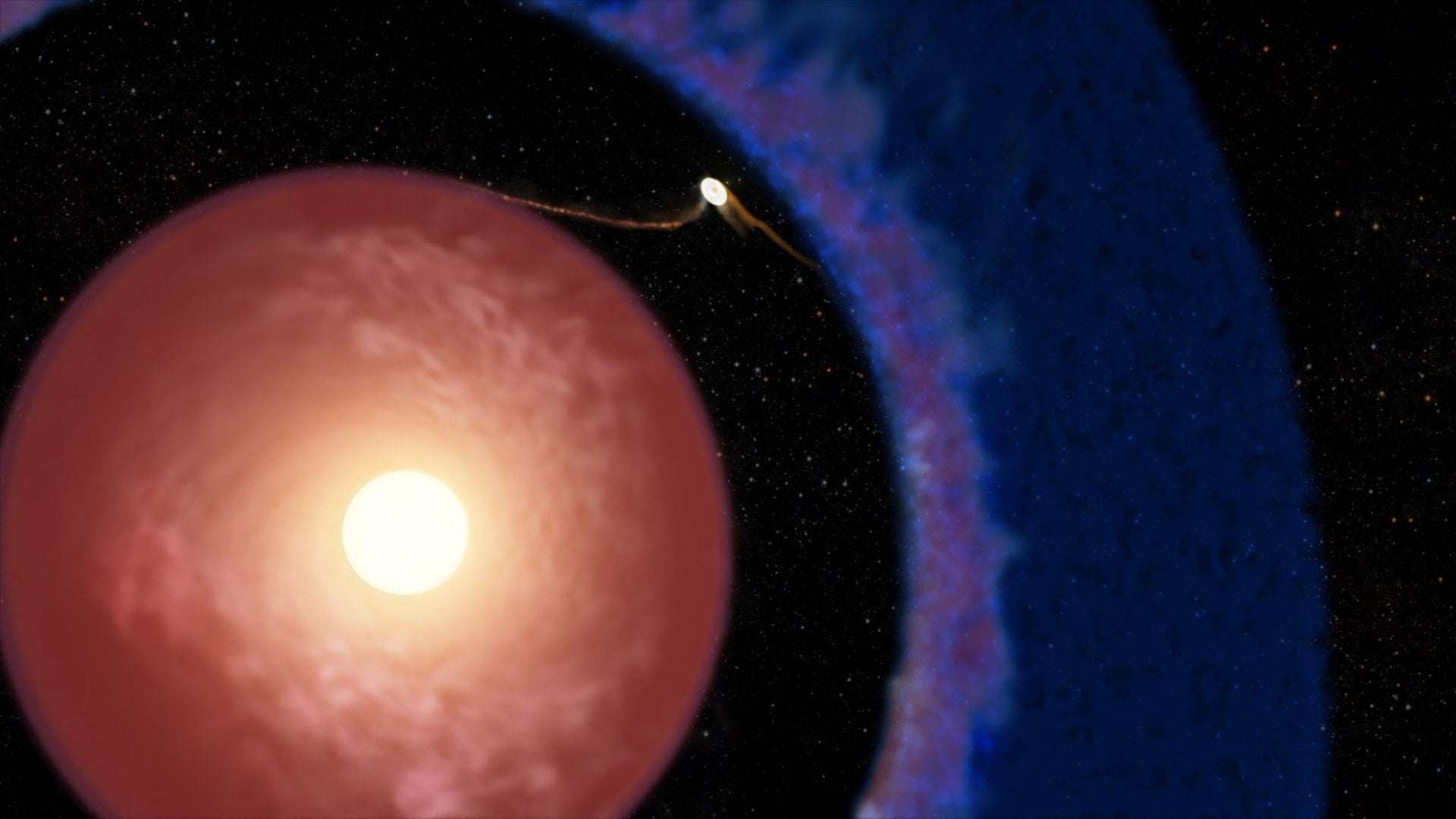
Planets form fast by cosmic standards, but catching one in the act remains rare. A team led by Andrea Bernardi of Diego Portales University in Chile has now confirmed a planet less than a million years old around the star Elias 2-24, roughly 454 light-years away in the Ophiuchus star-forming region. According to Universe Today, that makes it the youngest exoplanet yet found.
The discovery came from archival data rather than a new observing campaign. The team examined Keck Observatory NIRC2 coronagraph images from 2018 alongside ALMA and Very Large Telescope observations, then tracked the candidate’s motion between 2018 and 2020. The measured motion matched a bound planet rather than a background star at a reported confidence of 99.985 percent.
The planet is estimated at between one and four Jupiter masses, with a temperature of 1,300 to 1,600 kelvin, and sits about 54.9 astronomical units from its star. It also orbits inside a gap roughly 30 astronomical units wide in the star’s disk, which is exactly where planet-formation models predict a growing giant should clear a lane. Bernardi’s team describes it as still actively accreting material.
The result, published in The Astrophysical Journal Letters, gives modelers a rare benchmark: a giant planet with a measured mass, temperature, and orbit at an age when its formation is essentially still underway.
Source: Universe Today
NASA Selects PRIMA Far-Infrared Telescope as First Probe Explorer Mission
NASA has chosen PRIMA, the PRobe far-Infrared Mission for Astrophysics, as the first mission in its new Probe Explorers class. The announcement, released September 23, moves the mission into Phase B, the preliminary design and technology development stage, ahead of a confirmation review that will decide whether it proceeds to full implementation.
PRIMA will be managed by NASA’s Jet Propulsion Laboratory with support from Goddard Space Flight Center and Marshall Space Flight Center. International partners include the space agencies of France, Italy, Germany, Canada, South Korea, Japan, and the United Kingdom. The mission carries a cost cap of 1.2 billion dollars, excluding launch and other non-project costs, with launch planned for 2033 and a five-year primary mission.
The telescope’s 5.9-foot mirror will survey the sky in the far infrared, a band that has been largely unobserved since the Herschel observatory ended operations. Its science goals include the origins of exoplanets, the co-evolution of galaxies and their central black holes across cosmic history, and the build-up of dust and heavy elements over time.
The Probe Explorers class fills a gap between NASA’s smaller Explorer missions and its multi-billion-dollar flagships. PRIMA’s selection establishes the template for what a mid-scale astrophysics mission looks like, and its far-infrared focus complements the near-infrared work of Webb and Roman.
Source: NASA
NASA-Funded Research Finds Complex Life Defying Record Heat
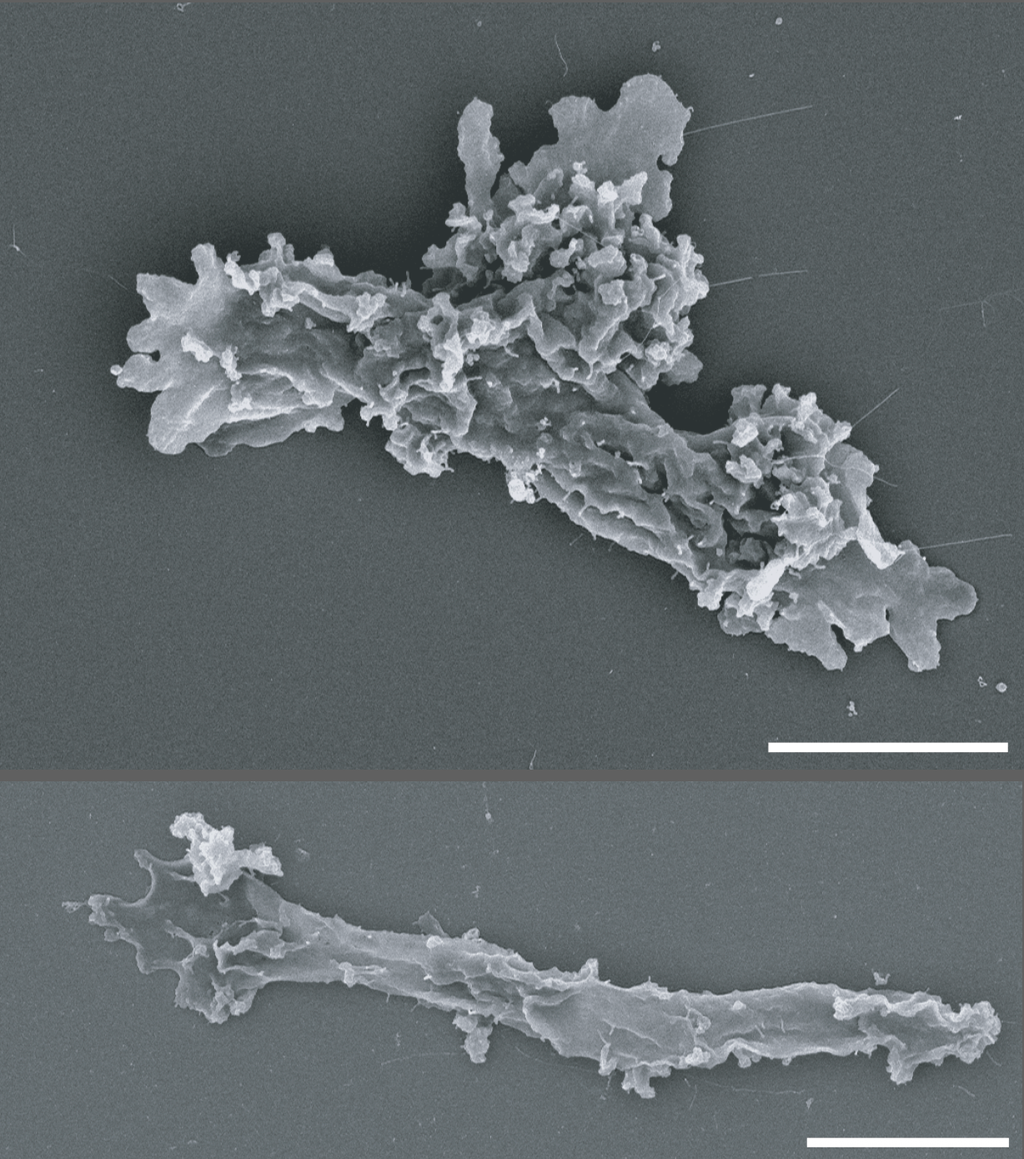
In the hot springs of Lassen Volcanic National Park in California, a team led by Syracuse University graduate student Beryl Rappaport has found a single-celled amoeba that reproduces at a temperature no eukaryote was known to tolerate. Named Incendiamoeba cascadensis, the “fire amoeba” divides at 145 degrees Fahrenheit, or 63 degrees Celsius, according to NASA.
That beats the previous eukaryotic limit of 140 degrees Fahrenheit, which had been set by a few species of fungi and red algae. The organism remains active and hunting for food at 147 degrees Fahrenheit, recovers from five minutes at 158 degrees, and only dies at 176 degrees. Eukaryotes, the branch of life that includes all plants, animals, and fungi, have long been thought to be far more heat-sensitive than bacteria and archaea because of their complex internal structures.
The result was published in the journal Cell. For NASA, which funded the work, the interest is astrobiological. As program scientist Alison Olcott put it, the finding “expands the range of conditions we think life could potentially inhabit elsewhere.” The agency notes that a single tolerance does not make an ecosystem, but each such boundary that moves outward changes how mission planners weigh the habitability of hot, volcanically active environments on other worlds.
Source: NASA Science
3I/ATLAS Has an Extreme Taste for Heavy Water

The interstellar comet 3I/ATLAS is only the third object confirmed to have arrived from outside the solar system, and its chemistry continues to surprise. Researchers led by Kenji Furuya at the RIKEN Pioneering Research Institute report that the comet’s water is extraordinarily rich in deuterium, the heavy isotope of hydrogen.
According to the phys.org report, the deuterium-to-hydrogen ratio in the comet’s water is roughly one percent, compared with 0.015 to 0.03 percent in typical solar system comets. Its methane is even more skewed, at around three percent versus 0.2 percent measured at comet 67P/Churyumov-Gerasimenko. The carbon-12 to carbon-13 ratio, between 123 and 191, is also well above the solar system’s value of about 90.
Furuya’s team argues these signatures point to formation in a low-metallicity environment, meaning one with fewer heavy elements than the cloud that formed our Sun. With less carbon monoxide present, the ion that seeds deuterium into water survives longer. Weaker ultraviolet radiation and lower cosmic-ray ionization rates further preserve the enrichment. The analysis appears in The Astrophysical Journal Letters and on arXiv.
The broader payoff is that 3I/ATLAS is effectively a sample from another star’s protoplanetary disk delivered to our doorstep. Its composition lets astronomers test models of how chemistry varies across the galaxy, and it hints that our solar system’s comets may be typical of only one kind of birthplace.
Source: Phys.org
Milky Way’s First Microblazar May Produce the Fastest Particles in the Galaxy

Blazars are among the brightest objects in the universe: supermassive black holes at galactic centers whose jets happen to point straight at Earth. An international team including ASTRON, JIVE, and the University of Amsterdam has now identified a scaled-down version inside our own galaxy, the first known microblazar.
The system, IRAS 18293−0941, pairs a black hole of roughly ten solar masses with a hot, massive companion star in an 11-day orbit. Combining radio, optical, X-ray, gamma-ray, and infrared observations, the team traced a jet extending about 100 light-years before it slams into a molecular cloud. The gamma-ray signature at that impact zone indicates particles accelerated to petaelectronvolt energies, which phys.org characterizes as roughly 100 times beyond the Large Hadron Collider.
The result, published in Astronomy & Astrophysics, matters for a long-standing puzzle: where the highest-energy cosmic rays in the Milky Way come from. Supernova remnants have been the traditional suspects, but they struggle to reach the petaelectronvolt range. A stellar-mass black hole with a well-collimated jet aimed our way offers a laboratory for studying particle acceleration at a distance where the details can actually be resolved.
Source: Phys.org
Hubble Marks 200,000 Orbits While Watching for a Lensed Supernova

On September 19, the Hubble Space Telescope completed its 200,000th orbit of Earth. According to NASA, the observatory has traveled more than five billion miles and collected over 1.7 million observations in its 36 years of operation. Demand remains fierce: astronomers request about seven times more observing time than the telescope can provide each year.
The milestone observation was aimed at the galaxy cluster MACS J0417, a massive concentration of galaxies whose gravity bends light from objects behind it. In 2025 the James Webb Space Telescope spotted a supernova, named Athena, in a galaxy lensed by this cluster. Because the cluster’s gravity creates multiple light paths of different lengths, the same explosion should appear again in a different image of the background galaxy, and models predict that reappearance sometime before early March 2027.
Catching it would be more than a curiosity. The time delay between images depends on the distribution of mass in the cluster and on the expansion rate of the universe, the Hubble constant. Measuring the delay precisely would help refine both. Hubble is monitoring the field to record the moment the supernova reappears.
The observation is a reminder that a telescope launched in 1990 still has unique work to do, particularly in partnership with Webb, which finds the targets that Hubble then follows at visible wavelengths.
Source: NASA Science
SpaceX Stacks Starship and Super Heavy for First Orbital Flight
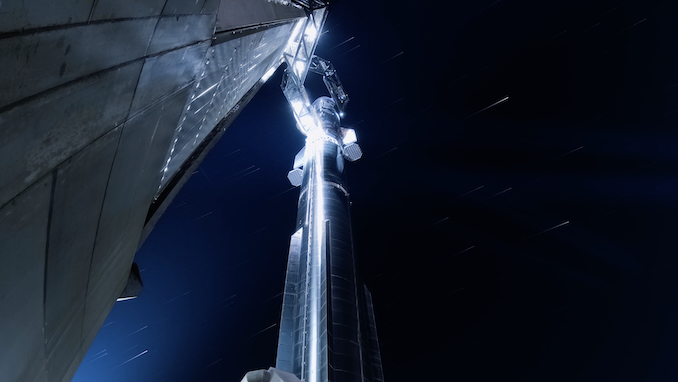
Early on Wednesday, September 23, SpaceX lifted Ship 41 onto Super Heavy booster B21 at Starbase in south Texas, assembling the full 124-meter vehicle for Starship Flight 14. According to Spaceflight Now, this will be the vehicle’s first orbital mission, as opposed to the suborbital-trajectory test flights that have characterized the program so far.
The stacking operation began around 7:45 p.m. Central on Tuesday and took nearly five and a half hours, with the launch tower’s mechanical arms placing the 52-meter upper stage atop the booster. SpaceX is targeting September 28 at 7:15 a.m. Central, pending Federal Aviation Administration approval. The FAA has issued a temporary flight restriction running from September 23 through October 7, and a wet dress rehearsal fueling test may precede launch.
The mission is planned to last roughly ten hours and carry 26 next-generation Version 3 Starlink satellites. These larger, more capable satellites cannot fit on Falcon 9, so their deployment has been waiting on Starship reaching orbit. That makes Flight 14 both a rocket milestone and the start of a new phase for the Starlink constellation.
An orbital Starship also underpins NASA’s Artemis lunar lander plans and SpaceX’s own Mars ambitions. Whatever the outcome on September 28, the vehicle on the pad represents the transition from test article to operational launch system.
Source: Spaceflight Now
First Diagnostic X-Rays in Space Mark a New Era for Astronaut Health
Medicine in orbit has long relied on ultrasound because X-ray equipment was too bulky and power-hungry to fly. That barrier has now fallen. A team led by Dr. Sheyna Gifford, a Mayo Clinic professor of aerospace medicine, reports in the journal Radiology that the Fram2 commercial spaceflight captured the first diagnostic-quality X-ray images ever taken in space.
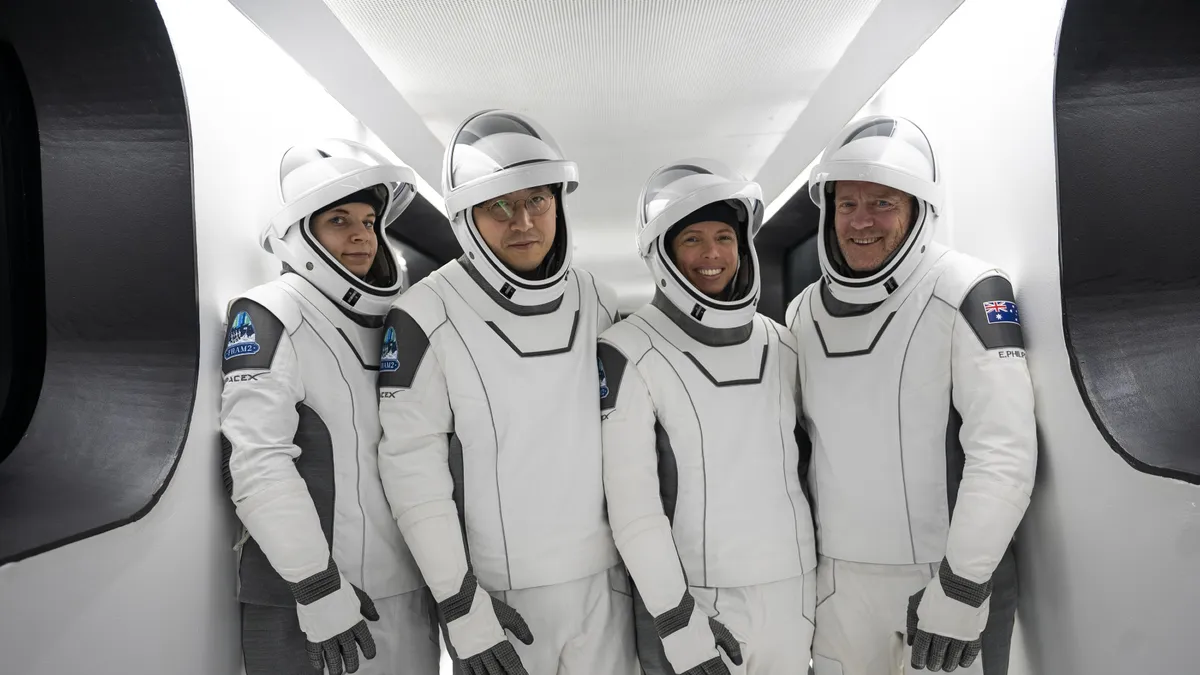
Fram2, sponsored by entrepreneur Chun Wang, spent roughly three and a half days in polar orbit with a crew of four: Wang as commander, pilot Rabea Rogge, vehicle commander Jannicke Mikkelsen, and medical officer Eric Philips. The team flew an ultraportable wireless digital X-ray generator, and three crew members received just four hours of training before launch.
In flight, the crew imaged a hand, forearm, abdomen, pelvis, and chest, with matching pre-flight images for comparison. Three independent radiologists judged the results consistent with diagnostic standards, though positioning scores were lower for the chest, pelvis, and abdominal views, a reflection of the difficulty of holding a patient still in microgravity.
The implications extend beyond medicine. As Gifford noted, “X-rays are critical not just for crew members but also for mission components like electronics and spacesuits.” For multi-month missions to the Moon and Mars, where evacuation is impossible, the ability to diagnose fractures and inspect hardware onboard is a genuine capability gap that this experiment begins to close.
Source: Universe Today
Scientists Release Details About the Moon’s New Massive Crater
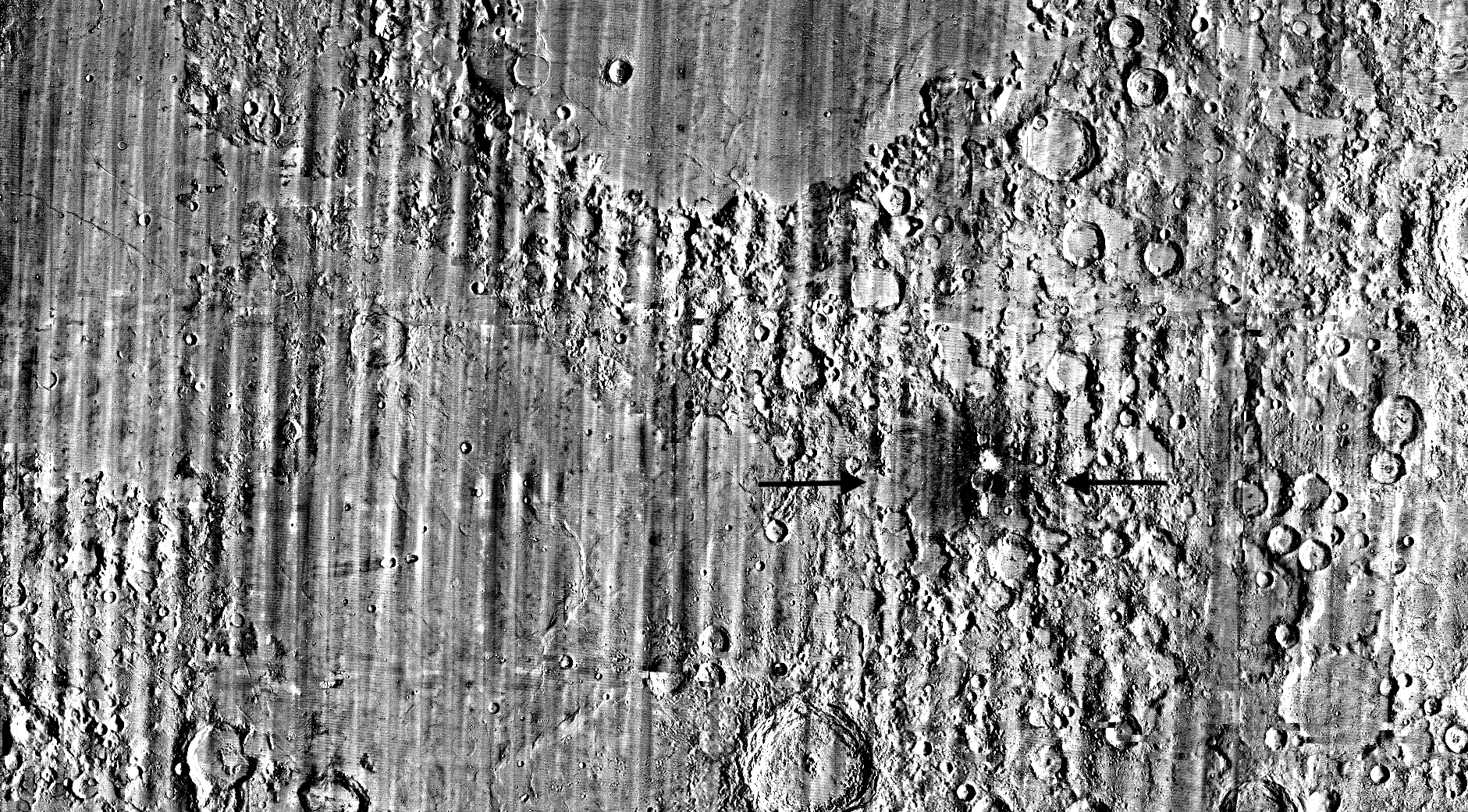
Sometime between April 11 and May 22, 2024, an asteroid or comet fragment estimated at three to six stories across struck the Moon and excavated a crater 222 meters wide and about 43 meters deep. Named McGetchin after the lunar scientist Tom McGetchin, it is, according to Universe Today, the largest newly formed impact crater found anywhere in the solar system in modern times.
The crater was spotted in October 2025 by Robert Wagner, an image-processing specialist at Intuitive Machines, using global difference maps that compare before-and-after images from NASA’s Lunar Reconnaissance Orbiter. Wagner described it as “by far the most obvious impact debris pattern” he had seen. The orbiter’s Diviner instrument added thermal data, revealing an anomaly extending 6.4 kilometers around the crater where the surface is about nine degrees Celsius colder than its surroundings during the lunar night.
The full analysis appears in Science Advances. The team estimates that an impact of this size occurs roughly once every 132 years, which sounds rare until one considers plans for permanent lunar bases with multi-decade lifetimes.
Beyond the hazard assessment, a fresh crater of known age is a scientific gift. It lets researchers calibrate how quickly lunar surfaces weather and how ejecta and thermal signatures evolve, improving the age estimates applied to every other crater on the Moon.
Source: Universe Today