Space Weekly Review 2026-11-14

Week In Review
This week’s strongest thread was the arrival of data at a scale that changes what questions astronomers can ask. The European Space Agency’s Euclid mission published its first major catalogue, Euclid offers best-ever 3D map of the universe to date, with hundreds of millions of galaxies and tens of thousands of gravitational-lens candidates drawn from barely a seventh of its planned footprint. A radio counterpart came from the Netherlands, where LOFAR takes the deepest image of the low-frequency radio sky to date, an eight-billion-pixel field with tens of thousands of sources. And in South Africa the MeerKLASS collaboration reported the first direct measurement of cosmic hydrogen clustering, a long-promised technique for mapping the universe by the faint glow of its most abundant element rather than by counting galaxies one at a time. Alongside these, an Australian team showed that the famous 2019 black hole picture holds up under an entirely different analysis, in Independent technique validates landmark M87* image. Together they mark a moment when the field’s bottleneck is shifting from collecting light to extracting signal from it.
Closer to home, the week was about physical contact with small bodies. ESA’s Hera probe has begun its detailed survey of the asteroid that NASA deliberately struck in 2022, as reported in Europe’s Hera spacecraft begins close inspections of an asteroid rammed by NASA, turning a planetary-defence demonstration into a measured science. Material already returned to Earth continued to pay off: Asteroid Bennu’s sample delivers another surprise describes atom-by-atom isotope measurements that distinguish where a prebiotic molecule formed, while Space dust particles point to ancient heavy-oxygen water reservoir in the Kuiper belt uses stratospheric dust grains to argue that the outer solar system kept a chemically distinct store of water from the earliest days.
The third thread was economic. Two analysis pieces this week treated orbit and the asteroid belt as markets rather than frontiers. Asteroid mining will crash the platinum market, but that’s good news for Earth models what happens to terrestrial mining when space supply arrives, and Solving the space junk crisis isn’t just about counting trash argues that debris is a tragedy-of-the-commons problem that needs incentives as much as hardware. Both are reminders that the long-term shape of space activity is being decided by pricing and policy, not only by engineering.
The engineering still had its say. SpaceX launches Starship but passes up booster catch for safety’s sake covers the fifteenth test flight, which placed the ship in orbit with satellites aboard while deferring the attempt to recover both stages. The lesson across the week is consistent: the big machines are working, the data is flooding in, and the hard problems now sit in analysis, economics, and the discipline of knowing when not to try something.
Items
SpaceX Launches Starship but Passes Up Booster Catch for Safety’s Sake
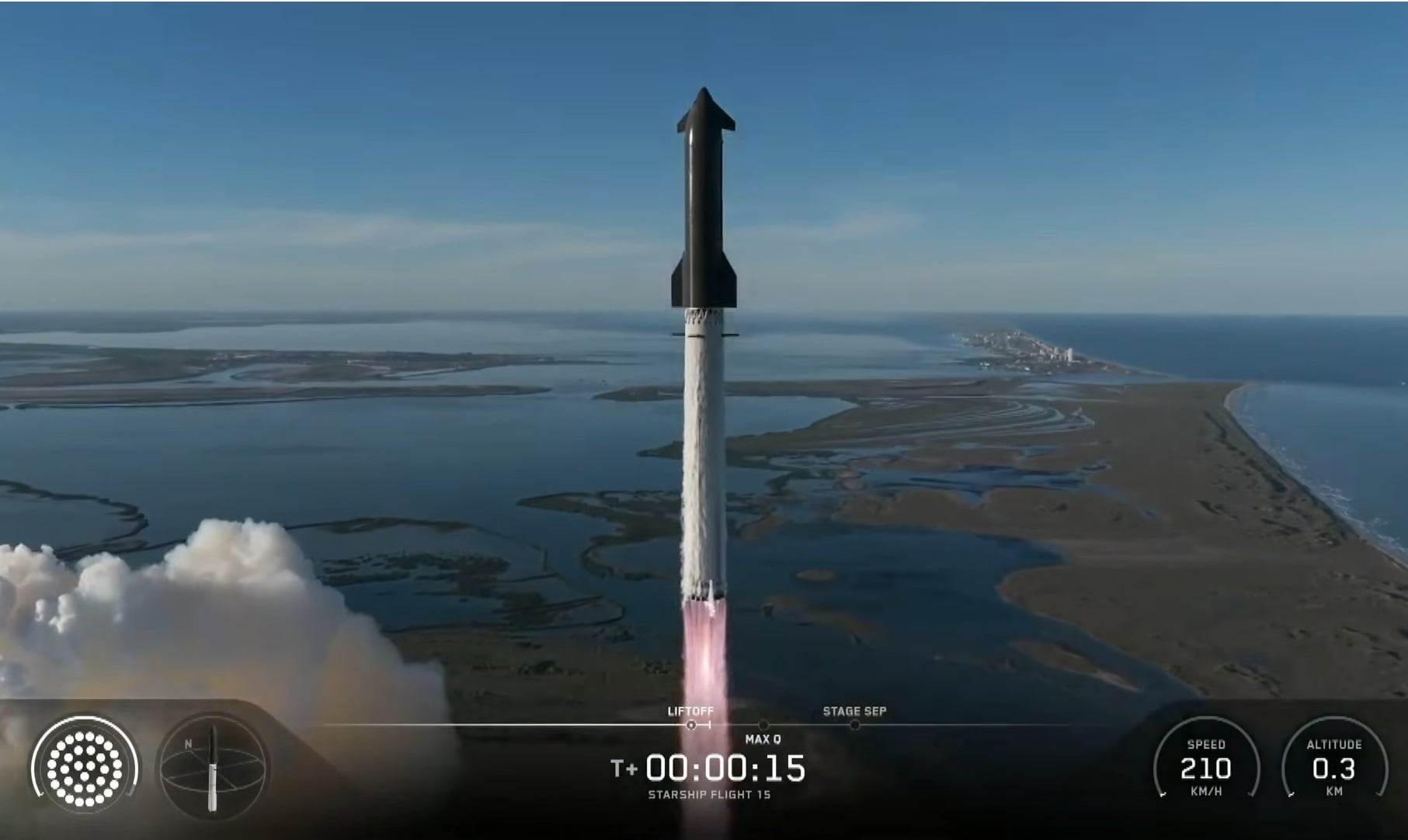
SpaceX’s fifteenth Starship test flight lifted off from Starbase on the South Texas coast at 4:47 p.m. Central Time on November 13, according to Universe Today’s report. The stated goal was the most ambitious yet: the first attempt to retrieve both stages of the vehicle, with the Super Heavy booster returning to the launch tower and the upper stage, Ship 42, spending up to 22 hours in orbit before its own midair capture.
The booster catch did not happen. SpaceX called it off over safety concerns and diverted Super Heavy to an offshore splashdown, which launch commentator Jessie Anderson described on the webcast with “you could feel the rumble of that splashdown there.” The decision illustrates a maturing operational culture: a recovery attempt near populated ground infrastructure is only worth making when every parameter is nominal, and the flight’s primary objectives did not depend on it.
Those primary objectives were met. The ship reached orbit and deployed 26 Starlink satellites, three of them fitted with cameras to inspect the vehicle’s heat shield from outside, a direct way of studying the tile system that has been the programme’s recurring weak point. Universe Today notes the stacked vehicle stands 407 feet, or 124 metres, tall and produces about 17 million pounds of thrust at liftoff.
NASA Administrator Jared Isaacson offered congratulations on “another spectacular launch,” a reminder of how much the agency has riding on this vehicle. Universe Today reports that NASA plans Artemis III testing in low Earth orbit next year, which depends on Starship demonstrating reliable orbital operations and, eventually, propellant transfer. Each flight that reaches orbit with a useful payload moves the programme from experimental to operational, even when the headline-grabbing catch is left for another day.
Source: Universe Today
Euclid Offers Best-Ever 3D Map of the Universe to Date

The European Space Agency and the Euclid Consortium released the mission’s first major data batch, called DR1 Foundation, built from 13 months of observations. According to the Max Planck Society release carried by Phys.org, the dataset covers about 1,900 square degrees of sky, an area equivalent to roughly 9,500 full moons, and contains light from more than a billion objects. That footprint is only about 14 percent of what the six-year survey will eventually cover.
The headline numbers are striking even for a field accustomed to large catalogues: more than 900 million galaxies, over 60 million quasar candidates, more than 160 million spectra, and some 15,000 candidate strong gravitational lenses, where a foreground mass bends the light of a background galaxy into arcs and rings. The release amounts to about 1.7 million gigabytes of data.
Euclid’s two instruments make this possible. VIS is a 600-megapixel visible-light camera that delivers the sharp galaxy shapes needed to measure weak gravitational lensing, the subtle statistical distortion of distant galaxies by intervening dark matter. NISP, the Near-Infrared Spectrometer and Photometer, provides the redshifts that turn a flat image into a three-dimensional map. Frank Grupp, the German Euclid project manager at LMU Munich and the Max Planck Institute for Extraterrestrial Physics, credited the optics with transmitting “images of outstanding quality” to the ground.
The scientific target is the nature of dark energy. By charting how matter clustered across cosmic time, Euclid aims to test whether the acceleration of cosmic expansion matches a simple cosmological constant or demands new physics. “Today marks a scientific milestone in our study of the cosmos,” said ESA Director of Science Carole Mundell. LMU cosmologist Jochen Weller put the ambition plainly: another step toward understanding “why the expansion of the universe is accelerating.” With most of the survey still ahead, DR1 is the foundation, and the measurement that matters will sharpen with every subsequent release.
Source: Phys.org
Europe’s Hera Spacecraft Begins Close Inspections of an Asteroid Rammed by NASA

The European Space Agency’s Hera spacecraft has started its close-range study of the double asteroid Didymos and its moonlet Dimorphos, the target NASA’s DART spacecraft struck in September 2022 in humanity’s first full-scale planetary-defence test. According to the Associated Press report carried by Phys.org, Hera is currently observing from 25 to 30 kilometres and plans to close to about 20 kilometres next month.
DART succeeded in shortening Dimorphos’s orbital period around Didymos. What it could not do was stay to measure the aftermath. The impact threw out debris that extended thousands of miles into space, and that ejecta carried momentum of its own, meaning the push delivered to the asteroid was larger than the spacecraft’s mass and speed alone would predict. Pinning down exactly how much larger is the central question, because it determines how much warning time a real deflection would need.
Hera, which launched in 2024, carries 25 science instruments, along with two shoebox-sized CubeSats that will conduct closer surveys and attempt landings. Its job is to measure the crater, the mass and interior structure of Dimorphos, and the fate of the debris, some of which may still linger near the system. The AP called it a “crash site investigation” for a robotic detective.
The scale of the targets puts the achievement in perspective. Dimorphos is about 151 metres across and Didymos about 780 metres, bodies small enough that a spacecraft measurably moved one of them. Turning that single experiment into a validated model for kinetic deflection is what converts planetary defence from a demonstration into a capability.
Source: Phys.org
First Direct Measurement of Cosmic Hydrogen Clustering Could Change How We Map the Universe
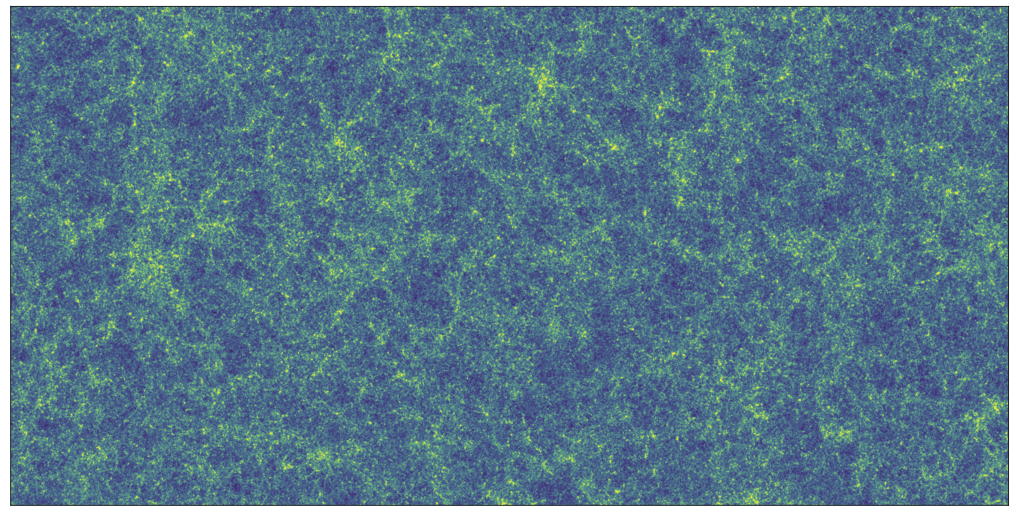
The MeerKLASS collaboration, working with South Africa’s 64-dish MeerKAT radio array, has reported the first direct measurement of how neutral hydrogen clusters on the largest scales. Published in Monthly Notices of the Royal Astronomical Society, the result validates a technique called 21-centimetre intensity mapping, which Universe Today describes as a potential new way of charting the cosmos.
Conventional galaxy surveys map the universe by detecting individual galaxies and measuring their distances. Intensity mapping skips that step. It records the combined faint radio emission of neutral hydrogen across large patches of sky, treating the gas itself as a tracer of where matter has gathered. The challenge is that the hydrogen signal is roughly 10,000 times weaker than the foreground emission from our own galaxy and from radio interference, so extracting it has been a decades-long goal.
The team analysed about 250 square degrees of sky and detected the hydrogen signal as it was about 4.5 billion years ago, roughly 9 billion years after the Big Bang. The analysis pipeline was co-led by Steven Cunnington of the University of Portsmouth’s Institute of Cosmology and Gravitation, with Mário Santos of the University of the Western Cape as principal investigator. The collaboration spans seven countries on three continents.
“This is a milestone in establishing 21-cm intensity mapping as a novel tool for cosmology,” the team said. The promise is efficiency: a survey that captures hydrogen across huge volumes can test models of dark energy and cosmic structure over regions that would take galaxy-by-galaxy surveys far longer to cover. MeerKAT is also a pathfinder for the much larger Square Kilometre Array, so a working method now sets up a far more powerful measurement later.
Source: Universe Today
Asteroid Mining Will Crash the Platinum Market, but That’s Good News for Earth
What happens to a commodity market when a new source appears that dwarfs every terrestrial deposit? Two MIT system dynamicists, Robert Nachtrieb and Steven Smith, have modelled exactly that scenario for platinum-group metals in a paper titled “Will AstroForge Collapse the PGM Market?” Universe Today’s Andy Tomaswick walks through the argument.
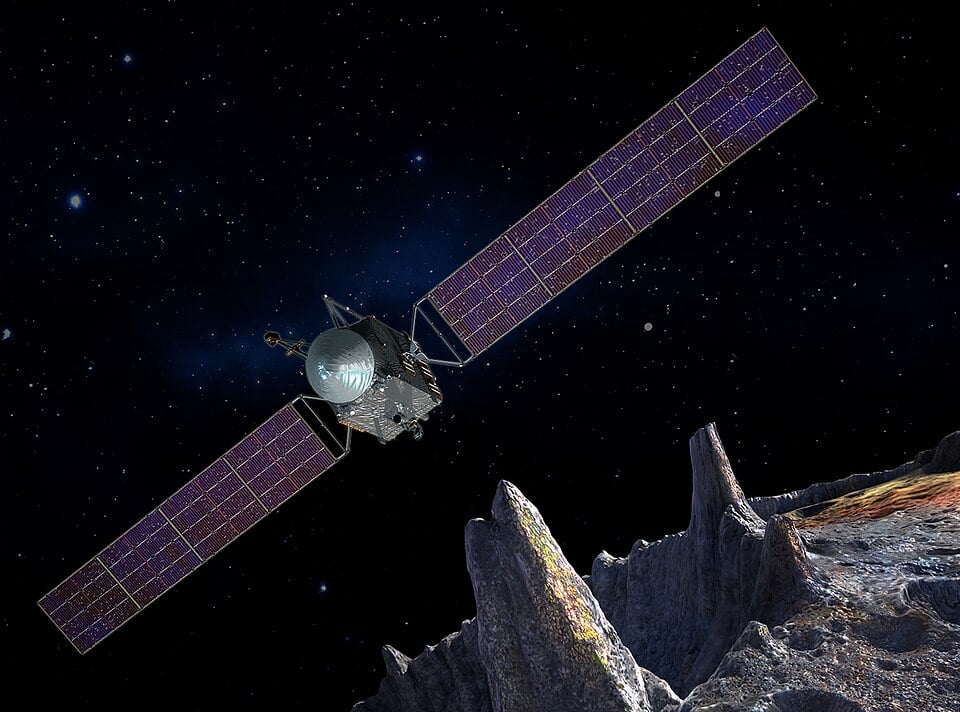
The starting conditions are lopsided. According to the article, more than 80 percent of known platinum-group reserves sit in deep-shaft mines in South Africa and Russia. Metallic M-type asteroids contain these metals at concentrations dozens of times higher than Earth’s richest ores, and a single kilometre-wide metallic asteroid holds more platinum-group metal than humanity has ever extracted. AstroForge, a California startup, is pursuing this with small probes costing a few million dollars each to launch. Its concept involves magnetically attaching to an asteroid, vaporising crust with high-power lasers, refining the metals on board, and returning them in heat-shielded capsules.
The model predicts a two-phase transition. Early space miners enjoy a gold rush, with industry profits rising to about eight times current levels as they sell into prices set by terrestrial costs. Then comes what the authors call equilibrium collapse: as space supply scales, prices fall by more than 75 percent within 15 years, and deep-shaft mines become unprofitable.
The twist is that the collapse is the good news. Platinum-group metals are key catalysts in hydrogen electrolysers and fuel cells, so a sustained price drop lowers the cost of the green hydrogen economy. And it would retire an industry marked by acid drainage, arsenic pollution, and dangerous underground labour. The analysis is a useful corrective to the common framing of asteroid mining as a get-rich scheme: the lasting value may be in making a scarce industrial input cheap for everyone.
Source: Universe Today
Solving the Space Junk Crisis Isn’t Just About Counting Trash
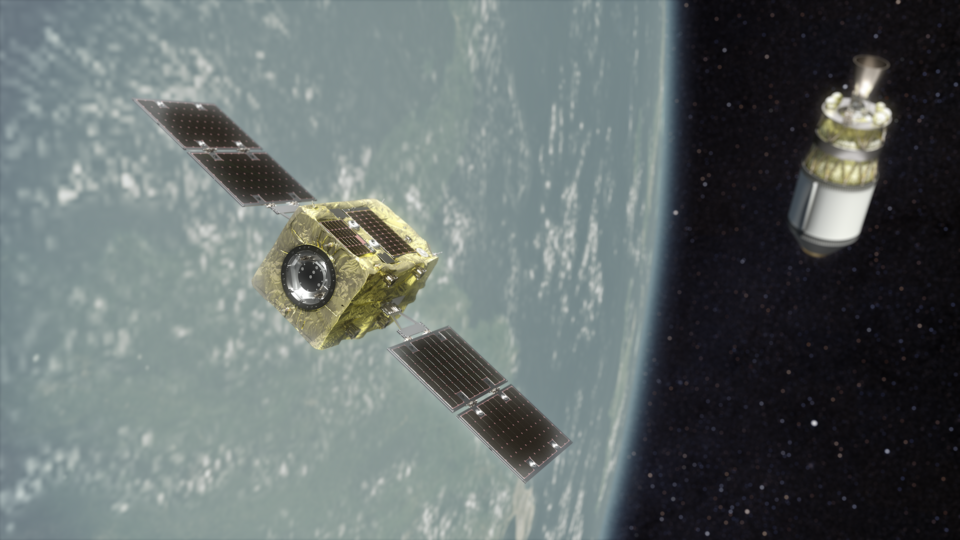
Orbital debris is usually discussed as a tally of objects. A new analysis by Slava Turyshev of NASA’s Jet Propulsion Laboratory, summarised by Universe Today, reframes it as a problem of control and economics, and arrives at some clarifying numbers.
The scale of active management is already large. According to the article, SpaceX’s Starlink satellites performed 144,404 collision-avoidance manoeuvres between December 2024 and May 2025, roughly one per satellite per week. Yet Starlink, Amazon’s Kuiper, and China’s Qianfan operate around 500 to 600 kilometres, where atmospheric drag eventually cleans up. The greater danger lies higher, around 850 kilometres, where dead objects persist for decades. The article cites European Space Agency data that 96 percent of long-term collision risk comes from uncontrolled dead objects, not active satellites.
Turyshev identifies three levers. First, design rules: the FCC recently cut the post-mission deorbit requirement from 25 years to 5, and the analysis finds that raising disposal reliability from 90 to 99 percent under a five-year rule cuts the long-term hazard by a factor of 50. Second, better tracking, so that the uncertainty zone around a predicted conjunction shrinks and fewer manoeuvres are needed. Third, just-in-time collision avoidance, using ground-based lasers or satellite swarms to nudge a piece of debris a few metres off a collision path, far cheaper than removing it entirely.
The hard part is institutional. The 1967 Outer Space Treaty leaves abandoned objects under their launching state’s jurisdiction, so a private company cannot simply remove foreign debris. And cleanup is a textbook tragedy of the commons: everyone benefits, but one operator pays. Turyshev proposes government-funded disposal bonds that reward removal of the highest-risk objects. The framing matters because the technology for debris removal largely exists. What is missing is a market that makes someone want to use it.
Source: Universe Today
Asteroid Bennu’s Sample Delivers Another Surprise
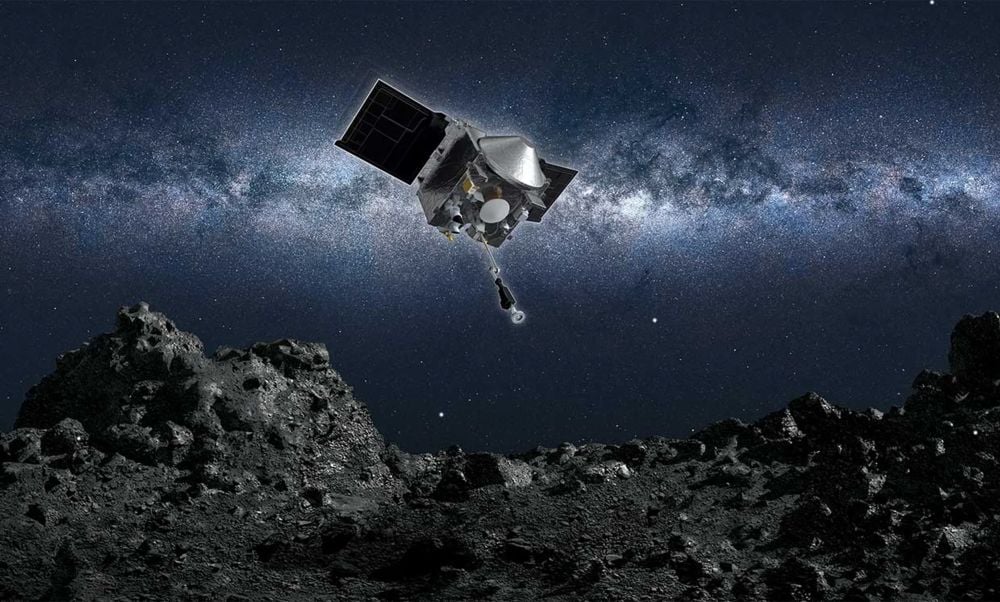
The samples NASA’s OSIRIS-REx mission returned from asteroid Bennu in 2023 have already shown that the body carries 14 of the 20 amino acids used in Earth’s proteins and four of the building blocks of DNA and RNA. A Penn State team has now gone a level deeper, measuring isotope ratios not just for whole molecules but for individual atoms within them, and found something unexpected.
Led by Ophélie McIntosh, with Christopher House and Katherine Freeman as co-authors, the study published in Nature Communications Earth and Environment compared beta-alanine from Bennu with the same molecule from the Murchison meteorite, a famous carbon-rich fall from 1969. Using a technique called picomolar-scale compound-specific isotope analysis, with a modified gas-chromatography Orbitrap mass spectrometer, the team measured carbon and nitrogen isotope values position by position along the molecule.
The bulk carbon averages for Bennu and Murchison were nearly identical. But the position-specific values differed dramatically, with “startling differences” between neighbouring atoms in the same molecule. “I was genuinely gobsmacked by the enormous isotope difference between two neighboring atom positions,” Freeman said. The pattern indicates that beta-alanine in the two bodies formed through similar chemical pathways but in different environments or locations within the protoplanetary disk.
The result shows that prebiotic chemistry was not a single event in one corner of the early solar system but a process operating across diverse settings. It also establishes a method. As McIntosh put it, intramolecular isotopic measurements “offer a particularly powerful approach,” and the team sees them as baseline data for recognising potential biosignatures on future missions to the icy moons of Jupiter, where distinguishing life’s chemistry from abiotic chemistry will be the whole game.
Source: Universe Today
Independent Technique Validates Landmark M87* Image

The 2019 image of the black hole at the heart of galaxy M87 was one of the most scrutinised pictures in science, and also one of the most dependent on complex processing. A four-person team at Australia’s national science agency, CSIRO, has now reconstructed it using an entirely different method and recovered a ring “almost identical in size and shape,” according to the CSIRO release carried by Phys.org. The work is published in Nature.
The Event Horizon Telescope combines radio dishes across the globe into a virtual Earth-sized instrument. The standard method correlates signals between pairs of telescopes, which leaves the result vulnerable to calibration errors from the atmosphere and the instruments themselves. The CSIRO technique instead works with triplets of telescopes, a combination in which many of those errors cancel out, and uses machine learning to handle what remains. Project leader Nithyanandan Thyagarajan drew on experience from synchrotron experiments to develop it.
Lead author Samuel Lai described the difficulty of the observation itself: “It is like standing in your backyard and trying to take a photo of a doughnut on the moon.” Reproducing that photo by an independent route is what gives it scientific weight. Laurent Loinard, director of the Event Horizon Telescope Collaboration, called the validation “extremely gratifying” and the method “elegant” and “entirely independent.”
Independent replication is routine in most sciences but rare for one-of-a-kind instruments, where there is no second telescope to check against. A second analysis path that reaches the same answer strengthens every subsequent EHT result, including efforts to make movies of material swirling around black holes. It also gives the field a new tool for cleaning up the next generation of very-long-baseline images.
Source: Phys.org
LOFAR Takes the Deepest Image of the Low-Frequency Radio Sky to Date
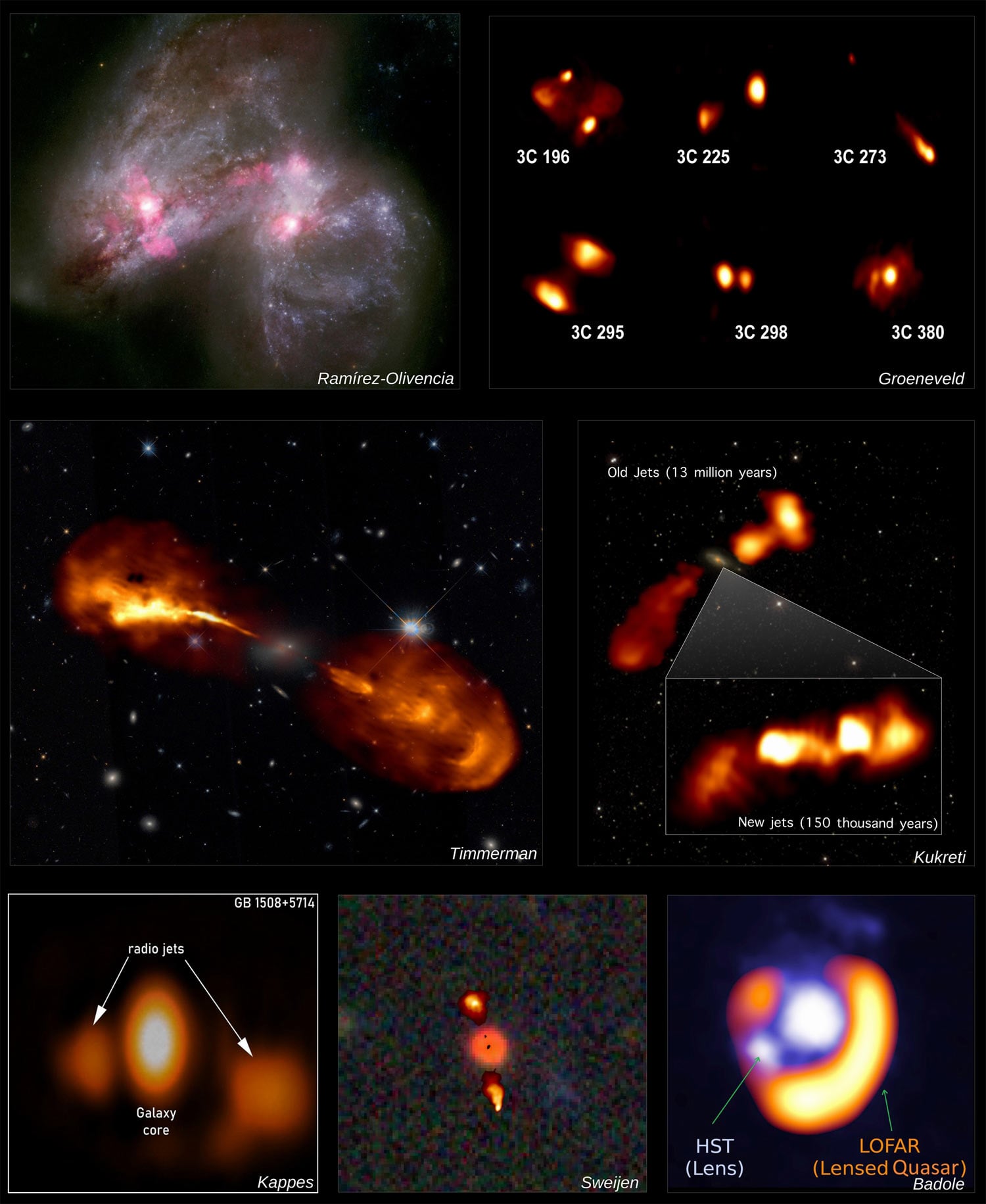
The Low Frequency Array, LOFAR, has produced the deepest and most sensitive image yet of the sky at low radio frequencies, according to Universe Today. The target was ELAIS-N1, a patch of the northern sky chosen because it is unusually free of the Milky Way’s dust, gas, and stars, giving an unobstructed window onto the distant universe.
The statistics give a sense of the undertaking. Some 200 hours of observation produced 400 terabytes of raw data, which were reduced to an eight-billion-pixel image containing 63,000 radio sources. The new image has 20 times the resolution of LOFAR’s previous view of the same field. The research was led by Jurjen de Jong, a postdoctoral researcher at Leiden Observatory and ASTRON, the Netherlands Institute for Radio Astronomy.
Radio waves pass through the dust that hides much of the universe from optical and infrared telescopes, so the sources in the image are a mix of active galactic nuclei, where supermassive black holes drive relativistic jets, and young galaxies in the throes of star formation. Seeing both populations deeply enough to study their evolution over cosmic time is one of the central aims of low-frequency surveys.
As with Euclid and MeerKLASS, the limiting factor was computation rather than collection. ASTRON developed a data-processing platform called Spider, hosted at the Dutch computing facility SURF, that cut processing time by a factor of ten. The gain matters because the full LOFAR survey covers far more sky than this one field, and the Square Kilometre Array will generate far more data again. Methods that make deep imaging routine are what turn a showcase result into a survey programme.
Source: Universe Today
Space Dust Particles Point to Ancient Heavy-Oxygen Water Reservoir in the Kuiper Belt

Some of the oldest material in the solar system arrives on Earth not as meteorites but as microscopic dust, drifting down through the upper atmosphere where aircraft can collect it. A team led by NASA scientist Lindsay Keller has analysed 12 such particles from the stratosphere and traced them to the Kuiper belt, the ring of icy bodies beyond Neptune. The findings appear in Science Advances, as reported by Phys.org.
The Kuiper belt origin is inferred from the grains’ dense tracks of radiation damage, the signature of long exposure to solar energetic particles far from the Sun. Within the particles, the team found hydrated clay minerals, evidence that water once reacted with rock at low temperatures. The researchers propose that amorphous silicate grains containing tiny inclusions of iron-nickel metal and sulfides were the main precursors to these clays.
The surprise is in the water’s oxygen. Isotope analysis indicates the original water had an oxygen-18 to oxygen-16 ratio about 15 percent higher than the standard for Earth’s ocean water, a figure the researchers describe as a model-based upper limit. That is a large difference, and it implies the outer solar system kept a distinct reservoir of heavy-oxygen water that did not mix freely with the inner regions where Earth formed.
The proposed mechanism is a pressure bump in the young solar nebula, created by Saturn and possibly the ice giants, that acted as a barrier between inner and outer zones. If so, these dust grains are physical samples of material that stayed isolated for billions of years. They offer a way to study Kuiper belt chemistry without a mission to the Kuiper belt, and a test for models of how water was distributed as the planets assembled.
Source: Phys.org