Energy Weekly Review 2026-11-06

Week In Review
The strongest thread this week runs through the fusion laboratory at DIII-D in San Diego, where two separate results moved long-standing engineering questions from theory toward practice. General Atomics physicists reported in Physical Review Letters the first experimental confirmation of helicon current drive, a radio-frequency method for sustaining plasma current that had been attempted and abandoned since the 1980s and that could let future tokamaks run continuously rather than in pulses. Days later, a team from North Carolina State, Oak Ridge, and JEOL announced that 3D-printed tungsten tiles survived three days of plasma exposure in the same machine’s divertor. One result addresses how to keep a reactor running; the other addresses how to build the parts that face the plasma. Together they show a field working on the unglamorous components a power plant actually needs.
Fission had a week of supply-chain and licensing milestones rather than headline machines. The Nuclear Regulatory Commission completed its final safety evaluation for Dow and X-energy’s Long Mott plant in Texas, clearing the last major review before a construction permit for what would be the first grid-scale advanced reactor at a U.S. industrial site. Urenco produced the Western world’s first commercial cylinder of LEU+ fuel, the enrichment grade that lets existing reactors run longer between refuelings and feeds several advanced designs. Copenhagen Atomics and Urenco agreed to build a deconversion line for molten-salt reactor fuel in Denmark, and Helsinki’s municipal utility opened an environmental assessment for a reactor sized for district heating. None of these generates a single watt yet, but each removes a specific bottleneck between a reactor design and a reactor.
Materials science supplied the week’s record. A consortium led by Soochow University and LONGi reported in Nature a perovskite-silicon tandem solar cell certified at 35.1 percent efficiency, achieved by redesigning the self-assembled molecular layer that sits between the two absorbers so it coats textured silicon uniformly without sacrificing conductivity. In batteries, a Korean chemistry institute showed that a garnet solid electrolyte can be transfer-printed like a sticker onto electrodes at fifteen microns thick and over an area of 120 square centimeters, a step toward manufacturing solid-state cells at scale rather than in coin-cell demonstrations.
Two analyses rounded out the week by asking what cheap storage makes possible. A Georgetown and Duke report argued that batteries beat new gas plants for serving data centers on cost, speed, and flexibility, as utilities plan more than 60 gigawatts of gas for the purpose. German researchers modeled iron powder as a seasonal energy carrier, storing summer renewables as reduced metal and burning it in converted coal plants in winter, and found system savings in the tens of billions of euros a year. Both pieces share a premise with the fusion and fission items above: the constraint on abundant energy is increasingly engineering and logistics, not physics.
Items
A Perovskite-Silicon Tandem Cell Reaches a Certified 35.1 Percent
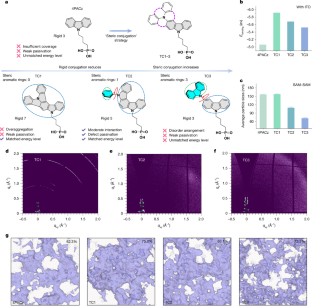
A team spanning Soochow University, Northwestern Polytechnical University, Hong Kong Polytechnic University, the Chinese University of Hong Kong, KAUST, and the solar manufacturer LONGi reported in Nature a perovskite-silicon tandem cell with a certified stabilized efficiency of 35.1 percent and a fill factor of 85 percent. Tandem cells stack a perovskite absorber, which captures high-energy blue and green light, on top of a silicon cell that captures the red and infrared. The combination can exceed the practical ceiling of silicon alone, and the race among manufacturers has been to push the stack past 35 percent in a form that is stable and manufacturable.
The advance here is in the self-assembled monolayer, a single molecular layer that forms the interface between the perovskite and the layer beneath it. These monolayers must do two things at once. They must conduct charge efficiently, which favors molecules with extended conjugated electron systems, and they must coat the pyramidal texture of a silicon wafer uniformly, which conjugated molecules tend to resist because they stack against each other and clump. Previous designs traded one property against the other.
The authors engineered what they call conjugation-regulated molecules with deliberate intramolecular distortion. The twist in the molecule suppresses excess stacking between neighbors while preserving the conjugation that carries charge, so the layer forms a conformal, ordered film across the rough silicon surface. The paper reports that the optimized device retained more than 94 percent of its initial performance after 1,500 hours of aging under the ISOS-L-1 light-soaking protocol, which addresses the durability concern that has shadowed perovskite devices.
The presence of LONGi among the authors matters. LONGi is one of the largest silicon module manufacturers in the world, and its participation signals that the interface chemistry is being developed with production lines in view rather than as a laboratory curiosity. If tandem modules in the mid-30s can be made at silicon-like cost, the land, racking, and labor per watt of a solar farm fall substantially relative to today’s single-junction panels.
Source: Nature
DIII-D Confirms Helicon Current Drive After Four Decades of Attempts

A tokamak confines plasma with a magnetic field that is partly generated by a current flowing through the plasma itself. In today’s machines that current is induced by a central solenoid, a transformer that can only ramp for so long before it runs out of flux. DIII-D’s pulses last about 10 seconds for this reason, and even ITER will be limited to under about 1,000 seconds. A power plant that must run for months needs some other way to drive current, and the options have been studied for decades without a clear winner.
General Atomics scientists Jeff Lestz, Bart Van Compernolle, and Bob Pinsker, writing as joint first authors in Physical Review Letters, report the first clear experimental evidence that helicon waves can do the job. Helicon current drive uses radio waves in the lower hybrid frequency range, launched from a comb-line antenna, a row of radiating elements arranged along the toroidal direction and fed in sequence so the wave is steered in one direction. The concept was explored in the 1980s and abandoned after early experiments failed. Victor Vdovin of Moscow’s Kurchatov Institute championed its revival, and the DIII-D team built a megawatt-class system to test it.
The experiments showed heating from helicon wave absorption at reactor-like plasma parameters and drove current in the plasma core, with the measured changes in magnetic field appearing noticeably faster than in comparable microwave heating experiments. The researchers note that the antenna launched waves efficiently and that plasma diagnostics showed the driven current behaving as theory predicted. Pinsker described it as “just the thing that you would want in a reactor plasma.”
The result matters because the competing techniques have known weaknesses. Lower hybrid current drive struggles in the dense plasmas a reactor will need, and electron cyclotron waves are efficient but expensive per ampere. Helicon waves can penetrate dense plasma and are expected to be well suited to driving current at mid-radius, where the self-generated bootstrap current is weakest. The team says the next step is to raise the power considerably and measure the current-drive efficiency directly.
Source: ANS Nuclear Newswire
3D-Printed Tungsten Tiles Survive Plasma Exposure in a Working Tokamak

Tungsten is the material of choice for the parts of a fusion reactor that face the plasma. It has the highest melting point of any metal, resists sputtering, and conducts heat well. It is also notoriously hard to shape. It is brittle at room temperature, transitions to ductile only at several hundred degrees, and cracks when conventionally machined or welded into complex forms. Fusion divertors, the exhaust region where heat fluxes are highest, need tungsten in geometries that are difficult and costly to produce.
A team from North Carolina State University, Oak Ridge National Laboratory, and the equipment maker JEOL reported that tungsten tiles printed by electron-beam powder bed fusion survived installation in the DIII-D lower divertor. The process melts tungsten powder layer by layer in vacuum while the electron beam keeps the surrounding material hot enough to avoid cracking, a technique NC State developed years ago at sizes up to about 50 millimeters. Using JEOL’s large-format JAM-5200EBM printer, the team produced tiles of about 140 by 130 millimeters and then machined the plasma-facing surface to a mirror finish.
The tiles went into DIII-D in July 2026 and saw three days of direct plasma exposure, including 74 high-confinement discharges at medium to high power. They came out intact with minimal surface damage. Earlier small button samples of the printed material had withstood heat fluxes near 20 megawatts per square meter, with brief peaks above 35.
Michael Kirka of Oak Ridge summarized the significance: showing that printed tungsten tiles “can go into a working tokamak and come out intact moves additive manufacturing from ‘promising’ to ‘proven’ for fusion.” The practical implication is that divertor and first-wall components with internal cooling channels and complex contours could be printed to shape rather than assembled from machined blocks, shortening the path from design to installed hardware for the private fusion companies now building their first machines.
Source: ANS Nuclear Newswire
Urenco Produces the Western World’s First Commercial LEU+ Cylinder

Urenco USA has produced its first commercial cylinder of LEU+ at its enrichment plant in Eunice, New Mexico, which the company says is the first commercial production of the material in the Western world. LEU+ is uranium hexafluoride enriched to between 5 and 10 percent uranium-235, a step above the sub-5 percent fuel that powers today’s light-water reactors and below the high-assay low-enriched uranium, up to 20 percent, that many advanced designs require. The specific enrichment of the first cylinder was not disclosed.
The material has three uses, and all three matter to the current nuclear buildout. For the existing fleet, higher-enriched fuel allows longer cycles between refueling outages and higher burnup, which improves capacity factors and reduces spent fuel volume. For some advanced reactor designs, LEU+ is the intended fuel. And for the enrichers now racing to build HALEU capacity, LEU+ is the feedstock from which the higher assay is produced, so a domestic LEU+ supply shortens the chain.
Urenco received Nuclear Regulatory Commission approval in September 2025 to enrich up to 10 percent at Eunice, and the sixth of eight planned cascades there came online in October 2026. The company plans first customer shipments in late spring 2027. The plant has operated since 2010 and is the only commercial enrichment facility in the United States, which has made the country dependent on imports for a meaningful share of its fuel.
That dependence is now being addressed on several fronts at once. The article lists Orano, Centrus Energy, Global Laser Enrichment, General Matter, LIS Technologies, and Nusano among the companies developing domestic enrichment capacity. Urenco’s cylinder is the first tangible product from that effort at a commercial scale, and it arrives while the fuel question is the most frequently cited constraint on advanced reactor timelines.
Source: ANS Nuclear Newswire
Dow and X-energy’s Texas Reactor Clears Its Final Safety Review

The Nuclear Regulatory Commission completed its Final Safety Evaluation Report on October 30 for the Long Mott Generating Station, a four-reactor plant that Dow subsidiary Long Mott Energy intends to build at the chemical company’s Seadrift Operations on the Texas Gulf Coast. The environmental review was finished in May 2026, so both primary reviews are now complete and a construction permit decision is expected shortly. The construction permit application was submitted in March 2025, making this one of the faster advanced-reactor reviews on record.
The plant will use four Xe-100 high-temperature gas-cooled reactors from X-energy, for a combined 800 megawatts thermal or 320 megawatts electric. The Xe-100 is helium-cooled and fueled by TRISO pebbles, ceramic-coated fuel particles that retain fission products at temperatures far above those in a conventional reactor. Its outlet temperature is high enough to produce industrial process steam directly, which is the point of the project: Dow’s Seadrift complex needs steam and power for chemical production, and the reactors will supply both while exporting surplus electricity to the grid.
X-energy describes Long Mott as “the first grid-scale advanced nuclear reactor at an industrial facility in US history.” Dragan Popovic, the company’s chief global operating officer, framed the milestone in terms of process rather than politics: “Licensing a new reactor is earned through the quality of the application and the rigor of the regulator’s review.”
The project is a test of whether nuclear heat can compete with natural gas for industrial steam, a market that has had no low-carbon option at scale. If construction proceeds on the current path, it will also provide the first data on building a gas-cooled pebble-bed plant under U.S. regulation, which several other industrial customers are watching before committing to similar units.
Source: World Nuclear News
Copenhagen Atomics and Urenco Plan a Fuel-Salt Line for Molten-Salt Reactors
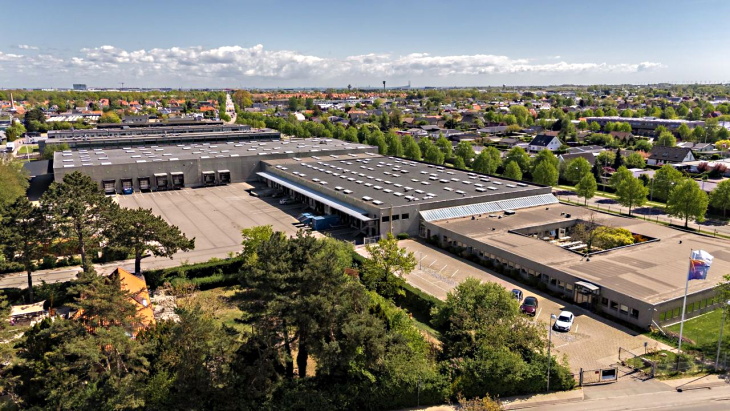
Copenhagen Atomics and the enricher Urenco have signed a memorandum of understanding to build a uranium deconversion facility at the Danish company’s fuel site in Copenhagen. The plant will convert uranium hexafluoride, the gaseous form in which enriched uranium leaves an enrichment plant, into uranium tetrafluoride, the solid form that dissolves into the fluoride salts used as fuel in molten-salt reactors. Copenhagen Atomics describes the broader site as “the first tonne-scale fuel-salt production facility in the world.”
Molten-salt reactors dissolve their fuel in a liquid salt rather than fabricating it into solid pellets and rods. This eliminates fuel-cladding failure as a concern, allows continuous removal of fission products, and lets the reactor run at atmospheric pressure. But it also means the fuel supply chain is different at every step, and no commercial source of reactor-grade fuel salt has existed. Chief technology officer Aslak Stubsgaard called the UF4 line “the final missing piece in our supply chain puzzle.”
The company will source enriched UF6, deconvert it, and synthesize high-purity fuel salts for its own reactors while also supplying other molten-salt developers and research institutions. That second role could be significant, since every company designing a salt-fueled reactor faces the same fuel-sourcing gap.
Copenhagen Atomics is developing a containerized 100-megawatt-thermal reactor moderated with unpressurized heavy water, designed to consume spent fuel from conventional reactors while breeding new fuel from thorium. The company targets a levelized cost of 20 euros per megawatt-hour, expects its first test reactor to operate at the Paul Scherrer Institute in Switzerland, and aims for commercial deployment in the early 2030s. Those targets are ambitious, but the fuel line is the kind of concrete investment that distinguishes a company building toward a date from one issuing roadmaps.
Source: World Nuclear News
Helsinki Begins Environmental Assessment for a Reactor Built to Heat the City

Helen Ydinvoima Oy, the nuclear subsidiary of Helsinki’s municipal utility, has launched an Environmental Impact Assessment for a small modular reactor plant to serve the Finnish capital. The project’s primary purpose is district heating, which supplies most of Helsinki’s buildings and has historically come from coal and gas. Helen is evaluating both heat-only and combined heat and power configurations, and the city has set a carbon-neutrality goal for 2040 that heating must meet.
The scale is substantial for an urban plant. A heat-only option would deliver 600 megawatts of thermal output from a 630-megawatt reactor. A cogeneration option would produce 700 megawatts of heat and 500 megawatts of electricity from a 1,400-megawatt reactor. Three candidate sites are under study: the Salmisaari and Vuosaari power plant areas and Norrberget. The Swedish engineering firm AFRY is conducting the assessment and technical studies.
The timeline is deliberate. The EIA programme stage is underway now, the assessment report is expected in 2028, and a site decision is targeted for the same year. Chief executive Pekka Tolonen described the motivation plainly: “We are investigating the possibilities of nuclear power for the needs of a growing and vibrant city,” citing both low emissions and energy security.
Heating is a large share of a Nordic city’s energy demand, and electrifying it with heat pumps alone places heavy winter load on the grid. A reactor that delivers heat directly at district-heating temperatures sidesteps that problem, and Finland, with its long record of public support for nuclear power, is a plausible place in Europe to try it first.
Source: World Nuclear News
Iron Powder Could Carry Summer Sunshine into Winter Through Converted Coal Plants

Batteries move energy across hours and pumped hydro across days, but nothing deployed today moves energy across seasons at the scale a northern country needs. A study by the Energy Economics Institute at the University of Cologne, commissioned by TU Darmstadt’s Metal Energy Hubs project and the DESERTEC Foundation, models iron powder as the carrier that could do so. The underlying research comes from the Clean Circles project, which TU Darmstadt and KIT have run since 2021.
The cycle is simple chemistry. Finely ground iron burns in air at high temperature, releasing heat without carbon dioxide and leaving iron oxide, which is rust. Green hydrogen produced from surplus summer solar and wind strips the oxygen back off, regenerating the metal and storing the energy chemically. The iron is not consumed; it cycles between charged and discharged states indefinitely, and it can be stored in piles at ambient conditions and moved by rail or ship like any bulk commodity. Burning it in winter in the boilers of former coal plants uses infrastructure that already exists.
The modeling finds that Germany could convert 37 gigawatts of coal capacity to iron combustion by 2045 and Europe 83 gigawatts. Summer storage would reach roughly 58 terawatt-hours, enough when discharged in winter to meet about a quarter of Germany’s district heating demand. The study projects annual system cost savings of about 15 billion euros between 2035 and 2045 compared with scenarios that exclude iron, rising to around 18 billion euros a year by 2040 to 2045.
Professor Christian Hasse of TU Darmstadt argued that “iron as an energy carrier can help combine decarbonization and competitiveness.” The idea has obvious uncertainties, chiefly the round-trip efficiency of making hydrogen, reducing oxide, and burning metal, and the economics depend on very cheap summer electricity. But the proposal reuses an existing asset base rather than scrapping it, and it converts the seasonal storage problem into a bulk-materials logistics problem, which is a kind industry knows how to solve.
Source: Tech Xplore
Batteries, Not Gas Plants, Are the Better Bet for Data Centers, Report Argues
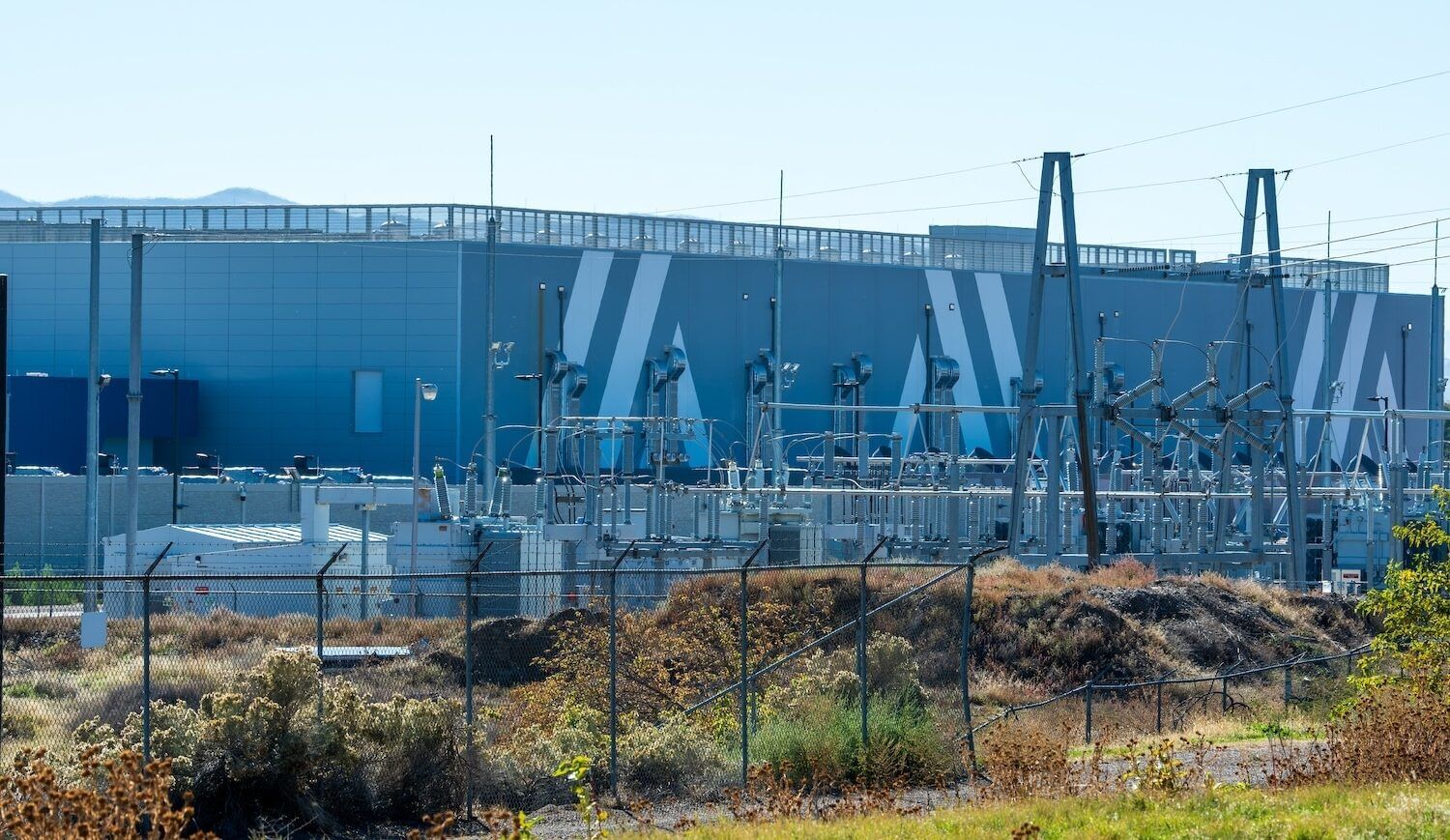
U.S. utilities are planning more than 60 gigawatts of new gas-fired plants to serve data centers, and developers have proposed some 90 gigawatts of behind-the-meter gas generators nationwide. A report from Georgetown and Duke universities, written by Ian Hitchcock of the Duke Initiative for Science and Society and Jackson Ewing of Duke’s Nicholas Institute, argues that much of this capacity would be better built as battery storage, and that the case rests on economics and risk rather than on climate policy.
The argument has four parts. Batteries are cheaper for meeting near-term capacity needs than new combined-cycle plants, whose turbine order books now stretch years out. They are modular, so a utility can deploy them in increments and stop if the data center demand it was built for fails to materialize. They can be installed in months rather than years. And because they can charge from existing generation during off-peak hours and discharge at peak, they defer or avoid the transmission and substation upgrades that a new gas plant would require.
The authors frame the stranded-asset risk explicitly. If a wave of speculative data center projects is cancelled, a utility that built gas plants to serve it has a long-lived asset and no customer, and ratepayers absorb the cost. “Batteries can act as a hedge against that risk,” the report says. The deployment trend supports the view: BloombergNEF now forecasts U.S. energy storage surpassing 11,000 gigawatt-hours by 2036, a 30 percent increase on its prior forecast.
The report concedes the obvious counterargument. Gas delivers round-the-clock power in a single package, and lithium-ion batteries cannot run a data center through a multi-day lull on their own. The claim is narrower: batteries can meet a substantial share of data center demand, and for the peaking and reliability roles that justify most of the proposed gas capacity, they do so faster and with less regret if the forecast is wrong.
Source: Canary Media
A Solid Electrolyte That Peels Off and Sticks On Like a Sticker

Solid-state batteries replace the flammable liquid electrolyte in lithium-ion cells with a solid that conducts lithium ions, promising higher energy density and better safety. Oxide electrolytes of the garnet family are among the most stable candidates, but they are ceramics. Making them thin enough to be competitive, uniform enough to avoid short circuits, and large enough for a real cell has been a manufacturing problem rather than a chemistry one, and most demonstrations have been coin-sized.
A team at the Korea Research Institute of Chemical Technology, led by Yongku Kang and Myung-Soo Park with Seul Gi Chu as first author, reports a transfer-printing method that treats the electrolyte like a decal. A slurry of the garnet oxide LLZTO is coated onto a flexible PET-PDMS substrate and dried. The dried film is then pressure-laminated onto the electrode with a roller and released from the carrier, transferring intact. The researchers used Hansen solubility parameters, a framework for predicting how materials interact, to choose combinations that coat uniformly and detach cleanly.
The resulting layers are 15 micrometers thick on average with about one micrometer of variation, over an area of 6 by 20 centimeters, or 120 square centimeters. Ionic conductivity measured 2.83 × 10⁻⁴ siemens per centimeter at 25°C. Cells retained 83.6 percent of capacity after 100 cycles and held a stable voltage at 150°C for two and a half hours, a temperature at which a liquid-electrolyte cell would be in serious trouble. The work was published in Advanced Functional Materials.
A hundred cycles is far from a commercial battery, and the conductivity is lower than the best sulfide electrolytes. What the result demonstrates is a route to defect-free, thin, large-area ceramic electrolyte films that is compatible with roll-to-roll processing. That is the step solid-state developers have struggled to show, and it is the one that determines whether the technology can be made on a production line rather than in a glovebox.
Source: Tech Xplore