Longevity Weekly Review 2026-11-18

Week In Review
The week’s most consequential result was also its most inconvenient. A team at the Gladstone Institutes that includes Shinya Yamanaka put three human cell types through partial reprogramming and found that Partial Reprogramming’s Outcome Depends on Cell Type in ways that break the field’s working assumption. Fibroblasts got epigenetically younger and functionally worse. Endothelial cells got younger and better. T cells mostly died. For a decade the epigenetic clock has served as rejuvenation’s scoreboard, and this preprint argues the scoreboard and the game can come apart. That argument lands in the same week as A Senolytic Vaccine That Also Repairs the Cells Doing the Clearing, which takes the opposite methodological bet: never mind reading a cell’s age, just destroy the cells that are measurably broken.
Adipose tissue turned out to be the week’s quiet center of gravity. Three separate groups arrived at fat from three directions. One showed that Fat Cells Secrete a Signal That Ages Blood Vessels, tracing a fat-derived hormone through damaged mitochondria to senescent arteries. The senolytic vaccine’s target antigen sits on senescent fat cells specifically, and clearing them improved metabolism body-wide. And a City of Hope group reported that Immune and Nerve Signals Decide Which Fat Cells Burn, locating age-related cold intolerance in a control circuit rather than in the fat itself. Fat has long been treated as a passive depot that happens to inflame. These three papers treat it as an endocrine organ that sets the aging pace of tissues far from itself.
A second thread ran through NAD+, the cofactor whose decline is among the most cited mechanisms in geroscience and among the least successfully drugged. Rutgers researchers found that A Gut Bacterial Molecule Feeds the Body’s NAD+ Supply, identifying a microbial metabolite that converts back into NAD+ where human-made analogues do not. Independently, Blocking One Enzyme in Late Middle Age Extended Mouse Lifespan by protecting the enzyme that builds NAD+ from being cleaved apart. One approach supplies more raw material; the other stops the factory being dismantled. Neither is a supplement, and both suggest the NAD+ story is about regulated machinery rather than a draining tank.
What unites the rest is a shift from slowing decline to restarting capacity. An mRNA therapy got Adult Heart Muscle Dividing Again by restoring a missing piece of transcriptional hardware rather than adding a growth signal. A designed peptide freed a longevity protein from a brake, showing that Interfering With One Protein Interaction Delays Senescence. Killing a specific population of brain neurons made old mice Move Like Younger Ones Again, implying that some of what looks like frailty is active suppression. And in humans, a small trial found that Nitroglycerin and Vibration During Sleep Shifted Brain Clearance Markers, using two interventions that cost almost nothing. Nearly every animal result this week started treatment in already-old animals. That is the practical thing to notice: the window for intervention keeps looking later than the field used to assume.
Items
Partial Reprogramming’s Outcome Depends on Cell Type
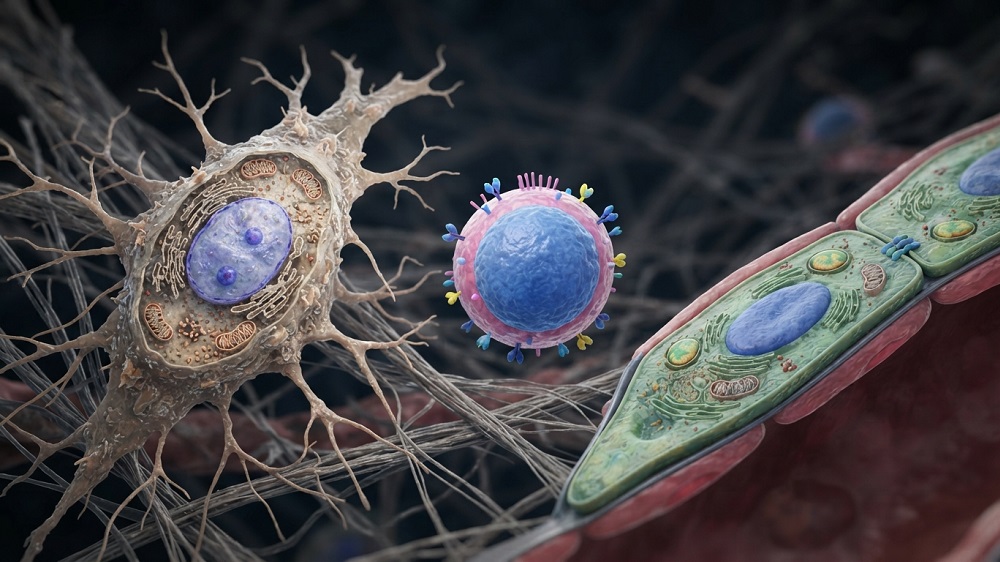
Partial reprogramming is the most heavily funded idea in rejuvenation biology. Expose an aged cell briefly to the four Yamanaka factors, stop before it loses its identity, and it emerges with a younger epigenetic profile. Billions of dollars of company valuations rest on the premise that this makes cells functionally younger too. A preprint from the Gladstone Institutes, with Shinya Yamanaka among the authors, tested that premise across three human cell types at once, and the answer was not uniform.
Fibroblasts behaved the way the field expects on paper. Their epigenetic age fell progressively as reprogramming went deeper, and their identity markers recovered afterward. But according to the Lifespan.io report, those cells carried lasting growth deficits that persisted twenty weeks after treatment ended. The clock said younger. The cells performed worse, and kept performing worse for months.
T cells fared worse still. Shallow reprogramming states produced only limited epigenetic age reduction, and one group of treated cells failed to recover at all, disappearing by day eleven. A different T cell group did better than untreated controls, expanding more readily and showing increased immune activity. The same protocol, applied to the same cell lineage, either killed the cells or improved them depending on the state they had been pushed into.
Endothelial cells, which line blood vessels, were the clean success. They combined reduced epigenetic age with improved function, and recovered quickly from both shallow and intermediate reprogramming. The authors’ summary is that younger epigenetic ages and better function do not always go together, and the gene expression differences between cell types were substantial rather than incidental.
The implication is uncomfortable but useful. A whole-body reprogramming therapy delivers one protocol to hundreds of cell types, and this work suggests the same dose could rejuvenate blood vessels while leaving connective tissue impaired and destroying part of the immune repertoire. It also raises the harder question of what rejuvenation should be measured as, once the most convenient biomarker has been shown to diverge from the thing anyone actually wants.
Source: Lifespan.io
A Senolytic Vaccine That Also Repairs the Cells Doing the Clearing
Senescent cells accumulate with age partly because they stop dividing and partly because the immune system stops removing them. Most senolytic strategies address only the first half of that problem, using drugs that poison senescent cells directly and must be redosed indefinitely. A vaccine approach addresses the second half, training the immune system to do the clearing itself. The obstacle has always been that the aging immune system is itself degraded, which makes vaccinating it a strange proposition.
Research published in Advanced Science this week attacks both halves with one construct. The vaccine targets Gpnmb, a protein expressed on senescent fat cells, and raises CD8+ cytotoxic T cells that hunt Gpnmb-positive adipocytes throughout the body. That much follows established senolytic vaccine logic. The novelty is the delivery scaffold, built from a cationic spider silk protein variant called CK5, which local dendritic cells take up directly.
Dendritic cells are the immune system’s antigen presenters, and they become senescent with age like everything else, which blunts their ability to mount the response a vaccine depends on. According to the paper’s description, intracellular uptake of the CK5 scaffold reduces senescence-associated signaling in those dendritic cells and restores their antigen-presenting competence. The vaccine repairs the machinery it needs in order to work.
The two mechanisms operate in different places, which is what makes the design clever rather than merely combined. Locally, at the injection site, the scaffold rejuvenates the antigen-presenting cells. Systemically, the T cells those cells activate clear senescent fat cells elsewhere in the body. Across multiple aging mouse models, the authors report targeted clearance of Gpnmb-positive senescent adipocytes, substantial improvement in metabolic dysfunction, and extended lifespan.
Specific lifespan figures were not included in the available summary, which is the main reason to hold the result loosely for now. The approach is notable regardless, because it suggests senolytic vaccines need not accept the aged immune system as a fixed constraint. If the presenting cells can be brought back into working order as part of the same intervention, the ceiling on immune-mediated senolysis in old organisms may be higher than assumed.
Source: Fight Aging!
Fat Cells Secrete a Signal That Ages Blood Vessels
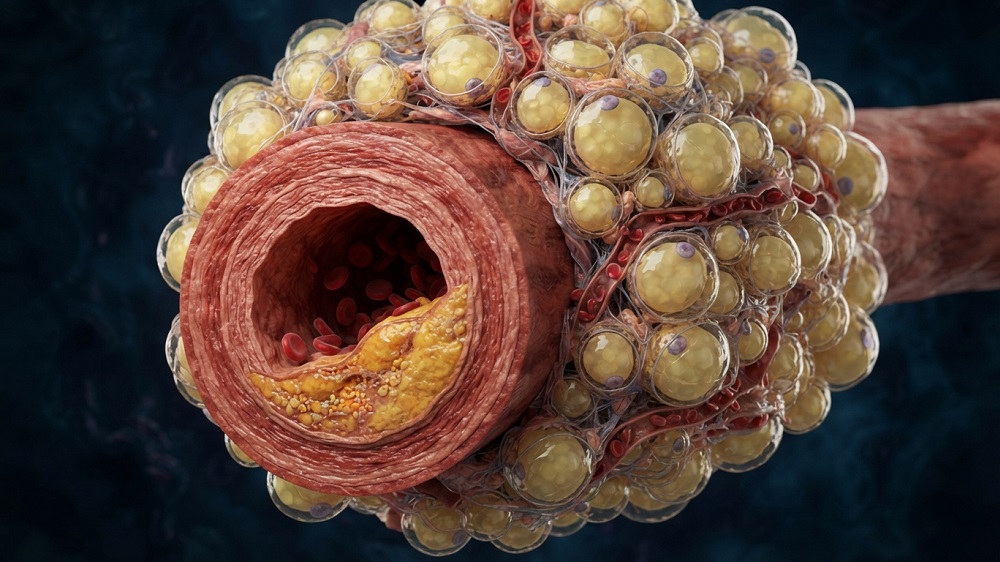
Senescence is usually described as something that happens to a cell and then spreads through inflammation to its neighbors. Work published in Aging Cell describes something more direct and more troubling: a hormone secreted by fat tissue that travels through the bloodstream and induces senescence in blood vessel cells. The molecule is asprosin, previously studied as a metabolic regulator, and its levels rise with age in both human endothelial cells and mice.
The mechanism the researchers traced runs through mitochondria. Asprosin damages mitochondrial membranes, causing fragmentation and leakage of mitochondrial DNA out into the cell’s interior. The cell’s innate immune sensors interpret loose DNA in the cytosol as a sign of infection and activate the STING pathway, which is one of the main switches that drives a cell into senescence. A metabolic hormone, in other words, triggers an antiviral alarm that ends in cellular aging.
Several lines of evidence point the same way. Injecting asprosin into mice produced senescence and inflammatory markers comparable to those from D-galactose, a standard chemical used to induce accelerated aging in the laboratory. Both treatments thickened blood vessel walls and raised systolic blood pressure. Mice engineered to lack asprosin entirely showed reduced inflammatory markers and fewer senescence-associated vascular changes than controls.
Two interventions blocked the effect, and each confirms a different part of the mechanism. An antibody against asprosin, given alongside D-galactose, reduced senescence biomarkers, inflammatory cytokines, and vascular changes compared with D-galactose alone, which establishes that the hormone is a necessary link rather than an incidental marker. A mitochondrial antioxidant called mitoTEMPO also mitigated asprosin’s effects, consistent with mitochondrial damage sitting in the middle of the chain.
An antibody against a circulating hormone is a familiar and well-tolerated drug class, which makes this a more tractable target than most senescence mechanisms. It also reframes what fat tissue does during aging. Visceral fat has long been understood to drive inflammation, but a specific secreted protein with a specific molecular route into vascular senescence is a different kind of finding, and a more actionable one.
Source: Lifespan.io
Blocking One Enzyme in Late Middle Age Extended Mouse Lifespan
Most interventions that extend mouse lifespan are started early, which limits what they say about treating people who are already old. A study in iScience began treatment at eighteen months, roughly equivalent to a human in their fifties, and still moved the survival curve. Median survival in the treated mice rose from twenty-four to twenty-eight months, a gain of about fifteen percent from a late start.
The target is asparagine endopeptidase, a protease that cuts other proteins and becomes overactive with age. The compound used was an inhibitor designated 11a. The proposed mechanism is less about the enzyme itself than about one of its victims: NAMPT, the rate-limiting enzyme in the pathway that regenerates NAD+. Asparagine endopeptidase cleaves NAMPT, and inhibiting the protease left more intact NAMPT in place, with elevated SIRT1 and PGC-1α downstream.
That makes this a different approach to the NAD+ problem than the supplement route. Rather than flooding the system with precursors and hoping enough gets converted, it protects the enzyme that does the converting. The treated mice showed improved mitochondrial function and reduced senescence markers, both consistent with better NAD+ availability in tissue.
The functional results extended beyond survival and applied to both sexes. According to the report, the inhibitor alleviated multiple frailty indices in male and female mice and was associated with attenuated age-related decline in physical and cognitive function. Lifespan studies that show benefit in only one sex are common enough that results holding in both deserve note.
The authors themselves flag the main limitation, describing the mechanistic findings as largely correlative and calling for causal studies. The NAD+ chain of reasoning is plausible and well supported by the biomarkers, but the lifespan extension is not yet proven to run through it. What stands on its own is the survival result in animals that were already well into middle age when dosing began.
Source: Fight Aging!
Immune and Nerve Signals Decide Which Fat Cells Burn
Older people feel the cold more, and the usual explanations involve thinner skin, lower muscle mass, and reduced circulation. A study in Nature from Qiong “Annabel” Wang’s group at City of Hope’s Arthur Riggs Diabetes & Metabolism Research Institute points somewhere else entirely, to thermogenic fat and the control circuit that tells it when to produce heat.
Thermogenic fat differs from ordinary white fat in that it burns calories to generate warmth rather than storing them. The key finding is that this tissue is not uniform. Some of its cells carry high levels of UCP1, the protein that uncouples mitochondrial respiration to release heat, while neighboring cells carry much less. The tissue holds a mix of active and inactive cells, and signals from the nervous and immune systems recruit the quiet ones when the body needs more heat.
In older mice that recruitment becomes sluggish. Their thermogenic fat retained the ability to increase heat production, but took longer to do it, and the animals struggled to hold their body temperature through cold exposure. The deficit was in the speed and reach of the switching process rather than in the fat’s underlying capacity, which is a meaningfully different problem from tissue that has simply worn out.
The researchers then blocked part of the pathway responsible for the slowdown using mifepristone, and the treated older animals produced more heat and burned more energy. The authors are explicit that this is not a proposed therapy, since mifepristone acts on many systems throughout the body. The point of the experiment is the demonstration that the age-related decline is reversible at all.
That matters past the question of cold tolerance. Thermogenic fat consumes energy for no purpose other than making heat, which has made it a long-standing target in metabolic disease, and attempts to activate it in older people have mostly disappointed. If the tissue in older animals is functional but poorly recruited, then the useful intervention is on the recruiting signal rather than on the fat, and the right target is a control circuit involving immune and neural inputs.
Source: EurekAlert, City of Hope
A Gut Bacterial Molecule Feeds the Body’s NAD+ Supply

NAD+ decline is one of the most frequently cited drivers of aging and one of the most frustrating to address, because the precursor molecules humans produce and consume convert into NAD+ inefficiently. Rutgers researchers reporting in Science Advances identified a molecule that does better, and it comes from gut bacteria rather than from human metabolism. The compound is amide-N-methylnicotinamide, abbreviated N-MNA.
The conversion efficiency is the headline. In human colon cells, N-MNA supplied roughly twenty-two percent of total NAD+ within twenty-four hours. Humans make a structurally similar molecule, but it does not convert back into NAD+, and the microbial version uniquely does. A bacterial enzymatic step, absent from human biochemistry, turns a dead-end metabolite into usable raw material.
The functional results came from damaged intestines, where NAD+ demand is high. In mice with inflamed colons, untreated animals lost twenty percent of body weight and died, while animals injected with N-MNA lost only five percent and recovered. In fruit flies with damaged guts, N-MNA raised seven-day survival from forty-three percent to seventy-eight percent. The effects held across two species separated by a very large evolutionary distance.
The team, including Nan Gao, Xiaoyang Su, Ching-On Wong, and first author Jiangmeng Han, also looked at humans, analyzing stool samples from fifty-four patients with inflammatory bowel disease and twenty healthy volunteers. That clinical comparison is what ties the molecule to human disease rather than leaving it as a model-organism curiosity, and it points toward inflammatory bowel disease as the first indication.
The study reported acute survival benefit during inflammatory challenge, not lifespan extension in mice, and that distinction is worth keeping clear. What makes it interesting for aging biology anyway is the source. If the gut microbiome is a supplier of NAD+ raw material through a route human cells cannot replicate, then some portion of age-related NAD+ decline may reflect changes in the microbiome rather than in the host, which suggests a different class of intervention than swallowing precursors.
Source: Rutgers University
mRNA Therapy Gets Adult Heart Muscle Dividing Again
Adult mammalian heart muscle does not regenerate. Cardiomyocytes largely stop dividing after birth, which is why a heart attack leaves permanent scar rather than replacement tissue, and why heart failure is progressive. Decades of attempts to restart that division have run into a wall: Myc, the master transcription factor that drives proliferation in most cell types, simply fails to work in adult cardiomyocytes.
A study reported this week explains why, and the answer is a missing component rather than active resistance. Myc-driven transcription requires P-TEFb, a protein complex containing CDK9 and cyclin T1, and adult cardiomyocytes do not have enough of it. Myc arrives at the genes it should switch on and cannot complete the job for lack of the machinery that elongates transcription. Supplying Myc alone was never going to work.
Delivering both Myc and cyclin T1 together restored efficient Myc-driven transcription, and with it the ability to divide. The researchers used messenger RNA to induce both proteins transiently, and report that the combination drove cardiomyocyte proliferation in both juvenile and adult mice in living animals, producing myocardial repair and functional recovery after an induced heart attack.
The transient delivery is important for reasons beyond convenience. Myc is one of the most studied oncogenes in biology, and sustained overexpression in a tissue is exactly the sort of thing that produces tumors. An mRNA approach gives a pulse of protein that decays rather than a permanent genetic change, which is the only plausible way to use this particular pair of proteins in a patient.
The authors describe the work as proof of concept and note that clinical translation would require a better delivery system than the one used here, which is the standard and real constraint on cardiac mRNA therapy. The conceptual advance stands apart from the delivery problem. The reason adult hearts cannot regenerate may be less a deep developmental lock than a specific missing piece of transcriptional hardware, and missing pieces can be supplied.
Source: Fight Aging!
Interfering With One Protein Interaction Delays Senescence
SIRT1 has been studied for aging for twenty-five years, through the resveratrol enthusiasm and the disappointments that followed. Most of that work tried to make the protein more active with small molecules. A study in Aging Cell takes a different route, asking not how to stimulate SIRT1 but what is holding it back, and the answer turns out to be another protein binding to it.
The brake is USP25, a deubiquitinase. The researchers found that it acts on SIRT1 at two specific lysine residues, K506 and K513, altering its ubiquitination and reducing its deacetylase activity. Mice deficient in USP25 showed mitigated age-related phenotypes and improved overall physiological function, which establishes the interaction as relevant to aging rather than merely detectable in a dish.
From there the team built a drug candidate rather than stopping at a knockout mouse. They designed a cell-penetrating peptide called pSirt1-4 that physically disrupts the USP25-SIRT1 interaction. In treated cells it increased SIRT1 deacetylase activity and attenuated the onset of senescence. The peptide works by occupying an interface, not by binding an enzyme’s active site.
That design choice is part of why the result is interesting. Protein-protein interfaces are generally considered difficult targets for conventional small-molecule drugs, which is one reason so much pharmacology concentrates on a narrow set of well-shaped binding pockets. Cell-penetrating peptides can cover surfaces that small molecules cannot, and this is a clean demonstration of the approach aimed at a senescence regulator.
The available summary does not include quantitative outcomes for the mouse experiments, so the magnitude of benefit remains unclear, and a peptide that works in cultured cells is a long way from a systemic therapy. Still, the strategy generalizes beyond this one target. If the limiting factor for a longevity-associated protein is a specific inhibitory partner, then displacing the partner may accomplish what decades of trying to stimulate the protein directly did not.
Source: Fight Aging!
Nitroglycerin and Vibration During Sleep Shift Brain Clearance Markers
The glymphatic system clears metabolic waste from the brain, operates mainly during sleep, and declines with age. It is also central to current thinking about why protein aggregates accumulate in neurodegenerative disease. Almost all of the supporting work has been done in mice, because measuring brain fluid flow in a living human is difficult. A trial reported in Nature Communications tested whether two simple interventions could move the system in people.
The study enrolled twenty-nine healthy adults and combined two treatments, each chosen to act on a different part of the mechanism. One was sublingual nitric oxide, delivered as nitroglycerin, which dilates blood vessels and increases nitric oxide signaling. The other was whole-body vibration during sleep, tuned to engage Piezo1, a mechanically activated ion channel. The combination was registered as EudraCT 2021-000625-27.
The researchers tracked results with multimodal neuroimaging and blood biomarkers, and found correlated changes in brain fluid dynamics alongside raised blood levels of soluble brain proteins including amyloid beta 40, amyloid beta 42, and GFAP. The logic of that readout is that proteins cleared out of the brain should appear in the blood, so a rise in blood levels is an indirect signal that clearance increased rather than a sign of harm.
Two features of the results suggest the effect is real rather than noise. The magnitude increased with participant age, which is what would be expected if the intervention is correcting an age-related deficit. It also scaled with the degree of blood pressure reduction each participant experienced, giving a dose-response relationship tied to the vasodilatory mechanism. The treatments were well tolerated.
The caveats are substantial. Twenty-nine healthy adults is a small trial, the endpoints are biomarkers rather than cognitive outcomes, and nothing here shows that enhanced clearance prevents or slows disease. What the trial does establish is that glymphatic function in humans can be modulated measurably, using a generic vasodilator and a vibrating bed. Compared with the cost and complexity of most interventions aimed at neurodegeneration, that is an unusually accessible starting point.
Source: Fight Aging!
Serotonin Signals Explain Why Old Mice Move Less
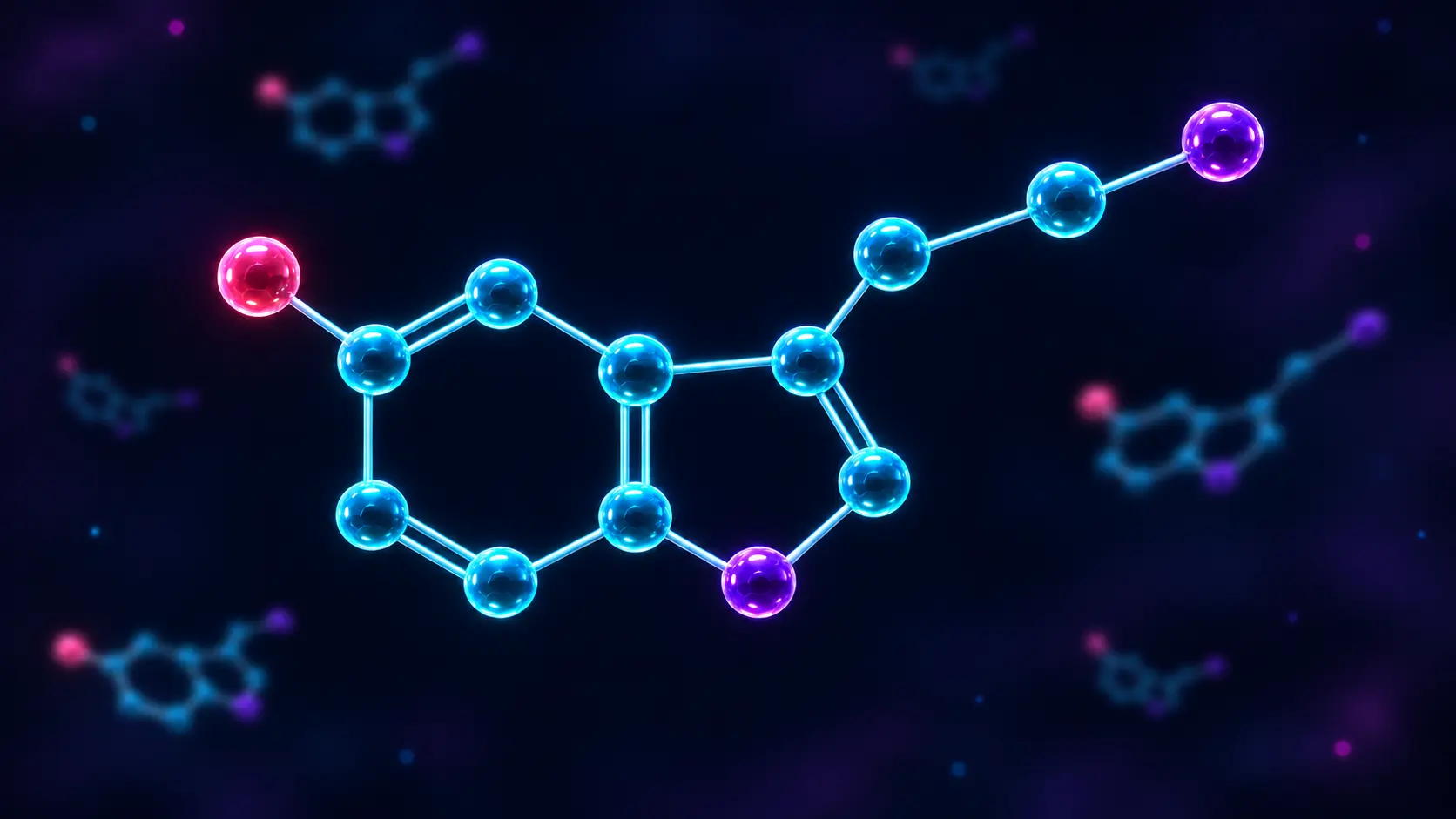
Declining physical activity with age is normally read as a consequence: muscles weaken, joints hurt, energy falls, so movement drops and body composition worsens. Work from the University of Aberdeen published in Metabolism inverts part of that story. In aging mice, a specific brain circuit actively suppresses movement, and shutting it off made old animals move more.
The circuit runs through serotonin. Neurons in the dorsal raphe release serotonin that activates inhibitory GABA-releasing neurons in the ventral tegmental area, which in turn suppress the dopamine neurons that drive motivation and movement. The researchers found that serotonin neurons in older animals fired more during active periods than those in younger animals. More serotonin signaling meant more dopamine suppression.
Two experiments tested the direction of causation. Treating mice with D-fenfluramine, which increases serotonin signaling, reduced both movement distance and speed during active phases, reproducing the aged phenotype in principle. Knocking out the 5-HT2C serotonin receptor in mice aged fourteen to twenty months did the opposite, increasing movement distance and speed.
The most striking result came from removing the neurons themselves. Using a virally delivered caspase-3 to selectively eliminate serotonin-producing neurons in mice aged fourteen to twenty months, the researchers saw increased movement, greater distance and speed, and less time inactive. After eight weeks, the treated mice had lost body fat and developed stronger grip strength. Changing a brain signal produced changes in body composition and physical strength.
This is early work in mice, the neuron ablation is a research tool rather than anything resembling a therapy, and serotonin signaling is woven through mood, appetite, and much else, so blocking it carries obvious risks. The conceptual point survives those caveats. If part of age-related inactivity is an imposed brake rather than an inevitable consequence of worn-out tissue, then some of the frailty that follows from not moving may be addressable upstream, in the brain, rather than in the muscles.
Source: Lifespan.io