Resource Abundance Weekly Review 2026-10-29

Week In Review
The week’s headline is a forecast that got less alarming. BloombergNEF’s new Transition Metals Outlook, summarised by HumanProgress in Copper Deficit Looms as Metal Shortages Ease, now finds that nine of the ten materials it tracks have enough supply capacity to carry electrification through 2050, up from seven a year ago. Lithium, nickel, cobalt and graphite, each the subject of shortage warnings not long ago, have dropped off the worry list as mines were developed and reserves replaced. The one exception is copper, and the World Bank’s upgraded copper price outlook reported by The Northern Miner shows the price mechanism already responding: a forecast of $13,000 a tonne for 2027 is the signal that pulls capital toward new mines, deeper ore bodies and recovery from material that was previously thrown away.
That signal is visible in the other items. Nova Minerals won final Alaska approvals for a Pentagon-funded antimony operation, the first new Western supply of a metal that China’s export controls made scarce. On the recovery side, Rice University chemists showed that flash heating can pull 90 percent of the antimony out of flame-retardant plastic in milliseconds, turning an e-waste nuisance into an ore, while a second Rice group built a porous framework that pulls rare earths out of industrial wastewater even when iron outnumbers them a hundred to one. At the University of Texas, cell-inspired channels sort lithium from brine with two to five times the selectivity of recent designs, a step toward tapping brines that evaporation ponds cannot economically touch.
Substitution and process reinvention round out the picture. KAIST’s ruthenium catalyst matches platinum in hydrogen electrolysers with 75 percent less precious metal, and the US Department of Energy’s new battery strategy puts a national-lab consortium behind battery chemistries built from abundant domestic elements. In Norway, Hydro, SINTEF and NTNU have for the first time produced aluminium with the HalZero process, a closed-loop chloride route that replaces the 140-year-old Hall-Héroult cell without, its developers say, costing more energy or capital. Each of these makes a resource effectively larger: fewer grams of platinum-group metal per electrolyser, fewer scarce elements per battery, and a primary metal made without a carbon anode.
The long view comes from HumanProgress’s reminder that the preindustrial past was a horror story of famine, half of children dying and lifespans in the thirties. The gap between that world and ours was closed by exactly the kind of ingenuity on display this week: new processes that make metals, materials and energy cheaper and more plentiful than the previous generation of forecasters believed possible. The BloombergNEF revision is one more data point that the forecasters keep being surprised in the same direction.
Items
BloombergNEF Now Sees Adequate Supply for Nine of Ten Transition Metals

A year ago BloombergNEF’s annual Transition Metals Outlook warned that three of the ten materials underpinning electrification faced long-run deficits. The 2026 edition, summarised this week by HumanProgress, has cut that to one. Nine of the ten materials covered, including lithium, nickel, cobalt and graphite, are now expected to have adequate supply capacity through 2050. The improvement is attributed to continued mine development and to producers replacing reserves faster than earlier models assumed.
The holdout is copper. BloombergNEF projects a supply deficit opening in 2028 and widening to 20 million tonnes a year by 2050, equivalent to 44 percent of projected demand. Closing that gap, the report estimates, would require about $332 billion of investment in new mines. The consequences of not closing it would be higher prices, manufacturers substituting other conductors where they can, and slower build-out of grids, electric vehicles and storage.
The pattern is worth noting for what it says about forecasting as much as about copper. Each of the metals that moved from deficit to surplus did so because the earlier warnings produced a response: exploration, new processing routes and, in the case of nickel and cobalt, chemistries that need less of them. Copper is now where lithium was a few years ago, with the price signal and the engineering effort only beginning to work. The items below on antimony recovery, rare earth extraction from wastewater and lithium-selective membranes are examples of the response that turns a deficit forecast into a surplus one.
Source: HumanProgress
The World Bank Lifts Its 2027 Copper Forecast to $13,000 a Tonne
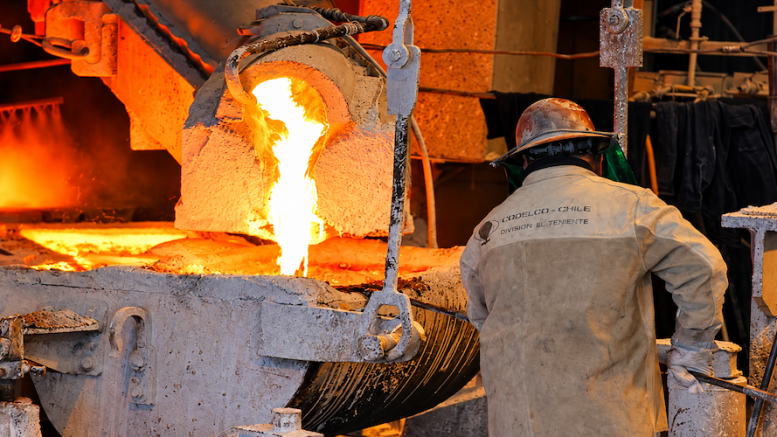
The World Bank’s latest commodity outlook, reported by The Northern Miner, raises its 2027 copper projection by 18 percent to $13,000 a tonne, roughly $5.90 a pound and only 1.5 percent below the $13,200 it expects copper to average in 2026. Tin and zinc also moved up sharply from the April forecast, by 22 percent to $45,000 a tonne and 13 percent to $3,100 a tonne respectively, while gold and silver are expected to ease from their 2026 highs. The bank expects its overall metals index to rise 25 percent in 2026 before slipping 3.3 percent in 2027, leaving it 16 percent above the 2021 peak.
The reasons for firm copper prices are structural. Mine development timelines run beyond a decade, refining capacity is concentrated in a handful of countries, Chilean ore grades are declining, Indonesian output has been disrupted by weather, and the Democratic Republic of Congo imposed an August ban on copper concentrate exports to push processing onshore. On the demand side, grid investment, data centres and electric vehicles are sustaining consumption even though global copper demand slipped slightly in the first half of the year.
Not every metal is tightening. Cobalt and lithium prices fell 25 percent and 13 percent in the third quarter, and nickel faces headwinds from lithium-iron-phosphate batteries that use none of it, a reminder that substitution works on demand as powerfully as new mines work on supply. A copper price near $13,000 is itself the fastest route to more copper: it makes low-grade deposits, tailings reprocessing and deeper orebodies pay, and it funds the exploration that BloombergNEF’s $332 billion figure is really a call for.
Source: The Northern Miner
Nova Minerals Clears the Last Hurdle for a Pentagon-Backed Alaska Antimony Mine

Nova Minerals has received final approvals from the Alaska Department of Natural Resources for its antimony programme at the Estelle project, allowing construction to begin with production expected in 2027. The three-year plan combines bulk sampling at the Styx and Stibium prospects, processing at the Whiskey Bravo site within Estelle, and refining at a pilot facility at Port MacKenzie in the Matanuska-Susitna Borough, on 17.3 hectares of industrial land permitted in 2025. Major mining and processing equipment has already been delivered.
The first phase is fully funded by a $43.4 million US Department of Defense award. The pilot refinery is engineered to produce antimony trisulfide and antimony metal at better than 99.7 percent purity, the military-grade specification used in primers, ammunition and flame retardants. Antimony is a small market that China dominated until it restricted exports, which is why a modest Alaskan operation attracted direct Pentagon money and why Nova’s shares rose 6.7 percent on the news to value the company at about $121.5 million.
Caveats apply. No formal antimony mineral resource estimate has yet been published for Estelle, and the operation starts as a pilot rather than a full-scale mine. But the point of the exercise is to establish a complete Western supply chain, from ore to refined product, for a metal where none existed. Together with the Rice University flash-heating process described below, which recovers antimony from discarded plastics, it shows the supply response to an export control taking shape within two years.
Source: The Northern Miner
Flash Heating Pulls 90 Percent of the Antimony Out of Flame-Retardant E-Waste

About 39 percent of the world’s antimony goes into flame-retardant plastics, the housings, circuit boards and connectors inside electronics, and nearly all of it is lost when those devices are discarded. A Rice University team led by James Tour, with graduate student Leo Haoxin Ye as first author, reports in Nature Chemical Engineering a method called isothermal-clamped flash Joule heating that recovers roughly 90 percent of that antimony from three representative waste streams: power-supply housings, printed circuit boards and electrical connectors.
The trick is speed. Conventional heating of brominated flame-retardant plastic produces a cocktail of toxic organic bromides. The Rice process passes the material through the critical 200 to 500 degree Celsius range in 9.4 milliseconds, far too briefly for those compounds to form. Instead, 83 percent of the bromine ends up as hydrogen bromide, an inorganic gas that is easily captured with sodium hydroxide as a stable salt. The antimony is left behind in a form that can be recovered, and the hazardous byproducts that make flame-retardant plastic so hard to recycle are largely avoided.
Tour notes that the world is on course to generate 82 million tonnes of flame-retardant plastic waste by 2030. Flash Joule heating has been scaled by Tour’s lab for other feedstocks, and the group describes this variant as faster, safer and more practical than furnace-based alternatives. Whether it is cheaper than mined antimony at today’s prices is not addressed, but antimony is exactly the kind of small, concentrated, export-controlled market where urban mining can be economic. The Alaskan mine above and this process are two halves of the same supply answer.
Source: TechXplore
Hydro Makes Its First Aluminium With a Closed-Loop Process That Replaces the Carbon Anode
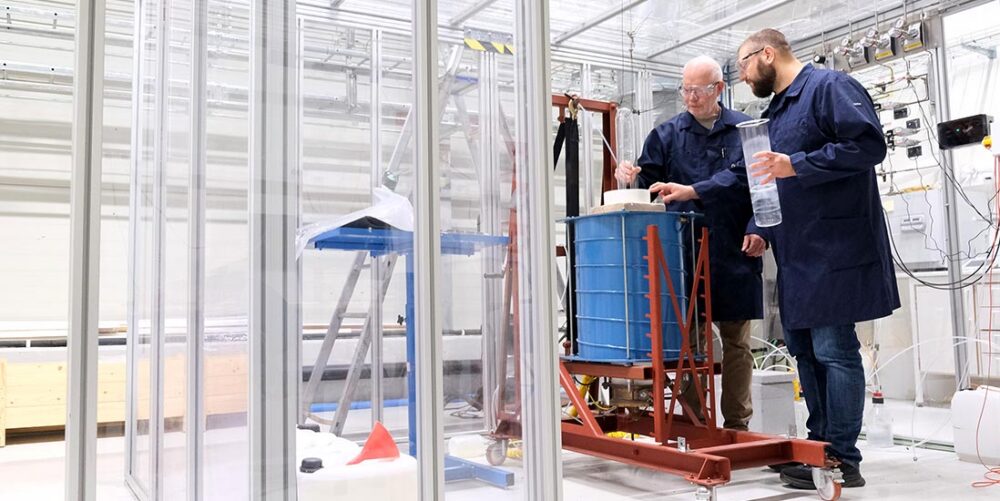
Aluminium has been made the same way since 1886: dissolve alumina in a molten salt and electrolyse it with carbon anodes that burn away, releasing about 1.5 kilograms of carbon dioxide for every kilogram of metal. On 19 October, Hydro produced aluminium for the first time with an alternative called HalZero at its Herøya research centre in Norway, with the prime minister in attendance. NTNU’s science news service, reporting on the milestone this week, describes a process developed jointly by Hydro, SINTEF and NTNU over several years.
HalZero takes a different chemical route. Alumina is first chlorinated to produce anhydrous aluminium chloride, and that salt is then electrolysed to yield aluminium metal and chlorine gas. The chlorine is fed back to chlorinate the next batch of alumina, and the carbon dioxide formed in the chlorination step is converted to carbon monoxide and recirculated. As SINTEF’s Egil Skybakmoen puts it, all the gases circulate in a loop, so there are no direct emissions. The anode is no longer consumed, removing both the emissions and the ongoing cost of carbon anode replacement.
The economic claim is the important one. Skybakmoen says an industrial-scale HalZero plant should need the same energy and capital as a conventional smelter, meaning the emissions benefit does not have to be paid for with a cost penalty. The project that produced the pilot ends this year, the partners have applied for renewed Research Council of Norway funding from April 2027, and the state agency Enova has granted 82 million kroner for the next phase. Industrial deployment is years away, but a drop-in replacement for the Hall-Héroult cell at parity cost would be the first fundamental change in how the world’s most-used non-ferrous metal is made in well over a century.
Source: Norwegian SciTech News
A Ruthenium Catalyst Matches Platinum With 75 Percent Less Precious Metal

Proton-exchange-membrane electrolysers, the fast-responding type suited to variable renewable power, depend on platinum at the hydrogen-evolving cathode. A team led by Jinwoo Lee at the Korea Advanced Institute of Science and Technology reports in Nature Communications a ruthenium catalyst that matches platinum’s performance while using 75 percent less precious metal. Ruthenium is both cheaper and more abundant than platinum, and the design extracts about four times platinum’s catalytic activity per unit of mass.
The structure is what the team calls atom-layer neighbours: clusters of three or four ruthenium atoms arranged in single-atom-thick layers on a tungsten carbide support. Keeping the atoms in such small groups lets them work cooperatively without clumping into larger particles that waste most of the metal in their interiors. Hydroxyl groups on the carbide surface also tune the local hydrogen-bond network to speed proton transfer. In testing, the catalyst reached a current density of 9.82 amperes per square centimetre at 2.0 volts and 80 degrees Celsius, and over 500 hours of continuous operation it lost about half as much performance as the platinum comparison.
The practical significance is in the supply chain rather than the laboratory. Platinum-group metals are a recurring constraint on how cheaply electrolysers can be built at scale, and the catalyst is a small fraction of total stack cost only as long as the metals stay available. Cutting the precious-metal loading by three quarters, and switching from platinum to ruthenium, reduces both the cost and the exposure. With collaborators at Konkuk University, the Korea Basic Science Institute and the Korea Research Institute of Chemical Technology, the work is at the stage where electrolyser makers can evaluate it for stack integration.
Source: TechXplore
Cell-Inspired Channels Sort Lithium From Brine With Several Times the Selectivity of Recent Designs

Much of the world’s lithium sits in salty brines where it is heavily outnumbered by sodium, potassium, magnesium and calcium. Separating it today means months in evaporation ponds or chemical-intensive processing, and many brines are too dilute or too contaminated to be worth either. Researchers at the University of Texas at Austin, led by Manish Kumar, report in the Journal of the American Chemical Society artificial membrane channels, modelled on the ion channels in living cells, that let lithium through while blocking the competing ions.
The channels achieve selectivity for lithium two to five times higher than other recently developed lithium transporters, according to the team. The discrimination comes from two mechanisms working together: chemical interactions at the channel entrance that favour lithium, and the physical confinement of the channel interior that excludes larger hydrated ions. Research scientist Harekrushna Behera describes the result as a toolkit, a set of design rules that can be tuned for different brines, rather than a single material.
The group is now embedding the channels into larger lipid- and polymer-based membranes, and sees applications in brine mining, battery recycling and as separators inside batteries themselves. No cost or throughput figures are given, and the team is clear that testing with real brines at industrial scale remains to be done. The direction, though, is one the industry is already moving in: direct extraction that bypasses evaporation ponds would bring lower-grade, higher-impurity brines into the economic resource base, which is how lithium went from projected deficit to projected surplus in BloombergNEF’s accounting.
Source: TechXplore
A Modified Porous Framework Pulls Rare Earths From Wastewater Even When Iron Outnumbers Them 100 to 1

Rare earths occur at low concentrations in many industrial wastewaters, mine drainage and process streams, almost always swamped by iron and other common metals. Capturing them from such dilute, dirty solutions has been the obstacle to treating waste as a resource. A Rice University team led by Qilin Li, with Yiming Liu as first author, reports in ACS Applied Materials and Interfaces a chemically modified metal-organic framework that does this with capacity and selectivity well beyond prior results.
The researchers took MIL-101, a water-stable porous framework, and grafted on phosphonomethyliminodiacetic acid to create binding sites tailored to rare earth ions. The modified material took up as much as 160 milligrams of neodymium, 175 milligrams of gadolinium and 195 milligrams of dysprosium per gram, at least double the earlier capacity of the same framework for neodymium and gadolinium under comparable conditions. The selectivity result is the more striking: with iron present at 100 times the rare earth concentration, rare earth uptake fell by only about 0.3 percent. Most of the captured metals could then be released with dilute hydrochloric acid, allowing the framework to be reused.
The paper does not give cost figures or a scale-up plan, and the authors note that durability and retention of the grafted ligands need further work. But neodymium and dysprosium are the magnet metals at the centre of the rare earth supply problem, and a sorbent that ignores iron is what makes wastewater, tailings leachate and acid mine drainage viable feedstocks. Solvent extraction, the incumbent process, is what makes rare earth separation expensive and polluting. A solid sorbent with this selectivity is a credible route to a cheaper one.
Source: TechXplore
The Energy Department Backs a National-Lab Accelerator for Batteries Built From Abundant Elements
The US Department of Energy’s Office of Critical Minerals and Energy Innovation released a national battery strategy on 28 October alongside a new Battery Manufacturing Accelerator, known as BattMan, led by Pacific Northwest National Laboratory with other DOE laboratories, industry and academic partners. The strategy projects US battery demand rising from 179 gigawatt-hours in 2025 to 707 gigawatt-hours in 2035, nearly a fourfold increase, and sets targets of a fully integrated domestic supply chain by 2030 and leadership in battery technology and manufacturing by 2035.
The accelerator’s remit is practical rather than aspirational: lower manufacturing costs, shorten the path from laboratory chemistry to production line, and apply advanced manufacturing and what the department calls super intelligence to spot production problems earlier. The materials angle is explicit. BattMan is to advance battery chemistries made from more abundant domestic elements, which the department says will cut production costs and shorten commercialisation timelines while reducing dependence on imported critical minerals.
That emphasis matters because substitution has already reshaped the demand side of the metals picture, as both the World Bank and BloombergNEF note this week in the retreat of nickel and cobalt from their shortage lists as lithium-iron-phosphate cells spread. Sodium-ion, iron- and manganese-rich chemistries and other abundant-element designs would extend the same effect to lithium and graphite. The strategy lists six pillars, from upstream investment and grid deployment to international coordination and workforce, but gives no quantified cost-reduction targets, so the test will be what the consortium ships rather than what the document promises.
Source: US Department of Energy
The Preindustrial Past Was a Horror Story, and Growth Is What Ended It
Chelsea Follett of HumanProgress takes aim at the persistent nostalgia for a simpler agrarian past, and at the related claim that measures like GDP do not capture anything that matters. Her method is to describe, in specifics, what life was like before industrial technology. Around half of all children died before reaching adulthood. Average lifespans were in the thirties. Barely one person in ten could read. Most of the population farmed for subsistence, labouring from sunup to sundown, and ate thin gruel and coarse bread that was often stale or contaminated. Food scarcity regularly triggered riots.
The resource picture was one of real limits. Europe’s forests had been largely cut down by early modern times, because wood was fuel, building material and industrial feedstock all at once. Cities dumped waste into the rivers they drank from, which is why weak alcohol was the everyday drink for all ages. Medicine meant surgery without anaesthesia, physicians who did not wash their hands and bloodletting as standard care. These were not the hardships of an unlucky few but the ordinary condition of nearly everyone.
Follett’s argument is that industrial growth did not merely add comforts to this world but dissolved its constraints, and that the gains compound: once survival stopped consuming all available effort, societies could afford to question accepted cruelties such as child labour and to fund the medicine, sanitation and schooling that pushed child mortality toward zero. The week’s other items are small instalments of the same process. Deforestation was the resource crisis of the preindustrial world, solved by coal, steel and later by substitution rather than by using less wood. The copper, antimony and rare earth constraints of 2026 are the same kind of problem, and the record suggests the same kind of answer.
Source: HumanProgress