Robotics Weekly Review 2026-11-01

Week In Review
The strongest thread this week is robots earning their keep in places that are awkward, dangerous, or simply enormous. ANYbotics started shipping a quadruped certified to walk through atmospheres where a single spark is forbidden, and its 50 existing customers already run more than 120,000 autonomous inspections a month. Embotech and BMW passed one million vehicles driven across factory lots with no one at the wheel, with the second half-million arriving in less than half the time of the first. Xpanner’s autonomous pile driver takes the same logic to the open field, letting one remote operator supervise the most repetitive job on a solar construction site. And Agility’s Digit, having moved more than 100,000 totes at a single GXO warehouse, is being booked into two more. The humanoid news this week is notable precisely because it is unglamorous: a customer that has run the robot for two years wants more of them.
The research items point at the capability gaps that still separate a robot from a skilled pair of hands or a cooperative coworker. A Chinese team’s artificial skin reads more than ten thousand touch points fast enough to pick up pencil lead and flinch from a needle, by borrowing the spinal cord’s trick of compressing sensation before the brain sees it. Researchers in Texas and Pittsburgh taught a humanoid to carry a long object with a human partner through doorways, a task where the robot cannot plan alone because half the plan belongs to someone else. MIT’s soft enteroscope shows the softer end of the field reaching a place that rigid instruments cannot: six and a half feet into the small intestine, with a camera, a drug sprayer, and a biopsy clip along for the ride.
The industry’s economics and politics took shape around the hardware. The Association for Advancing Automation reported that North American robot orders rose by a quarter in the third quarter, with growth spread across semiconductors, pharmaceuticals, metals, and automotive suppliers rather than concentrated in one sector. The same week, the White House declared that imported robots and industrial machinery pose a national security concern, opening six months of negotiations that could reshape where those robots are built. Against that backdrop, Deepak Jayaraj’s close reading of Symbotic’s dependence on Walmart is a useful corrective to the funding-round framing that dominates coverage: an anchor customer can carry a company to a $22.5 billion backlog, and can also dictate its contracts, its hiring, and its exposure. Taken together, the week describes a field whose demand is real and broadening, whose policy environment is tightening, and whose hardest remaining problems are tactile and social rather than mechanical.
Items
ANYbotics Ships a Four-Legged Inspector Certified for Explosive Atmospheres
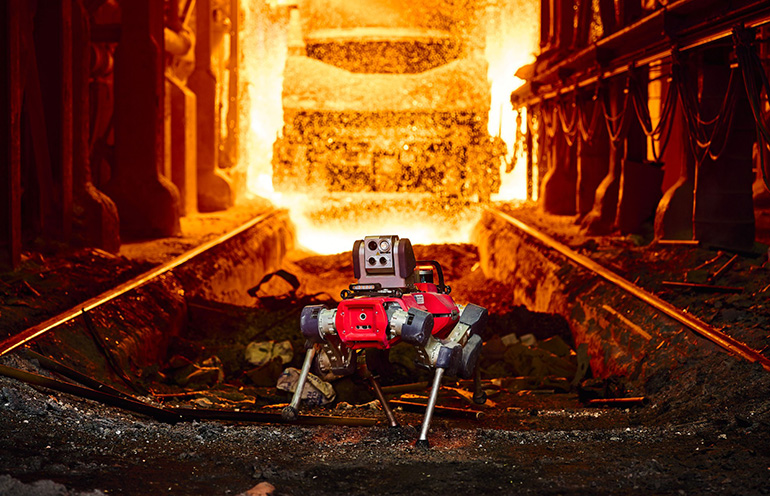
ANYbotics has begun delivering ANYmal X, which it describes as the first legged inspection robot certified to operate in explosive atmospheres. Oil refineries, gas terminals, and chemical plants contain zones where flammable vapors may be present, and equipment used there must be built so that it cannot produce a spark or hot surface capable of igniting them. Conventional robots are barred from those zones, which is why human inspectors still walk them. ANYmal X carries ATEX certification, the European standard for such equipment, and IECEx, the global equivalent, along with ISO 27001 for information security.
The engineering behind that certification took four years and produced more than ten patents, according to The Robot Report. All twelve leg actuators and the battery sit inside flameproof casings, while the AI computer and the inspection payload are sealed in nitrogen-filled chambers that exclude oxygen. The payload itself combines thermal, visual, acoustic, and gas sensors, so the robot can detect overheating, leaks, abnormal noise, and wear on a routine patrol. BP, Equinor, Shell, PETRONAS, Petrobras, BASF, and SLB have tested the robot since 2023.
The commercial case rests on the cost of surprises. The article cites an estimate that one hour of unplanned downtime in oil and gas can cost up to $500,000, and sizes the global inspection market for these sectors at $102 billion. ANYbotics already has more than 50 customers running over 120,000 autonomous inspections per month with its standard robots, and its Shift software connects to SAP, Yokogawa, and SLB maintenance systems so that findings flow into the records plant engineers already use.
The company has raised more than $150 million and employs about 200 people across Zurich, San Francisco, and Barcelona. The move into certified hazardous zones is a reminder that for industrial robots, the hard part is often not walking but paperwork: the standards, the sealing, and the integration that let a machine go where a human would rather not.
Source: The Robot Report
Embotech and BMW Pass One Million Vehicles Driven Through Factories With No One Aboard
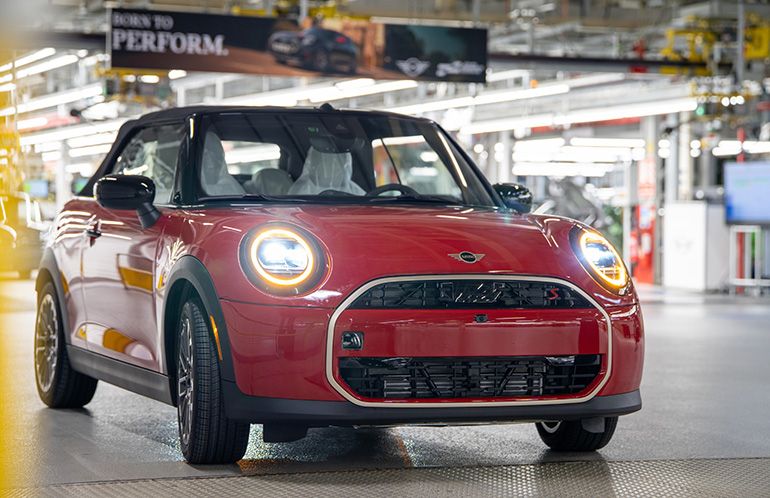
Every car that rolls off an assembly line has to be moved: to a finishing station, to a test rig, to a parking lot, to a rail siding. At scale, that means thousands of short drives a day by human drivers. Embotech and BMW announced this week that their Automated Vehicle Marshalling system has now performed one million of those moves across four plants: Dingolfing, Leipzig, and Regensburg in Germany, and the MINI plant in Oxford.
The system is unusual in that the intelligence lives in the building rather than the vehicle. Hesai lidar sensors mounted around the factory perceive the vehicles and the space, and Embotech’s software plans and commands each car’s movement. The cars need no added hardware, which matters because they are products on their way to customers. The platform operates at SAE Level 4 within its mapped environment and has been certified by TÜV SÜD, the German testing body.
The Robot Report says the deployment handles roughly 3,500 vehicle movements a day with more than 99.5 percent availability. The adoption curve is the telling figure: the first 500,000 vehicles took 15 months after the 2022 pilot, and the next 500,000 took seven. Embotech CEO Andreas Kyrtatos and chief commercial officer Eva Beck said the next site will be BMW’s Spartanburg plant in South Carolina next year, with other customers and use cases to follow.
Marshalling is a narrow task, but it is one where autonomy has quietly crossed from pilot to infrastructure. It also shows a pattern worth watching across robotics: when the environment can be instrumented, perception gets cheaper and more reliable than putting sensors on every moving thing.
Source: The Robot Report
Xpanner’s Autonomous Pile Driver Lets One Operator Run the Dullest Job on a Solar Site
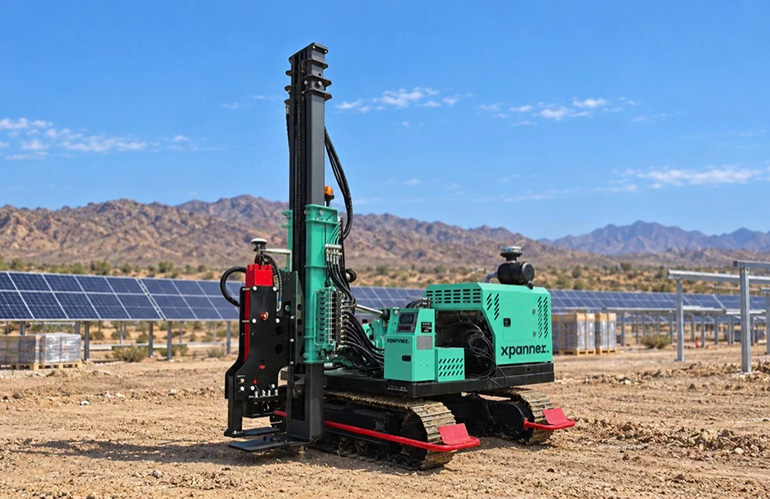
A utility-scale solar farm begins with tens of thousands of steel piles hammered into the ground in straight rows, each one required to be at the right position, depth, and plumb. It is repetitive, precise, and hard to staff. Xpanner has introduced the X1 Piling R6, a fully autonomous pile-driving machine designed for solar and battery storage construction that operates under the supervision of a single remote operator.
The workflow starts with a site plan uploaded to the machine. The operator remotely walks the R6 to the start of a row, after which it navigates between pile locations on its own using high-precision GNSS positioning and onboard sensors. A guide rail adjusts the pile nearly a foot forward or back and about 20 inches side to side, and the upper body rotates 180 degrees, so the machine can correct position without re-tracking. The Robot Report lists a 97-kilowatt engine, a hydraulic hammer delivering up to 1,260 joules per blow, piles up to 23 feet long, and a maximum driving depth of 15.7 feet. Each pile’s position, depth, and plumb are logged to a cloud dashboard in real time, which replaces the surveyor’s follow-up check with a record generated by the act of driving.
The business model mixes equipment purchase or rental with a monthly software subscription that is active only while the machine is working. Co-founder and CEO Henri Lee framed the product around the labor shortage that slows large solar builds. The approach is the same one that has made autonomous mining trucks and farm tractors practical: a well-defined task, a bounded site, and a human who supervises a fleet instead of driving one machine.
Source: The Robot Report
GXO Orders More Digits After the First Humanoid Warehouse Deployment Passes 100,000 Totes
GXO Logistics and Agility Robotics announced an expansion of the partnership that in 2024 became the first formal commercial deployment of humanoid robots in live operations, and the first robots-as-a-service agreement for humanoids. Digit robots will go to GXO facilities in Statesville, North Carolina, and Lebanon, Tennessee, starting in early 2027. The sites will begin with the current Digit 4 and move to Digit 5 once it is commercially available.
The numbers behind the decision are the substance of the announcement. Since work began at GXO’s Flowery Branch, Georgia, warehouse, Digit has moved more than 100,000 totes, and across all commercial deployments the robot has accumulated more than 65,000 hours of real-world operation, according to Agility. The Flowery Branch relationship started as a proof-of-concept pilot in late 2023 before the multi-year agreement in June 2024, so GXO has had two years to decide whether the robot is worth scaling. Its CEO, Patrick Kelleher, said innovation is most powerful when it delivers practical value for customers and employees.
Agility CEO Peggy Johnson put the shift plainly: customers are moving beyond asking whether humanoid robots can work to deciding where to scale them. The company has built out the capacity to answer that question, including RoboFab, a 70,000-square-foot Oregon factory with a stated capacity of 10,000 units per year, and expanded service operations. Agility expects to become a public company through a merger with Churchill Capital Corp XI in the fourth quarter of this year.
The tasks remain the same ones Digit has done from the start: repetitive tote handling in e-commerce fulfillment. That is the point. A humanoid deployment that a logistics operator chooses to repeat is a more meaningful signal than any demo reel.
Source: Agility Robotics
An Artificial Skin That Reads Ten Thousand Touch Points Lets Robot Fingers Hold Pencil Lead

Human skin carries thousands of touch receptors per square inch, and the nervous system compresses their signals in the spinal cord before the brain ever sees them. Researchers at Southern University of Science and Technology in China have built an artificial skin that works the same way, and used it to let robotic fingers grasp 0.5-millimeter pencil lead and 0.2-millimeter solder wire without crushing either. The work appears in Nature Machine Intelligence.
The sensing layer combines flexible electrodes with a soft gel containing electrically charged particles. Pressure changes the electrical response at the gel-electrode interface. The clever part is the readout: rather than wiring every sensing point individually, the system assigns a different signal frequency to each point within a bundle and reads them simultaneously, the way a trained ear separates the notes of a chord. An intermediate processing stage modeled on the spinal cord then compresses the data 268-fold before a higher-level model interprets it. According to the Tech Xplore account, the system reads more than 10,000 sensing elements 100 times per second with about 23 milliseconds of processing delay, and classified ten object categories with 98.2 percent accuracy.
The researchers also gave the skin a notion of pain. A signal computed from pressure intensity, how concentrated the contact is, and how fast pressure changes triggers a withdrawal reflex. Fingers pulled away from a needle point and loosened their grip on a spiny chestnut, behaviors that no grasp planner had to be taught case by case.
The authors note that the encoding and decoding circuitry is still bulky and that full integration awaits custom chips. But the architecture addresses the real bottleneck in tactile robotics, which has never been making sensors but reading enough of them fast enough to act.
Source: Tech Xplore
MIT’s Soft Snake Robot Crawls Six Feet Into the Small Intestine to Sample and Treat
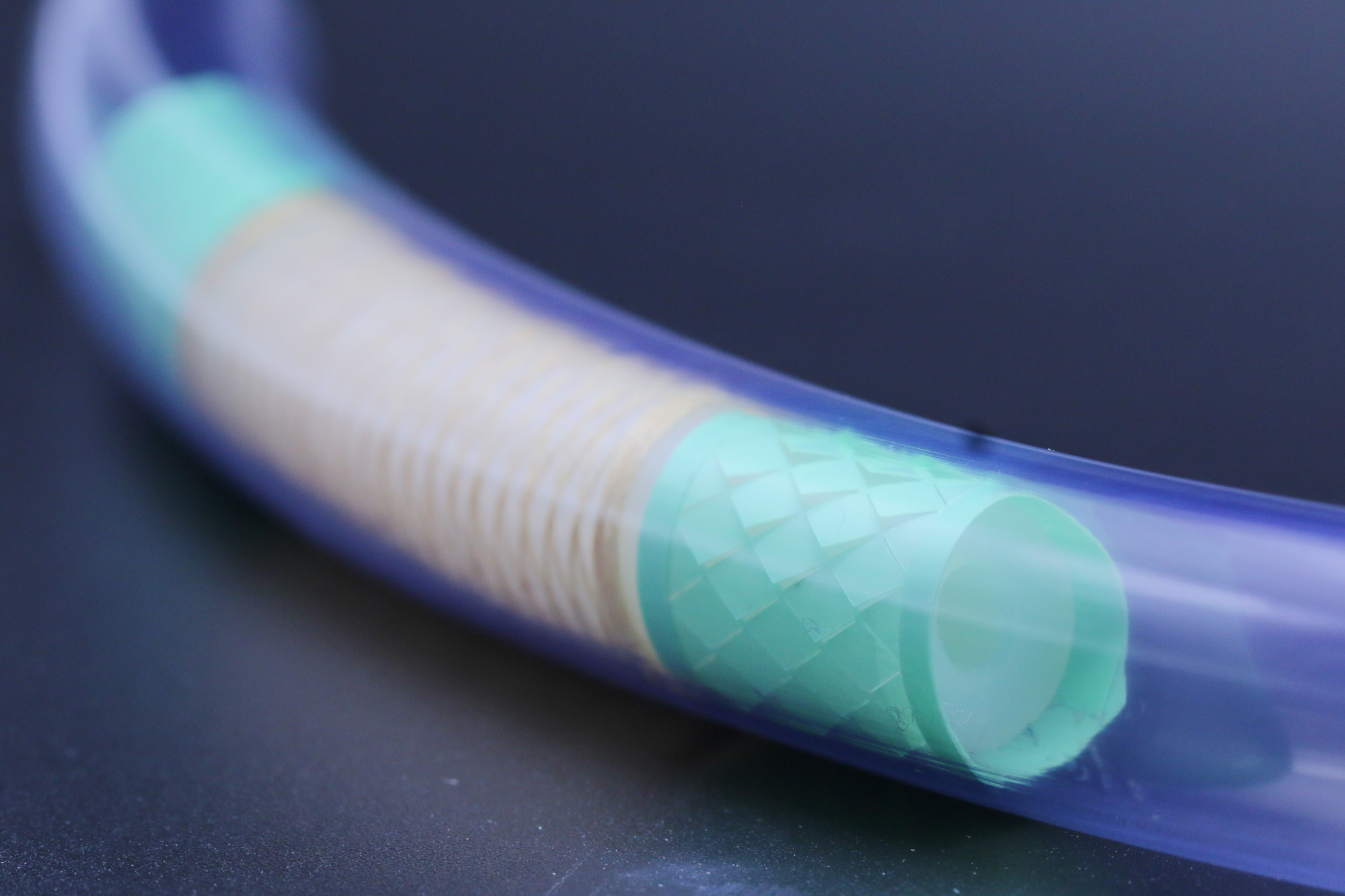
The small intestine is 20 to 25 feet long, about an inch wide, and tucked deep in the abdomen, which is why disorders there are harder to diagnose and treat than those of the stomach or colon. MIT engineers led by Giovanni Traverso, a mechanical engineering professor who is also a gastroenterologist at Brigham and Women’s Hospital, have built a soft robotic enteroscope that inches through it on its own. In animal studies the device traveled about six and a half feet, and the work is published in Science Robotics.
The robot moves like a snake. Each actuator segment contains four chambers that inflate in different combinations to bend and steer, and expandable balloons at the head and tail alternately anchor and release so the body can advance. The traction problem, gripping delicate tissue without stretching it, is solved with a kirigami-inspired surface: a patterned coating whose needle-like features pop up when the segment stretches, mimicking snake scales, and lie flat when it relaxes.
Locomotion alone would be a laboratory curiosity. The team equipped the robot with a camera, a drug sprayer for local medication delivery, and tissue clips for biopsies and polyp removal, all controlled through an external tether. Lead authors Binbin Ying, now at UT Southwestern Medical Center, Ahmad Mujtaba Jebran, and Sahab Babaee demonstrated each function in the animal model.
Traverso says the group is improving the navigation system and testing more applications, with a goal of systems that can evaluate the small intestine in a more automated way. Soft robotics has long promised machines that can go where rigid instruments cannot. A tethered snake with a toolkit, operating inside a living gut, is about as concrete as that promise gets.
Source: MIT News
HALO Teaches a Humanoid to Carry a Long Box Through a Doorway With a Human on the Other End
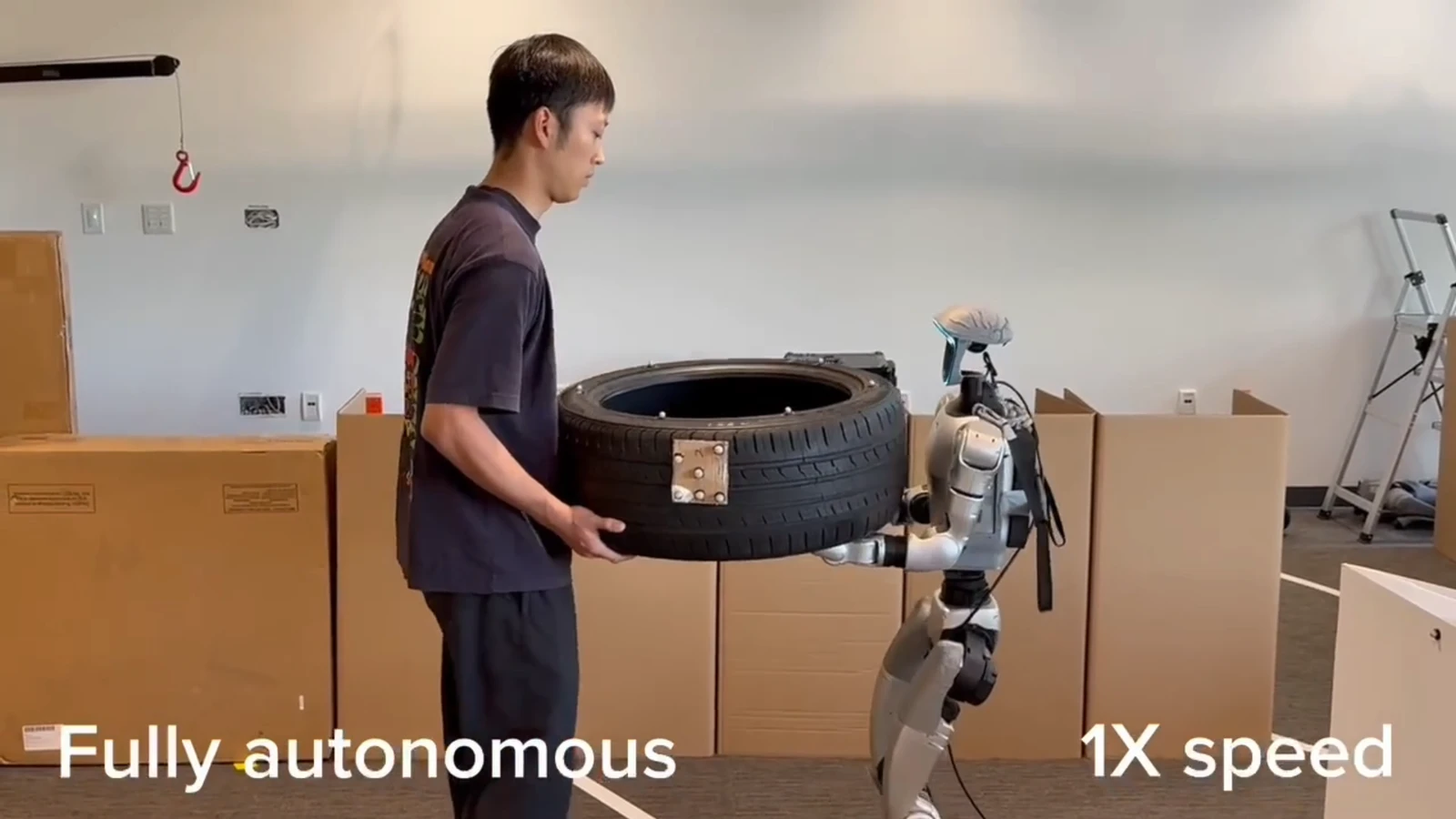
Carrying a couch with a friend is a negotiation conducted through your hands. Neither of you plans the whole route, and each adjusts to the other’s pushes and pauses. That coupled coordination is hard for robots, which are normally trained to execute their own plan. HALO, a project from the University of Texas at Arlington and Carnegie Mellon University presented as an oral talk at ICML 2026, tackles it directly, and Humanoids Daily walked through the results this week.
The team trained agents in NVIDIA’s Isaac Lab simulation and transferred them to a Unitree G1 humanoid working with human partners, with motion capture providing positional support. The demonstrations covered shared carrying and pushing: holding orientation precisely, threading a confined space, and handling elongated objects whose far end the robot cannot see. The researchers also tested what happens when a partner is obstructed or when the human’s height changes mid-task.
The quantitative results are modest and honestly reported. In confined-space transport, averaged over five trials, HALO finished in 76.2 seconds against 81.5 seconds for a method called PCGrad and 101.6 seconds for a scripted baseline, with zero drops for both learned methods. In a test where the human halts abruptly while carrying a long object, both learned methods dropped the object 20 percent of the time. The authors describe these as encouraging comparative results, not evidence of failure-free collaboration.
The framing matters for where humanoids go next. Most factory and warehouse pilots keep robots and people apart. If humanoids are to work in homes, hospitals, and construction sites, they will need to share loads, and the hard part is reading a partner rather than lifting a weight.
Source: Humanoids Daily
North American Robot Orders Jump 24.8 Percent in the Strongest Quarter of the Year
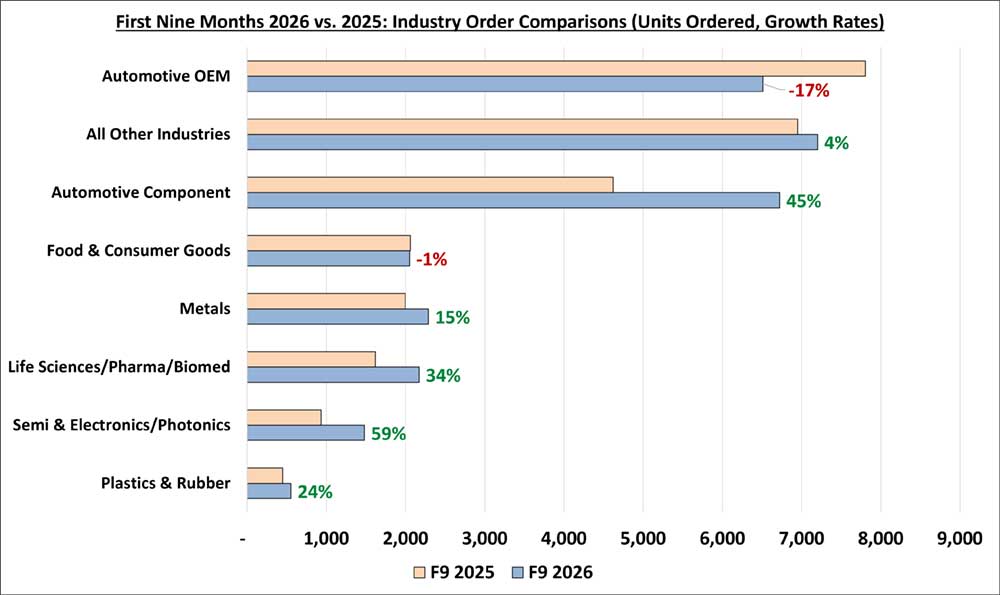
The Association for Advancing Automation reported that North American companies ordered 10,989 robots worth $723.5 million in the third quarter of 2026, up 24.8 percent in units and 26.1 percent in value from the same quarter a year earlier. It was the strongest quarter of the year. Through nine months, orders stand at 28,984 robots and $1.89 billion, up 9.6 percent and 13.3 percent respectively.
What makes the quarter notable is the spread. Semiconductor, electronics, and photonics orders nearly doubled, up 97.6 percent in units. Automotive component suppliers were up 90.4 percent, plastics and rubber 67.7 percent, life sciences and pharmaceuticals 38.7 percent, and metals 37 percent. Automotive manufacturers themselves grew a modest 7.5 percent, a recovery after declining in the first half. Food and consumer goods was the exception, down 23.7 percent. A3’s Alex Shikany said what stood out was not the magnitude of growth but how broadly it was distributed.
Collaborative robots, the smaller machines designed to work alongside people without cages, grew fastest of all: 1,831 units worth $63.8 million in the quarter, up 56 percent, and 16.7 percent of all orders. Year to date, cobots made up 43.8 percent of robot orders in life sciences and 36.9 percent in semiconductors and electronics, sectors where tasks are delicate and floor space is expensive.
The Robot Report placed the figures against a manufacturing purchasing managers’ index of 54.5 in September, the ninth straight month of expansion, and a 0.3 percent rise in manufacturing output. Industrial robot demand has always tracked the capital spending cycle, and this quarter suggests the cycle has turned up across most of the economy at once.
Source: The Robot Report
White House Declares Imported Robots a National Security Concern, Opening Six Months of Talks
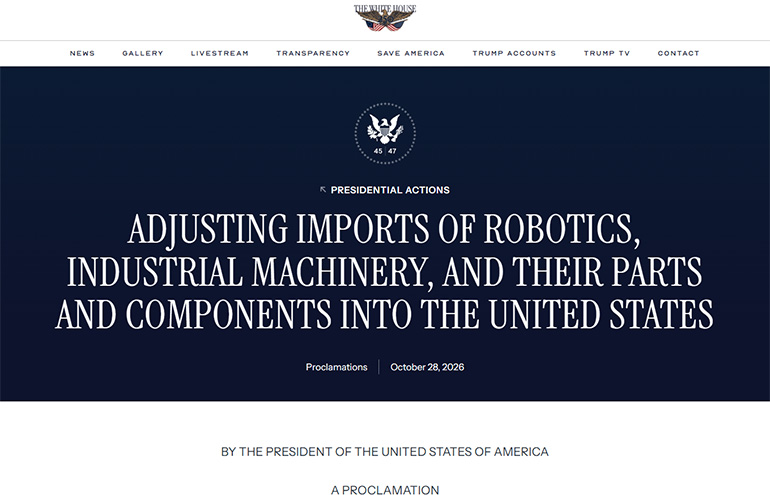
President Trump issued a proclamation stating that the Secretary of Commerce has determined that imports of robotics and industrial machinery threaten to impair the national security of the United States. The finding comes under Section 232 of the Trade Expansion Act, the same authority used for steel, aluminum, and automobiles. No tariffs were imposed. Instead, the President directed Commerce and the U.S. Trade Representative to negotiate with trading partners over the next six months to adjust imports.
The proclamation’s reasoning is that robotics and industrial machinery underpin defense, commercial, and dual-use manufacturing. It cites $7.1 trillion in manufactured goods shipments and $86 billion in equipment production in 2024, and it specifically names autonomous, humanoid, quadruped, and autonomous ground vehicle robots as supporting military capability. It also raises cybersecurity risks from imported systems. The products covered include robots, industrial machinery, and their parts and components, a category dominated by suppliers based in Japan, Germany, Switzerland, and increasingly China.
Industry reaction, as collected by The Robot Report, was measured. Brendan Schulman of Boston Dynamics called the determination another strong signal of government support for domestic supply chains. Analyst Robert Little noted that FANUC, Teradyne Robotics, and Yaskawa have announced U.S. manufacturing investments but that gaps remain in domestic component supply. Ash Sharma cautioned that it should not be read as a new robotics tariff today, while acknowledging that the policy direction is clear.
For companies planning factories, the six-month window is the operative fact. The determination signals that where a robot and its gearboxes, motors, and controllers are made will matter to its cost in the American market, and gives suppliers a deadline to decide how to respond.
Source: The Robot Report
What Symbotic’s Dependence on Walmart Teaches Robotics Startups About Anchor Customers

Symbotic is the rare robotics company that has reached industrial scale, and it did so almost entirely through one customer. Deepak Jayaraj’s analysis for The Robot Report takes the company’s latest quarter apart to show what an anchor customer gives and what it takes. In the third quarter of fiscal 2026, Symbotic reported $720.8 million in revenue and $55 million in net income, with 90.5 percent of revenue coming from Walmart. Its backlog stands at $22.5 billion, of which $11.6 billion belongs to Exol, a warehouse-as-a-service venture in which Symbotic owns 35 percent.
The financial structure is unusual. Walmart committed $520 million in development funding for its Accelerated Pickup and Delivery system, while Symbotic paid $200 million for Walmart’s in-house robotics business and faces two possible milestone payments of $175 million each. The contracts have no termination-for-convenience clauses, so most of the backlog can be cancelled only for performance failures or insolvency. In exchange, Walmart secured continuity rights, technical escrow provisions, and caps on how many comparable systems Symbotic can sell to competitors.
Jayaraj’s lesson for founders is to read past the headline numbers. About half of Symbotic’s roughly 2,000 employees are stationed at customer sites for installation and maintenance, and a standard deployment takes 24 months from signed agreement to acceptance, which means revenue lags commitment by two years. He cites Bossa Nova Robotics, which reached 500 Walmart stores with its shelf-scanning robots and then shut down after Walmart found other solutions.
His practical advice is to model two scenarios before hiring ahead of demand, a six-month rollout pause and on-schedule completion, and to track field hours meticulously so that unit economics are understood before scaling. It is a useful counterweight to the funding-round framing that dominates robotics coverage: the hard part of the business begins after the contract is signed.
Source: The Robot Report