Energy Weekly Review 2026-10-02

Week In Review
The week belonged to large nuclear. South Korea and the United States signed a framework that, according to ANS Nuclear Newswire, commits $120 billion to eight gigawatt-class reactors on federal sites, six Westinghouse AP1000s and two Korean APR1400s, with a $10 billion advance payment due before year’s end. Two days earlier the Nuclear Regulatory Commission had issued the first construction permit for a BWRX-300 small modular reactor at TVA’s Clinch River site, only the second permit for a commercial reactor in the United States in nearly a decade. And Amazon signed on to fund a 190-megawatt uprate at Calvert Cliffs, continuing the pattern in which hyperscalers pay to squeeze more output from plants that already exist. Together these three stories cover the full spectrum of how a country adds nuclear capacity: build big, build small, and build nothing new but run the old fleet harder.
Fusion policy moved on two fronts at once. In Washington, a bipartisan pair of California representatives introduced the American Leadership in Fusion Act, which would put $10 billion into milestone programs and test facilities and create a dedicated Office of Fusion inside the Department of Energy. In Sacramento, Governor Newsom signed two bills directing the state’s energy commission to write a fusion strategy and to assess new nuclear plants of all kinds as a route to firm zero-carbon power. Fusion has spent years as a research program; both measures treat it as an industry that needs a supply chain, a workforce, and a regulatory home.
Below the headlines, the laboratories kept improving the hardware. Chinese researchers pushed a perovskite-silicon tandem cell on industrial textured silicon to a certified 30.77 percent, a result that matters because it works on the same pyramid-textured wafers factories already produce. Two storage chemistries built from cheap, abundant metals showed real durability: a Spanish iron-lead flow battery completed 10,000 cycles, and EnerVenue booked its first megawatt-hour-scale order for nickel-hydrogen cells rated for 30,000 cycles. On the fuel cycle, Oregon State chemists described a low-temperature fluoride process that strips roughly 90 percent of the radioactivity from simulated used fuel without the radiation-sensitive solvents of conventional reprocessing.
The quiet counterpoint came from Vienna. A modeling study in Joule found that AI data centers could fit within existing US grid capacity if they agreed to curtail consumption for no more than 35 hours a year. The implication cuts against the week’s building spree: the fastest and cheapest capacity may be the flexibility of the load itself, which buys time for the reactors, cells, and batteries described above to arrive.
Items
South Korea Commits $120 Billion to Eight Large Reactors on US Federal Sites
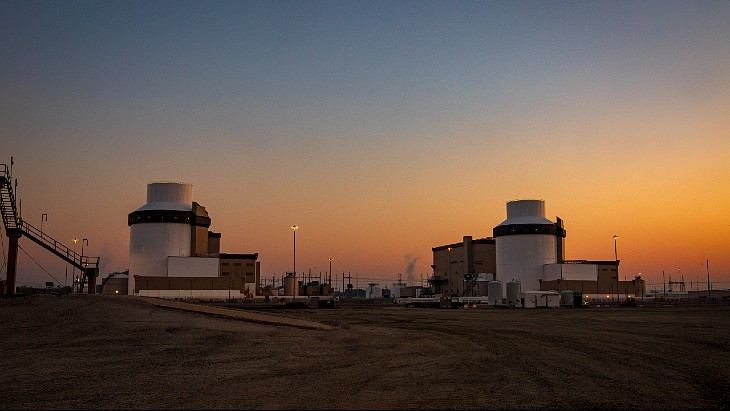
The United States and South Korea announced a framework agreement to build eight large reactors at federal sites in the United States, with South Korea providing $120 billion of financing. ANS Nuclear Newswire reports the package is part of a broader $200 billion strategic investment that also includes a $22.3 billion natural gas project in Texas and a $50 billion liquefied natural gas project in Alaska, and that the nuclear component sits inside a $350 billion plan that devotes a further $150 billion to shipbuilding.
The reactor fleet splits into six Westinghouse AP1000 units of 1,110 megawatts each, to be deployed as twin units across three federal sites, and two Korean APR1400 units of 1,400 megawatts each. Commerce Secretary Howard Lutnick named Ohio, Tennessee, South Carolina, and Kentucky as locations, though construction timelines have not been set. Of the $120 billion, $100 billion is earmarked for construction and $20 billion for contingencies, and both governments agreed to transfer a $10 billion advance payment by the end of the year to lock in long-lead components.
The commercial structure is as notable as the money. The signatories include both governments, Westinghouse, Korea Electric Power Corporation, and Korea Hydro & Nuclear Power. According to ANS, the Korean utilities may take a cornerstone equity stake of 5 to 10 percent in Westinghouse, aligning the two national champions around a shared order book. Westinghouse is currently owned in part by Brookfield Asset Management and Cameco.
For scale, ANS notes that only six AP1000s operate anywhere in the world today, two in the United States and four in China, and eight APR1400s, four in South Korea and four in the United Arab Emirates. Eight new units in one agreement would more than double the combined global fleet of both designs. Lutnick framed the goal as industrial: “These are gigantic nuclear power plants, because we want to create the supply chain for nuclear so we can be the exporter of the world of nuclear.” Westinghouse chief executive Dan Sumner called it “a defining moment for the future of U.S. nuclear energy.”
Source: ANS Nuclear Newswire
NRC Issues First US Construction Permit for a BWRX-300 Small Modular Reactor

The Nuclear Regulatory Commission approved the Tennessee Valley Authority’s construction permit for a GE Vernova Hitachi BWRX-300 at the Clinch River site in Oak Ridge, Tennessee. ANS Nuclear Newswire reports it is the first construction permit for a BWRX-300 in the United States, the second in North America, and only the second construction permit for any commercial reactor in the country in nearly a decade. The design is a 300-megawatt boiling water reactor that uses natural circulation and passive cooling, simplifying the plant relative to the large boiling water reactors it descends from.
The permit closes a long arc at Clinch River. In 1972, TVA, Commonwealth Edison, and the Atomic Energy Commission chose the site for a liquid-metal fast breeder reactor demonstration plant, a project that collapsed in the early 1980s under rising costs and political opposition. TVA returned to the site in the early 2010s with small reactors in mind, secured an early site permit in 2019, and in February 2022 its board approved a plan to deploy the BWRX-300 there. An agreement with GE Hitachi for licensing support followed the same year.
TVA is targeting commercial operation in the early 2030s. The permit allows construction to begin but does not itself authorize operation; a separate operating license will follow. Tennessee Governor Bill Lee said the project “represents the next chapter in our state’s legacy of innovation, strengthening America’s energy security and creating opportunity for generations to come.”
The Clinch River approval gives the small-reactor sector something it has lacked in the United States: a utility-owned project with a regulator’s construction sign-off in hand. With one other BWRX-300 permit already issued elsewhere in North America, the design now has two first-of-a-kind builds to learn from in parallel.
Source: ANS Nuclear Newswire
Amazon Funds a 190-Megawatt Uprate at Calvert Cliffs

Constellation Energy and Amazon signed a long-term power purchase agreement built around a 190-megawatt extended power uprate at the Calvert Cliffs plant in Lusby, Maryland. ANS Nuclear Newswire reports the plant’s current net capacity is 1,788 megawatts, so the uprate adds roughly 10 percent, and that Amazon will take 690 megawatts in total from the facility through the PJM grid. Constellation plans more than $3 billion of infrastructure investment in Maryland as part of the deal.
An extended power uprate is a serious engineering job rather than a paperwork change. ANS notes the project will require modifications to high-pressure turbines, condensate pumps, generators, and transformers, the equipment that converts reactor heat into deliverable electricity. Calvert Cliffs’ two pressurized water reactors entered commercial service in 1975 and 1977, and their current licenses run to 2034 and 2036 unless Constellation seeks a subsequent renewal, which a multi-billion-dollar uprate strongly implies.
The agreement replaces an earlier plan that failed. ANS reports Amazon abandoned a proposed data center campus at Calvert Cliffs in August 2026 after local opposition. Under the new structure the power flows into the regional grid for Amazon’s facilities elsewhere in the region, rather than to a co-located load, which sidesteps the siting fight while still delivering firm power to the buyer.
The deal extends Amazon’s nuclear portfolio, which ANS lists as a 2024 partnership with X-energy on a 320-megawatt project in Washington, a 2024 agreement with Dominion Energy on a small reactor in Virginia, and the 2024 purchase of a 960-megawatt data center campus from Talen Energy at the Susquehanna plant. Uprates are the fastest and lowest-risk way to add nuclear output, since the reactor, site, and license already exist, and hyperscaler contracts are now the mechanism paying for them.
Source: ANS Nuclear Newswire
Bipartisan Bill Proposes $10 Billion and a DOE Office of Fusion
Representatives Zoe Lofgren and Jay Obernolte, a Democrat and a Republican both from California, introduced the American Leadership in Fusion Act, which would direct $10 billion toward fusion development and establish a Department of Energy Office of Fusion led by an assistant secretary. ANS Nuclear Newswire reports the bill splits the money evenly: $5 billion for milestone-based development programs and $5 billion for test facilities and research infrastructure.
The milestone half builds on the program DOE launched in 2023, adding $2 billion to that effort and $3 billion to a new milestone track aimed specifically at fusion pilot plants. The bill defines a pilot plant as a facility that delivers at least 50 megawatts of net electricity to the grid for more than three continuous hours, a crisp target in a field where “net energy” has often meant something narrower. The infrastructure half includes $3.8 billion in 2027 for large test facilities, $300 million for small and mid-sized facilities, $800 million for research on materials, fuel cycles, and decommissioning, and $100 million for supply chain development. Test facilities would need to include a fusion neutron source with a one-tesla magnetic field and an energy flux of 10 megawatts per square meter, with operations starting before the end of 2027.
Beyond the headline sums, the bill authorizes more than $1.1 billion a year from 2027 through 2031 through the new office, including $150 million annually for milestone programs, $50 million each for inertial and alternative concepts such as field-reversed configurations, levitated dipoles, and magnetic mirrors, and $75 million for plasma science. A National Science Foundation workforce program and a STEM coordination hub round it out. Cosponsors include Representatives Don Beyer, Lori Trahan, and James Gallagher.
The competitive framing is explicit. ANS cites a bipartisan Special Competitive Studies Project report from October 2025 estimating China has invested at least $6.5 billion in fusion since 2023, nearly three times DOE’s fusion spending over the same period. Fusion Industry Association chief executive Andrew Holland said private fusion drew a record $4.5 billion in the past year but “needs a strong partner in the federal government” to deploy domestically within a decade. Commonwealth Fusion Systems chief executive Bob Mumgaard noted the bill funds the research infrastructure identified in the administration’s own fusion roadmap.
Source: ANS Nuclear Newswire
California Enacts a Fusion Strategy and Orders a Fresh Look at New Nuclear
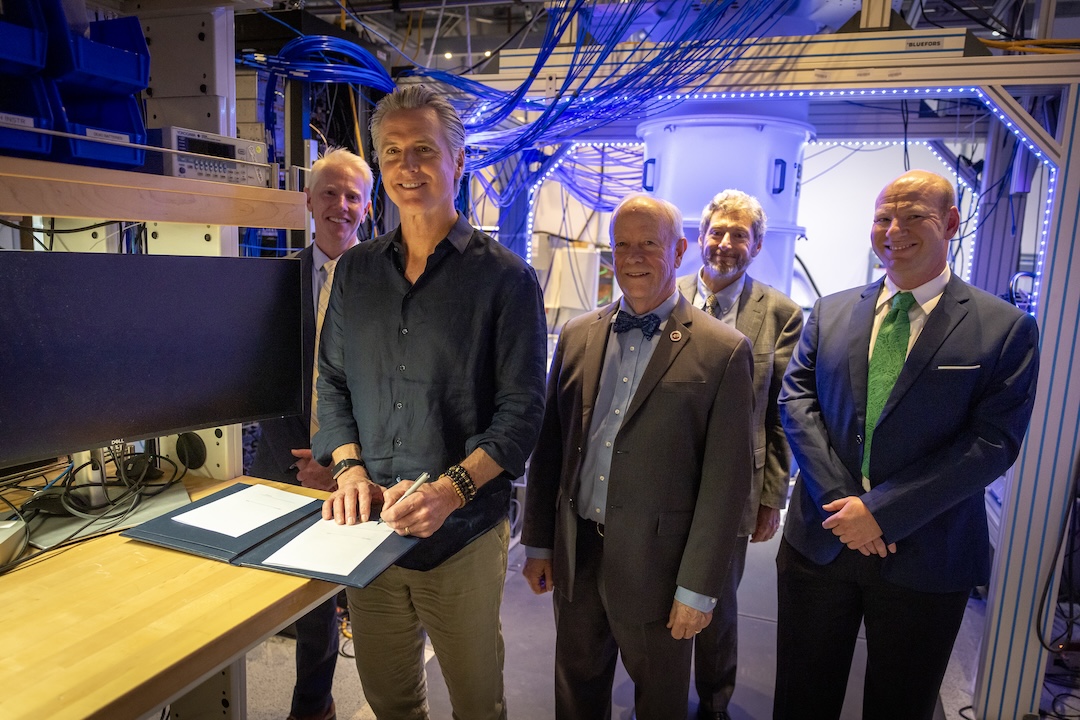
Governor Gavin Newsom signed two bills at UC Berkeley that reposition California toward building, not just studying, next-generation nuclear energy, and paired them with a $30 million investment in quantum and fusion research. The state hosts both of the country’s flagship fusion research facilities, the DIII-D tokamak in San Diego and Lawrence Livermore’s National Ignition Facility, where laboratory fusion ignition was first achieved in December 2022.
SB 925, authored by Senator Jerry McNerney, directs the State Energy Resources Conservation and Development Commission to produce a strategic development plan for fusion. According to the governor’s office, the plan must expand research and development opportunities, lay out a commercial fusion strategy, and advance fusion manufacturing within the state. The emphasis on manufacturing is the tell: California wants the magnets, lasers, and components built locally, not just the physics done there. McNerney said fusion “has the potential to provide nearly limitless clean, safe, and reliable power” and that the bill positions California as “a fusion technology leader in the coming decades.”
AB 2647, from Assemblymember Lisa Calderon, is the broader measure. It orders a comprehensive assessment of new nuclear power plants as a path to the state’s goal of 100 percent zero-carbon electricity by 2045, including an evaluation of advanced nuclear technologies for supporting critical infrastructure. A statutory requirement to evaluate new fission capacity marks a shift in posture for a state whose energy debate has long centered on renewables and storage. Calderon put it plainly: “Our grid needs firm clean power. Our families and businesses need affordable electricity.”
Neither bill funds a plant or licenses a reactor. What they do is create planning obligations with deadlines, which is how state energy policy typically begins before procurement follows. Combined with the federal fusion bill introduced the same week, fusion now has active legislative tracks at both levels of American government.
Source: Office of Governor Gavin Newsom
Perovskite-Silicon Tandem on Industrial Textured Silicon Reaches 30.77 Percent
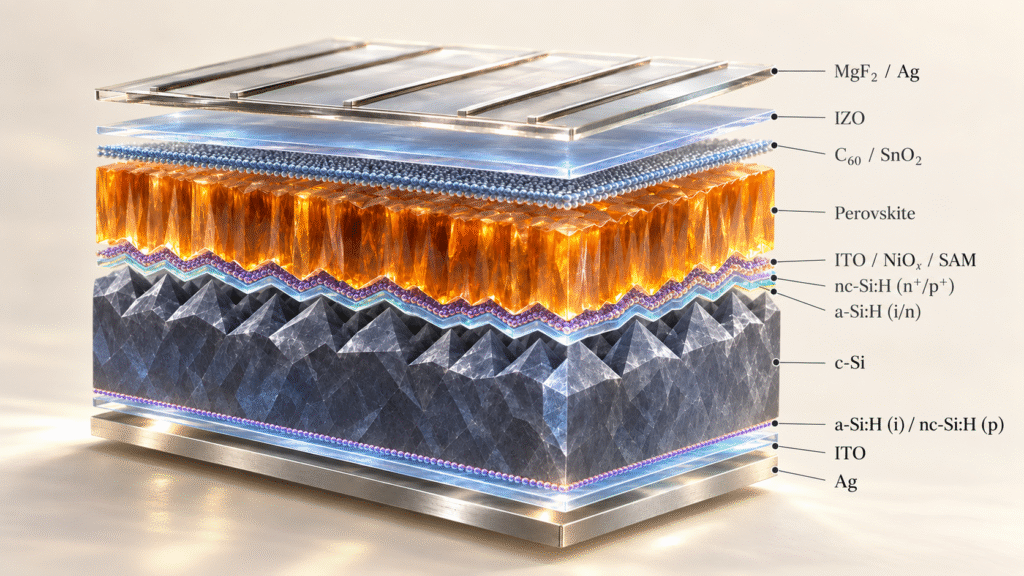
Researchers led by Nanjing University reported a certified stabilized efficiency of 30.77 percent for a perovskite-silicon tandem solar cell built on fully textured industrial silicon, with the encapsulated device holding its initial performance through 3,400 hours of continuous illumination. The work, published in Nature Communications, involved collaborators at Renshine Solar in Suzhou, Yunnan University, a Zhejiang laser equipment innovation center, and Uppsala University in Sweden.
The difficulty the team solved is practical rather than theoretical. Commercial silicon cells are textured with microscopic pyramids that trap light, but those same pyramids make it hard to lay down a uniform perovskite film on top. Many record tandems have used polished or lightly textured wafers that factories do not actually make. According to pv magazine, the Nanjing group deposited a lead iodide and cesium bromide base by thermal co-evaporation, spin-coated formamidinium halides over it, and then applied a methylammonium thiocyanate “healing” treatment that drove crystal growth through Ostwald ripening while preserving full coverage of the textured surface.
The numbers behind the headline figure are strong. The 1.68-electron-volt wide-bandgap perovskite top cell reached 21.1 percent on its own, with an open-circuit voltage of 1.915 volts over an active area of 1.164 square centimeters. The device stack is otherwise conventional for the field: hydrogenated amorphous silicon and indium tin oxide beneath the perovskite, a passivation layer and C60 electron transport layer above it, with processing temperatures of 90 and 150 degrees Celsius that are compatible with existing production lines.
Tandem cells break the single-junction silicon ceiling by splitting the solar spectrum between two absorbers. Demonstrating more than 30 percent on the wafer type that already dominates manufacturing, with a stability figure measured in thousands of hours, moves the technology closer to a drop-in upgrade for existing factories rather than a new industry built from scratch.
Source: pv magazine
Spanish Iron-Lead Flow Battery Completes 10,000 Cycles
The Spanish research center CIC energiGUNE has run an iron-lead redox flow battery through 10,000 full charge-discharge cycles at temperatures between 25 and 30 degrees Celsius, a durability milestone for a chemistry built entirely from cheap, widely recycled metals. ESS News reports the center is now moving from laboratory cells toward larger stacks, with kilowatt-scale modules as the next target.
Flow batteries store energy in liquid electrolytes held in external tanks, so capacity scales with tank size while power scales with the cell stack. That decoupling makes them attractive for multi-hour storage, but the incumbent vanadium chemistry depends on a metal with a volatile price and concentrated supply. Iron and lead both have established industrial and recycling supply chains, and lead-acid recycling in particular is among the most mature closed loops in any industry.
Two design choices distinguish the CIC energiGUNE system. It uses a single electrolyte loop rather than the dual circuits of most flow batteries, which cuts pumps, plumbing, and balance-of-plant cost. And it uses a fluorine-free membrane, which reduces internal resistance and removes a class of materials that regulators in Europe are increasingly scrutinizing. The center is also exploring organic redox molecules and methods for reducing vanadium consumption in existing vanadium systems.
The intended markets are stationary: integrating solar and wind, grid-scale storage, microgrids, and industrial energy management. Ten thousand cycles at a daily cadence corresponds to more than 27 years of service, which puts the chemistry in the range where the capital cost can be amortized over the life of the asset it supports. The next step, the center says, is “to develop kilowatt-scale modules through a combination of simulation, system design and experimental validation.”
Source: ESS News
EnerVenue Books First Megawatt-Hour-Scale Order for Nickel-Hydrogen Storage
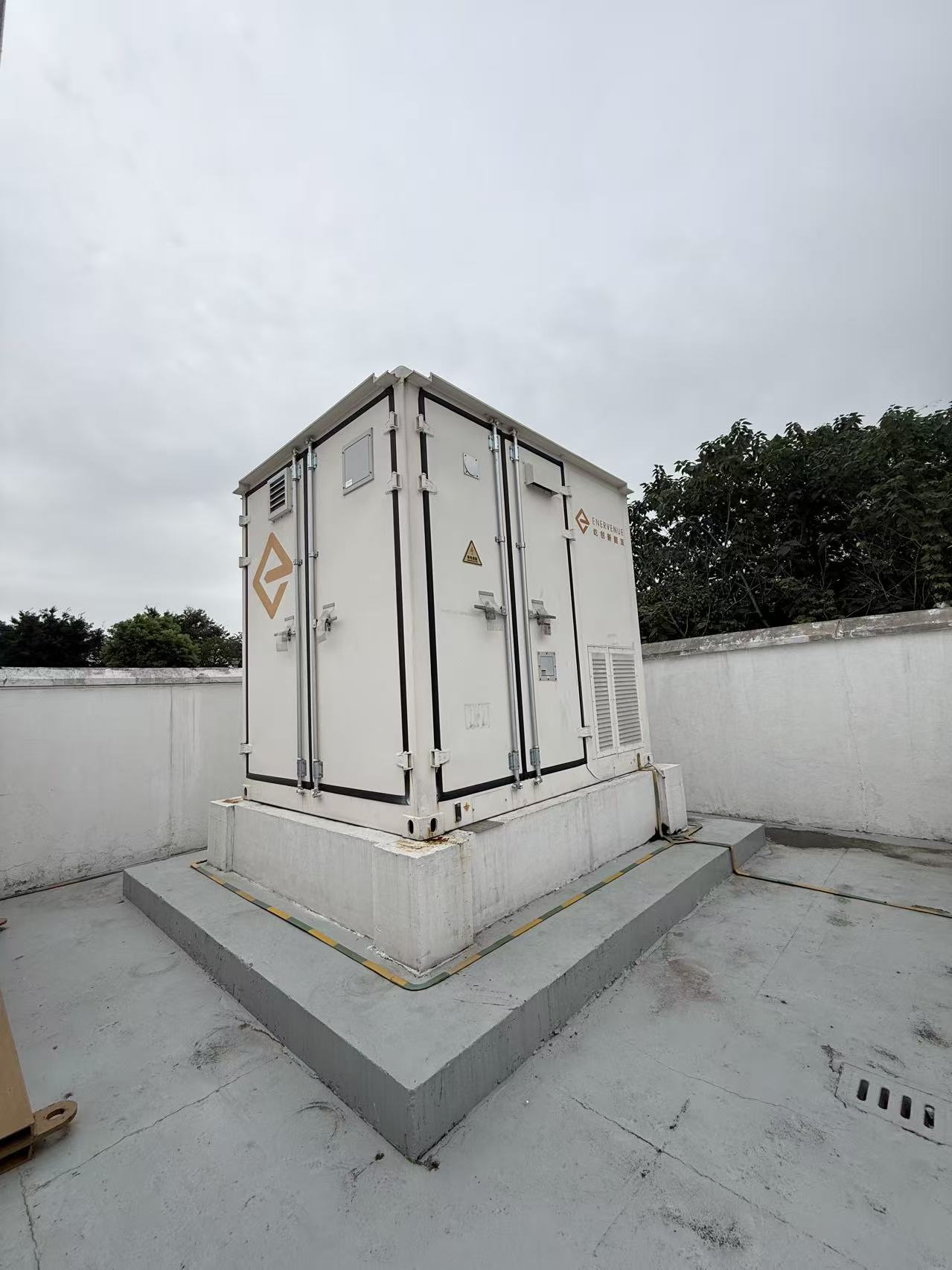
EnerVenue, a California storage company, has secured its first commercial order above one megawatt-hour: 26 containerized Energy Prism units totaling 11 megawatt-hours for an operating oilfield in northern China. ESS News reports the customer is an unnamed major Chinese oil and gas producer that will use the system to store output from an onsite solar array. The first three units ship in December 2026 and the remaining 23 in March 2027.
The chemistry is nickel-hydrogen, the same technology that powered the Hubble Space Telescope and the International Space Station, where it earned a reputation for extreme cycle life. EnerVenue’s fourth-generation Aqueous Metal Cell stores a nominal 3 kilowatt-hours, is rated for 30,000 cycles and a 30-year system life, and achieves round-trip efficiency above 90 percent. It operates from minus 20 to 60 degrees Celsius without active thermal management, uses a water-based, non-flammable electrolyte, contains no lithium, and showed no cell-level fire propagation in UL 9540A testing.
The cells come from EnerVenue’s factory in Changzhou, where ESS News reports the initial phase is rated at 250 megawatt-hours per year and designed to reach 300 cells per day at full automation, with plans to scale to one gigawatt-hour in 2027 and multiple gigawatt-hours by 2028. The company’s prior deployment was a 150-kilowatt-hour system with Towngas in Jintan in 2025, so the new order is roughly a seventy-fold step up.
Chief executive Henning Rath said the company competes on “lifetime economics rather than upfront battery cost,” an acknowledgement that the capital cost per kilowatt-hour is higher than lithium iron phosphate while the cost per cycle over three decades is claimed to be competitive. An oilfield with its own solar array and no appetite for fire risk or thermal management is a sensible first large customer for that pitch.
Source: ESS News
Low-Temperature Fluoride Process Simplifies Used Fuel Reprocessing

Chemists at Oregon State University have described an aqueous reprocessing route that separates the valuable actinides in used nuclear fuel from fission products by exploiting differences in solubility, removing roughly 90 percent of the total radioactivity from simulated fuel solutions. The work appears in Communications Chemistry. ANS Nuclear Newswire notes that only 5 to 10 percent of the fissile material in a fuel assembly is consumed before it leaves the reactor, which is why recycling the remainder has long been attractive in principle and difficult in practice.
The established approach, PUREX, relies on organic solvents that, as coauthor Alexander Chemey put it, “are very susceptible to radiation damage.” The Oregon State team instead used a highly concentrated ammonium fluoride solution. Actinides form fluoride clusters that behave differently in that medium than the fission products do, so the two groups can be pulled apart on solubility alone, with no organic phase to degrade.
The method proceeded in stages. The researchers created simulated used fuel with realistic proportions of uranium, other actinides, and fission products, reacted it at low temperature with ammonium bifluoride, and then performed a two-step separation that isolated the actinides from the contaminants. The recovered material was heat-treated into actinide fluorides or oxides, forms suitable either for refabrication into fuel or for stable storage. ANS also cites related solubility-based work by Jonathan Burns at the University of Alabama at Birmingham, suggesting a small research community converging on the approach.
A reprocessing chemistry that runs at low temperature, avoids radiation-sensitive solvents, and leaves the recovered actinides in a fluoride form has an obvious audience. Several advanced reactor designs use fluoride-based fuels or salts, and any serious expansion of the reactor fleet raises the question of what to do with the used fuel. Simpler, more robust separations lower the cost of answering it.
Source: ANS Nuclear Newswire
Data Centers Could Fit the Existing Grid With 35 Hours of Flexibility a Year

A modeling study led by the Vienna University of Technology finds that US data centers would need to reduce their electricity consumption for no more than 35 hours a year to remain within existing grid capacity. The research, published in Joule with collaborators at other international universities, challenges the assumption that the AI buildout requires a matching buildout of new generation before any of it can connect.
The context is a wave of gas-fired construction. According to the study as reported by Tech Xplore, 39 percent of US gas-fired generation capacity under development at the end of 2025 was intended to serve data centers. Reda El Makroum of TU Wien’s Institute of Energy Systems and Electrical Drives observed that “data centers are not necessarily being built where electricity is cheapest,” and the team’s analysis of US data center sites suggests the binding constraint is a few dozen peak hours, not the annual energy total.
The researchers propose that data centers should adapt to the grid rather than the reverse. In practice that means contracts with a guaranteed base capacity and a temporary curtailment option during periods of system strain, allowing an interconnection to proceed on the existing network while new supply is built. The study also notes that Norway, whose electricity is almost entirely renewable, still faces grid capacity shortages, a reminder that transmission and peak capacity, not generation mix, are the limiting factors.
Thirty-five hours is less than half a percent of the year. For an operator, that is the difference between waiting years for a new substation and gas plant or connecting now with a modest flexibility commitment and perhaps some onsite storage. For the grid, it means the load that is driving the current build cycle can also be the resource that smooths it, while the longer-lived capacity additions, nuclear among them, come online behind it.
Source: Tech Xplore