Energy Weekly Review 2026-10-16

Week In Review
The week’s defining event was a first: a utility-scale enhanced geothermal plant delivering commercial power. Fervo Energy’s Cape Station in Utah began selling electricity from its initial 33-megawatt unit, a milestone that IEEE Spectrum frames as the moment geothermal stopped depending on rare natural hot springs and became something you can drill for in ordinary hot rock. It is a reminder that firm, carbon-free, around-the-clock power can come from places other than reactors and dams, and that oilfield drilling know-how is turning out to be one of the energy transition’s most useful inherited assets.
Nuclear fission filled much of the rest of the week, in forms that look little like the gigawatt plants of the last century. The Department of Energy accelerated funding for the Molten Chloride Reactor Experiment, a fast-spectrum liquid-fuel reactor aimed at criticality in 2027 with commercial shipping as an eventual customer. Oklo announced Groves-2 Forge, a reactor built around producing lutetium-177 for cancer therapy, just weeks after its first Groves reactor reached criticality. In Poland, two companies formed a joint venture to build six BWRX-300 reactors on the grounds of an existing coal plant. Across these stories the common thread is specialization: reactors sized and shaped for a particular job, whether propulsion, isotopes, or replacing a coal boiler in place.
Fusion research moved on two fronts. Three companies in the DOE Milestone program reported progress, including Zap Energy’s capacitor built to survive billions of pulses and Commonwealth Fusion Systems’ selection to lead an AI digital-twin project for its SPARC machine. Meanwhile the DIII-D facility and Kyoto Fusioneering agreed to install a permanent negative-triangularity divertor, testing a plasma shape that in earlier trials ran for weeks without the destructive edge instabilities that plague conventional tokamaks. Both items show fusion’s center of gravity shifting from proving physics toward engineering hardware that can last.
On the grid, the week offered a dose of practical economics. American Electric Power agreed to buy up to 1.6 gigawatts of Mainspring linear generators, fuel-flexible machines that can be deployed in months rather than the years gas turbines now require. An EPRI analysis found that battery storage failure rates fell 98 percent between 2018 and 2025, putting modern systems on par with transformers for reliability. The International Energy Agency dissected why Chinese electrolysers cost a fraction of Western ones, finding the answer lies more in brutal competition and construction practices than in any technological secret. And UC San Diego chemists showed that a water-soluble battery binder can make lithium-ion cells both cleaner to build and far easier to recycle, a small materials change with outsized manufacturing consequences.
Items
Fervo’s Cape Station Becomes the First Utility-Scale Enhanced Geothermal Plant to Sell Power

Fervo Energy has brought the first utility-scale enhanced geothermal system into commercial operation. According to IEEE Spectrum, the company synchronized the initial 33-megawatt unit at its Cape Station project in southern Utah to the grid on September 24 and began commercial operations six days later, delivering electricity to Shell Energy in California. Two more 33-megawatt units are planned by the start of 2027, with the remaining 400 megawatts of the 500-megawatt project slated for 2028 under an agreement with Google.
Conventional geothermal plants depend on finding naturally occurring reservoirs of hot water and steam, which limits them to a handful of geologically lucky places. Fervo instead borrows horizontal drilling and hydraulic stimulation techniques from the oil and gas industry to create its own reservoir in hot, dry rock, circulating water through engineered fractures to produce steam. As Fervo senior vice president Dawn Owens put it in the article, traditional geothermal would never have been built in southern Utah. The company’s only prior commercial plant was a 3.5-megawatt pilot in Nevada that came online in late 2023, so the jump to 33 megawatts, and soon to hundreds, is a large one.
Cost is the central question for whether enhanced geothermal becomes a mainstream resource. Spectrum reports the full project at about 2 billion dollars, with the first phase coming in around 7,000 dollars per kilowatt and the second phase projected at 5,500 dollars per kilowatt as drilling gets faster and cheaper. Those figures remain well above solar or wind on a per-kilowatt basis, but geothermal runs continuously and delivers firm capacity, which is precisely what grids strained by data center growth are short of. When complete, the plant is expected to supply enough electricity for roughly a million homes.
The deeper significance is that geothermal has long been the renewable with the best fundamentals and the worst geography. If engineered reservoirs can be drilled into hot rock across the American West and beyond, the resource becomes a matter of drilling economics rather than geological luck, and the learning curves that drove down shale drilling costs could apply directly.
Source: IEEE Spectrum
DOE Accelerates Funding for a Fast-Spectrum Molten Chloride Reactor Aiming at Criticality in 2027
The U.S. Department of Energy has approved accelerated cost-shared funding under its Advanced Reactor Demonstration Program for the Molten Chloride Reactor Experiment, a collaboration between Southern Company, Idaho National Laboratory, and the maritime nuclear developer Core Power. World Nuclear News reports the experiment is now targeting first criticality in 2027.
Molten salt reactors dissolve their fuel in a liquid salt that also serves as coolant, eliminating solid fuel rods and allowing operation at high temperature and low pressure. Most molten salt designs use fluoride salts and thermal neutrons. The MCRE instead uses chloride salts and a fast neutron spectrum, which Idaho National Laboratory’s Jess Gehin says will make it the world’s first fast-spectrum molten chloride reactor to reach criticality. Fast-spectrum systems can in principle consume a wider range of fuels and reduce long-lived waste, but no one has operated one in this chemistry, so direct measurements during sustained fission are the experiment’s main product.
The fuel itself has been a hard problem. The reactor needs 72 to 75 batches of uranium chloride fuel salt to reach criticality, and early attempts to convert uranium metal into uranium chloride fell well short of the 90 percent conversion goal. World Nuclear News reports the team reached 95 percent conversion efficiency and the ability to produce a full batch in a single day, a 2024 breakthrough that cleared the path for the accelerated schedule.
Core Power’s interest points to the eventual application. Chief executive Mikal Bøe tied the work to civil maritime nuclear propulsion for large commercial ships, a market where a compact, high-temperature, low-pressure reactor could replace heavy fuel oil on vessels that burn enormous quantities of it. Southern Company’s Mark Berry framed the project as a model for how public-private partnerships move energy technologies from concept to demonstration.
Source: World Nuclear News
Three Fusion Companies in the DOE Milestone Program Report Hardware and Software Progress
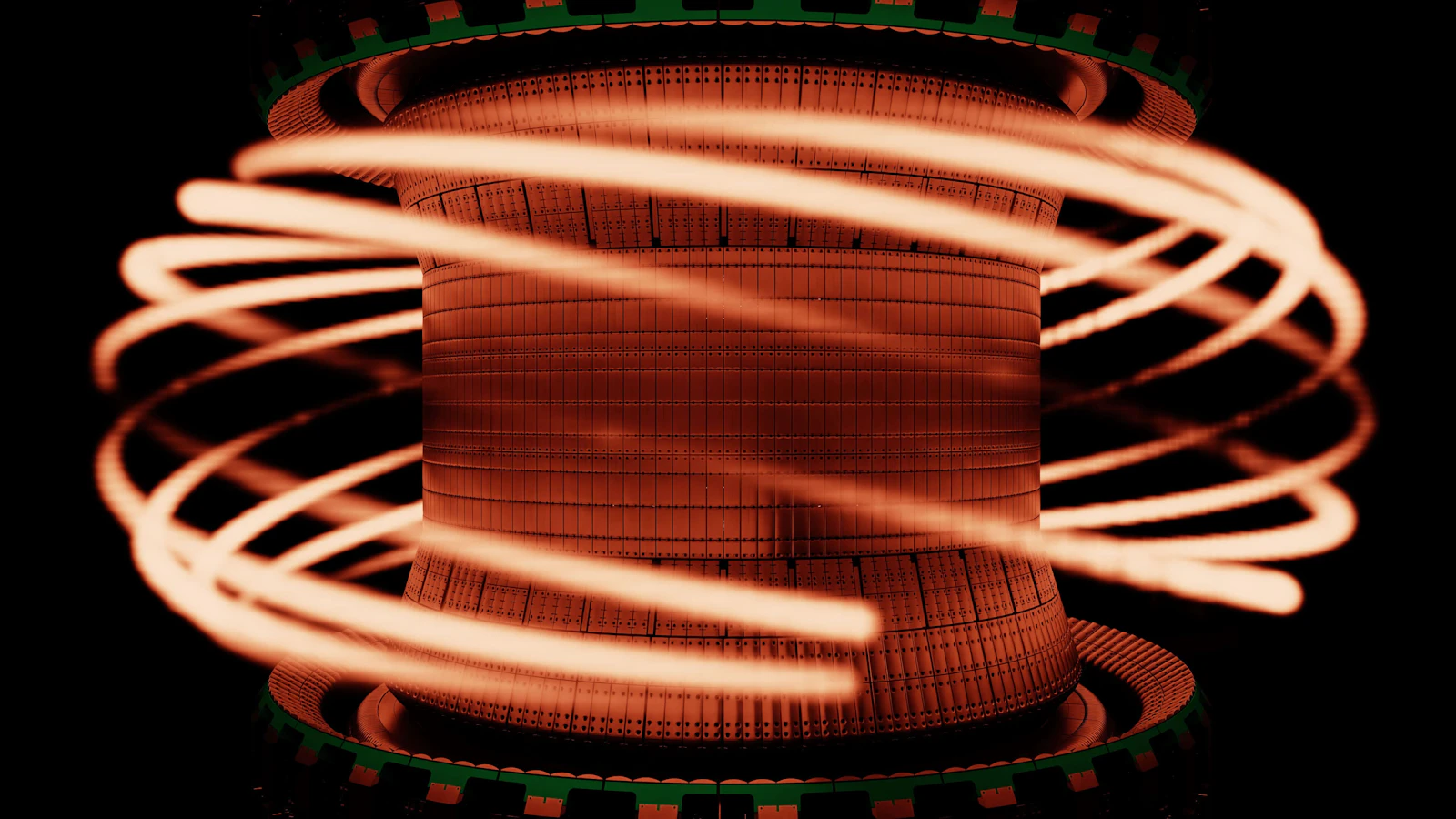
The Department of Energy’s Milestone-Based Fusion Development Program pays private companies only when they hit verified technical and commercial targets. ANS Nuclear Newswire rounded up updates from three participants this week, and together they sketch how different the paths to a fusion power plant have become.
Xcimer Energy, which pursues laser-driven inertial fusion, secured up to 30.5 million dollars in additional Milestone funding tied to achievements in its excimer laser system. Rather than the solid-state lasers used at the National Ignition Facility, Xcimer relies on what it describes as cost-effective gas lasers, durable gas optics, and a two-beamline layout. In June it launched its Phoenix prototype, which it calls the world’s largest privately owned laser system, and DOE approved the preconceptual design for its Athena commercial plant architecture. Chief executive Conner Galloway said the company has moved from proving the physics works to building the industrial technology, with commercial electricity targeted for the mid-2030s.
Zap Energy’s approach is a sheared-flow-stabilized Z-pinch, which uses pulses of electric current to compress a plasma column about 50 centimeters long without any magnets. Its approved milestones were unglamorous but essential: a 35-kilovolt, actively cooled pulsed-power capacitor rated for 50,000 amps peak current and projected to survive 6 billion pulses. A 2.8-pound prototype cycled at 8 kilovolts and more than 7,000 amps held its capacitance within a quarter of a percent. A pulsed power plant lives or dies on components that can fire millions of times a year without degrading.
Commonwealth Fusion Systems reported its selection as the only private company leading a Phase II project in DOE’s Genesis Mission, building an AI-enabled digital twin of its SPARC tokamak now being assembled in Devens, Massachusetts. The work spans software infrastructure connected to DOE computing, training datasets and AI surrogate models, reinforcement learning and agentic models for an operations co-pilot, and visualization pipelines. The CFS announcement describes it as the largest collaboration to date on AI in fusion, with Lawrence Livermore, Oak Ridge, Princeton Plasma Physics Laboratory, and SLAC among ten partners, and says AI models trained on DOE supercomputers will be used to plan pulses in the SPARC control room.
Source: ANS Nuclear Newswire
DIII-D and Kyoto Fusioneering Will Build a Permanent Negative-Triangularity Divertor

The DIII-D National Fusion Facility in San Diego has partnered with Kyoto Fusioneering to design, manufacture, install, and operate a new power exhaust system built around a negative-triangularity divertor, ANS Nuclear Newswire reports. The collaboration extends Kyoto Fusioneering’s existing work with Oak Ridge National Laboratory and brings in Columbia University researchers to study how the core plasma and its edge interact under the new geometry.
In a conventional tokamak the plasma cross-section is D-shaped, with the flat side of the D facing the center of the machine. Negative triangularity flips that, pointing the rounded side inward. The physics payoff, according to the article, is that this shape delivers high-performance plasma while naturally avoiding edge-localized modes, the periodic bursts of heat and particles at the plasma boundary that would erode the walls of a power plant. During a 2023 DIII-D campaign using temporary armor tiles, Columbia’s Kathreen Thome said researchers ran high-performance plasmas for weeks without seeing a single edge-localized mode.
Heat exhaust is one of fusion’s least glamorous and most consequential problems. A reactor must dump enormous power onto a small region of its inner wall, and the divertor is the component that takes the hit. Negative triangularity appears to spread that heat through radiation and ease the engineering demands on the divertor, which is why a permanent, purpose-built version is the logical next step after the temporary tiles. Kyoto Fusioneering will manufacture the tiles and work with Columbia on core-edge integration, power exhaust, diagnostics, and stresses on plasma-facing components.
The arrangement is also a case study in how fusion is now organized. A national user facility, a Japanese component company, a university, and a national laboratory are jointly building hardware to test a concept several private tokamak developers are watching closely, with results that will be public.
Source: ANS Nuclear Newswire
Oklo Announces Groves-2 Forge, a Reactor Built to Make Cancer-Treatment Isotopes

Oklo has announced plans for Groves-2 Forge, its next reactor project, building directly on the Groves Isotope Test Reactor that reached criticality in August 2026 in Lockhart, Texas. ANS Nuclear Newswire reports that the first Groves unit is a 15-megawatt-thermal pool-type, water-cooled demonstration reactor built through the Department of Energy’s Reactor Pilot Program, and that the sequel will integrate isotope irradiation and processing in a single facility.
The initial product is lutetium-177, a radioisotope used in targeted cancer therapies that is in chronically short supply. Lutetium-177 is made by irradiating ytterbium-176, and Oklo says it received 2 grams of enriched ytterbium-176 in September. The company intends to move from pilot-scale production to commercial scale under appropriate Nuclear Regulatory Commission licenses.
Chief executive Jacob DeWitte said Groves showed how quickly a new reactor could be built and brought to criticality through close collaboration between the private sector and DOE. The new project is supported by DOE’s Nuclear Energy Launch Pad Program, which extends the 2025 Reactor Pilot and Fuel Line Pilot Programs created under Executive Order 14301. Those programs allowed several startups to build and operate test reactors on an accelerated path outside the traditional licensing timeline, and Groves was one of the first to reach criticality under them.
Oklo is running several projects at once, including Aurora, a 75-megawatt-electric fast reactor at Idaho National Laboratory; Pluto, a plutonium-fueled sodium fast reactor; and the Aurora Fuel Fabrication Facility. Groves-2 shows a second commercial logic for small reactors alongside electricity: high-value isotopes, where a modest reactor can serve a medical market that today depends on a few aging research reactors around the world.
Source: ANS Nuclear Newswire
Polish Joint Venture Plans Six BWRX-300 Reactors on a Coal Plant Site
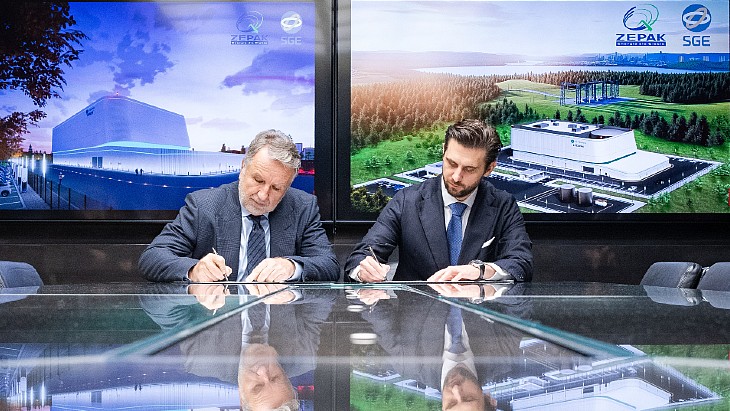
SGE, the nuclear venture founded by Polish industrialist Michał Sołowow, and the utility ZE Pak have formed a joint venture to build a plant of up to six BWRX-300 small modular reactors at Pątnów, the site of an existing coal-fired power station. World Nuclear News reports the project would total 1,800 megawatts electric, using GE Vernova Hitachi’s 300-megawatt boiling water reactor design.
ZE Pak will contribute land rights from its current holdings and has the option of remaining as a minority shareholder or exiting later. Sołowow framed the project plainly: replacing coal-fired generation with nuclear power based on SMR technology to modernize Poland’s energy system. Poland remains one of Europe’s most coal-dependent economies, and siting reactors where coal plants already stand reuses grid connections, cooling water access, and an industrial workforce.
The BWRX-300 is the most advanced of the Western small modular reactors in terms of real construction. World Nuclear News notes that the first commercial unit is under construction at Darlington in Canada, and that the U.S. Nuclear Regulatory Commission has issued a construction permit for a unit at the Clinch River site in Tennessee. Poland has received approval in principle for 26 BWRX-300 reactors in total, so the Pątnów project is one piece of a much larger program.
The design choice matters. Rather than a novel coolant or fuel, the BWRX-300 is a simplified, scaled-down boiling water reactor using conventional fuel, which means Poland is betting on repeatable construction of a known technology rather than on a first-of-a-kind demonstration. Whether a fleet of six identical units on one site can deliver the cost declines that modular construction promises is one of the most important open questions in nuclear economics, and Pątnów is set up to answer it.
Source: World Nuclear News
AEP Signs for Up to 1.6 Gigawatts of Mainspring Linear Generators
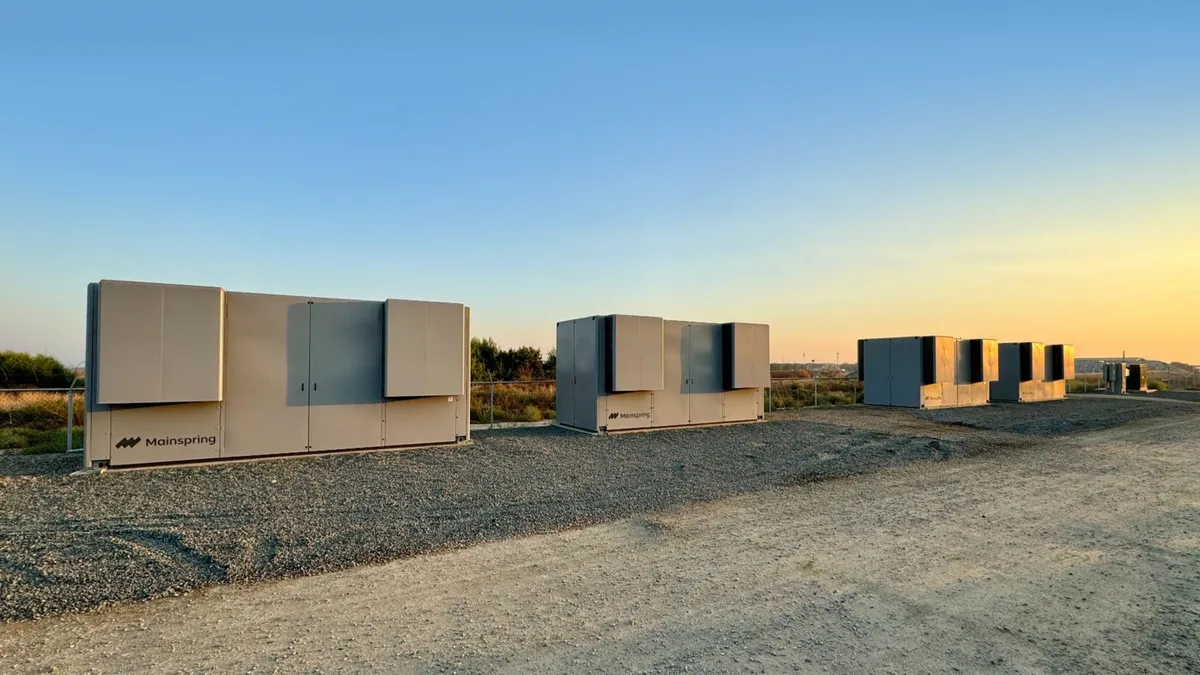
American Electric Power, one of the largest U.S. utilities, has agreed to buy up to 1.6 gigawatts of linear generators from Mainspring Energy over eight years, Utility Dive reports. The first 190 megawatts are scheduled for delivery in 2027, with roughly 200 megawatts a year thereafter, and the deal could be worth up to 4 billion dollars. It is Mainspring’s largest order and its first major entry into the investor-owned utility market after years of selling to commercial customers and data centers.
A linear generator is neither a turbine nor a conventional piston engine. Mainspring’s 2.5-megawatt units use a low-temperature, flameless reaction to drive magnets back and forth through copper coils, generating electricity directly. Because there is no flame and no turbine, the machines can run on natural gas, biogas, or hydrogen and switch among them, which lets a utility deploy them today on gas and transition to lower-carbon fuels later without replacing the hardware. Mainspring chairman and chief executive Tom Linebarger said the appeal to AEP is speed to power: the units can be deployed quickly wherever customers need them.
That speed is the point. Gas turbine order books have stretched to years, while data center load is arriving in months. Modular generators that ship from a factory and sit on a pad offer a way to add firm capacity at the pace demand is growing. Mainspring, founded in 2010, has raised over 1 billion dollars including a recent 242 million dollar Series G round, according to the article.
Separately, Utility Dive reports AEP committed about 4 billion dollars to a 702-megawatt Bloom Energy fuel cell project near Cheyenne, Wyoming, under a 20-year power purchase agreement with Google, with construction starting this year and completion targeted for 2028. The project incorporates carbon capture for near-zero-emissions generation. Taken together, the two deals show a major utility reaching for factory-built, fuel-flexible generation as the fastest way to serve new load.
Source: Utility Dive
EPRI Finds Grid Battery Failure Rates Fell 98 Percent in Seven Years
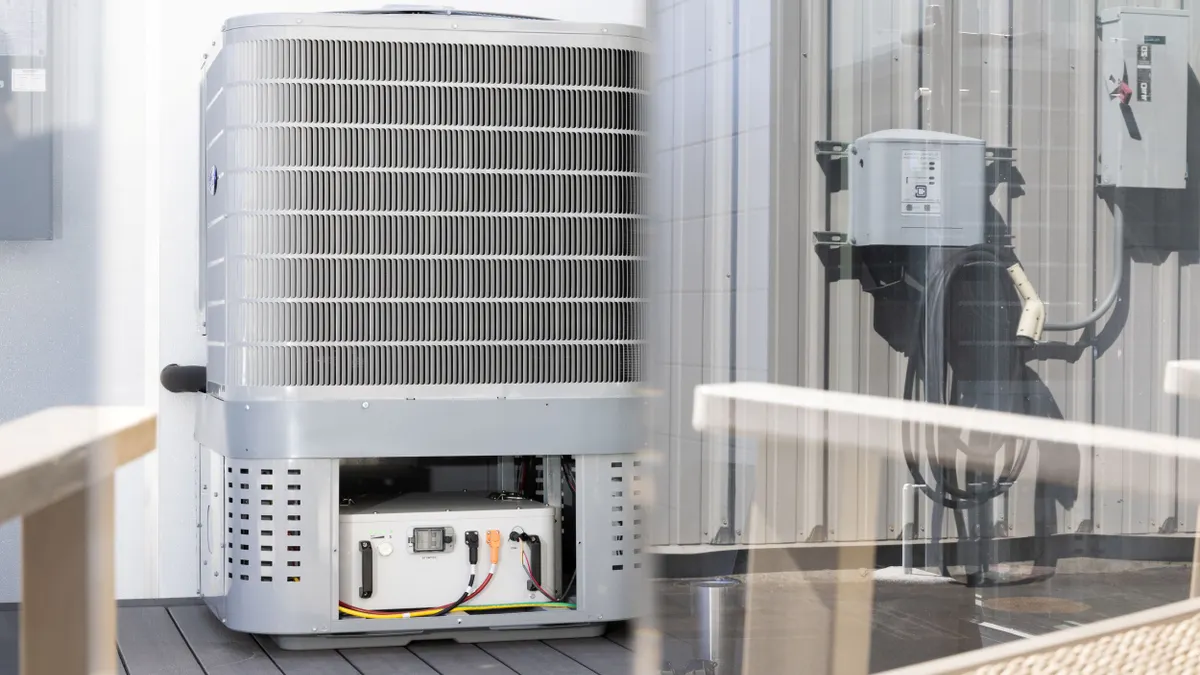
Lithium-ion battery storage has become dramatically safer, according to a new analysis from the Electric Power Research Institute reported by Utility Dive. The global failure rate per gigawatt-hour of installed storage dropped 98 percent between 2018 and 2025, with a further 50 percent reduction between 2024 and 2025 alone. Current stationary systems have annual failure rates between 0.04 and 0.14 percent, which EPRI compares to the roughly 0.1 percent rate for oil-filled electrical transformers, a piece of equipment the public rarely thinks about.
Of documented safety incidents worldwide, 93 percent resulted in no injuries or fatalities, and there have been no injuries or fatalities from battery failures in the United States since April 2019. The two incidents that still shape public perception illustrate the trend: the 2019 Arizona Public Service explosion injured four firefighters, while the January 2025 thermal runaway at Moss Landing destroyed a 300-megawatt battery array but hurt no one, in part because codes and designs had changed in between.
The caveat is legacy equipment. Systems installed before 2021 represent only 3 percent of global storage capacity but fail at elevated rates compared to those built under newer safety codes. EPRI senior technical leader Lakshmi Srinivasan put it simply: there are things known in 2026 that were not understood in 2019 or 2020. The report recommends owners of pre-2021 systems conduct risk assessments and consider retrofits ranging from flammable gas detectors to upgraded ventilation, while noting some modifications may void manufacturer warranties.
The finding matters because storage is being built at a pace that makes it a core grid asset rather than a niche one, and permitting fights over battery projects frequently turn on fire risk. A failure rate comparable to transformers, backed by seven years of data, is the kind of evidence that moves those debates from anecdote to statistics.
Source: Utility Dive
The IEA Explains Why Chinese Electrolysers Cost Half as Much, and Why That May Not Travel
Electrolysers, the machines that split water into hydrogen and oxygen, are the hardware on which the entire renewable hydrogen economy depends. A new commentary from the International Energy Agency by Herib Blanco, Uwe Remme, and Timur Gül asks why Chinese units are so much cheaper and whether the rest of the world can simply import the savings.
The scale of the gap is striking. The IEA reports Chinese alkaline electrolyser capital costs of 500 to 1,100 dollars per kilowatt, against 1,900 to 2,500 dollars per kilowatt elsewhere. Global deployment hit a record 4 gigawatts in 2025, up from 300 megawatts five years earlier, with China accounting for two-thirds of installed capacity and nearly 70 percent of manufacturing. The proximate cause is a manufacturing glut: China’s 35 gigawatts of annual production capacity dwarfs domestic demand of under 2 gigawatts, and the resulting competition has driven some bids as low as 170 dollars per kilowatt.
The more interesting finding is where the cost actually sits. The core electrolyser stack is only 15 to 20 percent of a project’s capital cost. Engineering, procurement, construction, and contingency account for 55 to 65 percent, and other plant components such as power electronics, piping, and compressors make up 25 to 30 percent. Chinese stacks are almost 60 percent cheaper on average than those made in advanced economies, but when a Chinese stack is imported into Europe and surrounded by local equipment and local construction, the overall capital cost advantage shrinks to about 8 percent. The IEA also notes trade-offs in efficiency and durability: a cheaper stack that uses more electricity per kilogram of hydrogen can erase its own savings, since electricity is 35 to 45 percent of hydrogen production cost.
The authors see several reasons the Chinese advantage may not become global dominance. Electrolysers are bulky and awkward to ship, some Chinese products have not matched international performance standards consistently, and global manufacturing capacity of 58 gigawatts a year is running at under 10 percent utilization, which gives every region room to build its own. Market behavior is also shifting: 40 Chinese manufacturers pledged in November 2025 to end below-cost bidding, China imposed mandatory efficiency standards in March 2026, and the European Hydrogen Bank now requires 75 percent of stack capacity to originate outside China. The lesson for anyone hoping to make hydrogen cheap is that the stack is not the problem. The construction site is.
Source: International Energy Agency
A Water-Soluble Binder Makes Lithium-Ion Batteries Cleaner to Build and Easier to Recycle

Every lithium-ion electrode is held together by a binder, a polymer glue that keeps active particles attached to the metal foil beneath them. The industry standard is a fluorinated polymer that must be dissolved in a toxic organic solvent during manufacturing and then recovered in energy-intensive drying steps. Chemists at the University of California San Diego report in Nature Communications a replacement that dissolves in water, contains no fluorine, and matches the incumbent’s performance, according to TechXplore.
The new binder combines two inexpensive and widely used polymers, polyacrylic acid and carboxymethyl cellulose, crosslinked with citric acid. Batteries built with it delivered the same initial performance as conventional cells and, the researchers report, maintained capacity longer over hundreds to thousands of charge cycles. The binder worked across the main electrode chemistries in commercial use: lithium iron phosphate and nickel-rich cathodes, and graphite and silicon anodes. That breadth matters because a binder that only works with one chemistry would face a steep adoption barrier.
The recycling payoff may be larger than the manufacturing one. Because the binder dissolves in water without residue, spent electrodes can be soaked to free the active materials for direct reuse, skipping the aggressive chemical or thermal processing that conventional fluorinated binders require. The team reports that batteries rebuilt from the recovered materials performed as well as those recovered from conventional binders by harsher methods.
Binders are a small fraction of a battery’s mass and cost, which is exactly why a drop-in change could propagate quickly. Eliminating fluorinated polymers and their solvents from electrode production would remove a hazardous waste stream from gigafactories and would simplify the circular supply chain that battery recycling depends on, with no sacrifice in the cell performance customers actually buy.
Source: TechXplore