Energy Weekly Review 2026-10-23

Week In Review
The week’s strongest thread ran through the American nuclear supply chain, from the fuel factory to the licensing office to the plant site. The Nuclear Company proposed a six-reactor AP1000 campus in Kentucky that would, at 6.6 gigawatts, exceed any nuclear station now operating in the United States. The same day, Westinghouse committed a billion dollars to a new fuel fabrication plant in South Carolina, the first fleet-scale fuel factory built in the country in half a century, and one aimed at the slightly higher enrichments that let existing reactors run longer cycles and produce more power. The day after, the Nuclear Regulatory Commission finalized a rule that lets designs already authorized by the Departments of Energy or Defense carry their test data and safety analyses into commercial licensing, with review targets of twelve to eighteen months. Radiant’s selection by the US Navy for a one-megawatt microreactor at Crane, Indiana, shows the kind of defense-first project that rule is designed to translate into civilian deployments. Taken together, these are the pieces of a buildout: fuel, fast licensing, demonstration hardware, and a developer willing to propose gigawatts.
The back end of the fuel cycle also moved, and in a way that answers the oldest objection to nuclear expansion. Finland granted an operating license for Onkalo, the world’s first permanent geological repository for spent fuel, after more than two decades of construction. Permanent disposal has been technically understood for a long time; what Finland has now demonstrated is that a democracy can finish the political and regulatory work too.
Away from nuclear, the week’s research news concerned the materials that make electrochemical energy cheaper. Fraunhofer ISE ran silicon-rich lithium-ion pouch cells through a thousand full cycles while keeping most of their capacity, attacking the durability problem that has kept high-silicon anodes out of mass production. Korean researchers built an alkaline electrolyzer electrode from nickel and cobalt that outperforms platinum at a tiny fraction of the material cost, and scaled it to industrially relevant sizes. Both are incremental on paper and significant in practice, because cycle life and catalyst cost are precisely the parameters that decide whether a laboratory result becomes a product.
The remaining items are about using the grid we already have more intelligently, plus one genuinely unusual idea. Google and Voltus scaled their PJM virtual power plant ambition from one hundred megawatts to more than a gigawatt, treating flexible demand as a resource in the most capacity-stressed market in the country. IEEE Spectrum made the case that variable frequency drives on the nation’s fifty million motors could free up enough power for years of data center growth without new generation. And a Seattle startup drew a few seconds of net power from a geothermal well a mile beneath the Pacific, a result that is tiny in watts and large in what it suggests about where heat can be harvested.
Items
The Nuclear Company Proposes a 6.6-Gigawatt AP1000 Campus in Kentucky
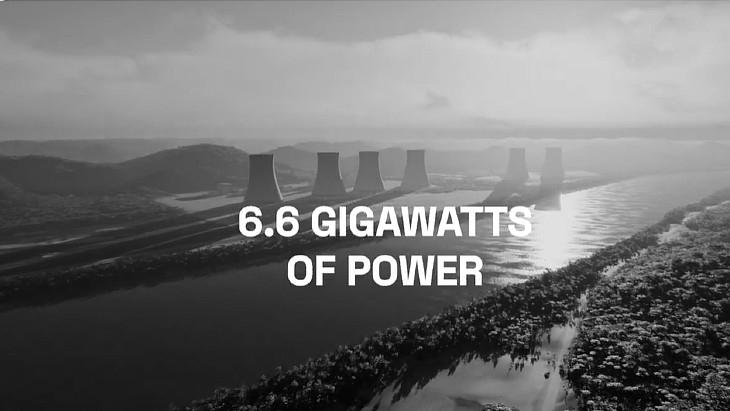
The Nuclear Company has announced plans for Prosperity One, a nuclear energy campus in Lewis County, Kentucky, on the Ohio River, with up to six Westinghouse AP1000 reactors and a combined capacity of 6.6 gigawatts. According to World Nuclear News, that would make it larger than any nuclear power plant operating in the United States today. The developer is targeting a construction start in 2028, with the first phase consisting of two reactors.
The project is a partnership with landowner Sam Howard, founder of Trace Creek Construction, whose comment on the announcement was personal rather than corporate: nine grandchildren live in Lewis County, and he wants them to be able to stay. Joe Klecha, the company’s chief nuclear officer, framed the project around lasting local jobs. The work ahead is the unglamorous front end of any nuclear project: site characterization, geotechnical investigation, environmental assessment, transmission planning, and preparation of a federal license application.
The Nuclear Company is a young firm, having emerged from stealth in July 2024, but it has been assembling the pieces of a credible developer. In March 2026 it launched a services arm for maintenance and outage support, and in May 2026 it announced a partnership with the investment firm Brookfield on completing the abandoned AP1000 units at VC Summer in South Carolina. Choosing the AP1000, a design with operating units at Vogtle and a known construction history, rather than a first-of-a-kind reactor, is itself a statement about how the company intends to manage risk.
The significance lies in scale and in choice of technology. Much of the recent news in American nuclear has concerned small modular reactors and microreactors, which promise easier financing and faster deployment. Prosperity One is a bet that the fastest route to large amounts of firm power is a proven large reactor built in series on one site, with each successive unit cheaper than the last. Whether that bet pays off depends on financing and on the licensing timeline, but the proposal itself marks a shift in ambition.
Source: World Nuclear News
NRC Finalizes an Expedited Licensing Path for Reactors Already Authorized by DOE or DOD
The Nuclear Regulatory Commission has finalized a rule that gives reactor designs previously authorized by the Department of Energy or Department of Defense a faster path through commercial licensing. The rule modifies the existing 10 CFR Part 50 framework and the new Part 53, and allows applicants to bring the analyses, test data, and other information generated under federal authorization directly into the NRC’s review. The agency set target review times of roughly eighteen months for a first-of-a-kind application and twelve months for subsequent applications of the same design, though Chairman Ho Nieh cautioned that these are targets that may vary with the specifics of each case.
The rule implements a vision laid out in Executive Order 14300, and Nieh was direct about what it does and does not do. “This is not a shortcut; it is not a compromise,” he said. “Our standards for safety as a result of this rule have not changed.” Christian Araguas, deputy director for engineering and science in the NRC’s Office of Advanced Reactors, acknowledged that commenters had raised concerns about the rule being perceived as bypassing NRC standards, and the agency said plainly that it is not a rubber stamp for DOE or DOD projects. Areas the NRC flagged as potentially needing more scrutiny than a federal authorization provides include consequence analysis, natural phenomena hazards, and material qualification.
The proposed rule drew 136 unique comment submissions. The final version is scheduled for publication in the Federal Register on October 28, 2026, and takes effect thirty days later. A separate rulemaking, Part 57, covering microreactor designs, is still under development.
The practical effect is to turn the growing number of federal demonstration programs into a pipeline. Reactors tested at Idaho National Laboratory’s facilities or deployed on military bases now have a defined route to commercial sale, with the government’s own test data counting toward the civilian license. That makes the military and DOE programs a form of de-risking for the commercial market rather than a parallel track that leads nowhere.
Source: ANS Nuclear Newswire
Westinghouse Commits One Billion Dollars to the First New US Fuel Factory in Fifty Years

Westinghouse Electric Company will invest one billion dollars in a new building at its Columbia Fuel Fabrication Facility in Hopkins, South Carolina, which World Nuclear News describes as the first new fleet-scale nuclear fuel factory built in the United States in more than fifty years. Operations are targeted for 2030. The new plant will sit beside the existing facility, which dates from 1968 and currently employs more than 1,200 people.
The product is LEU+ fuel, enriched above the three to five percent uranium-235 used in most commercial reactors today. Westinghouse achieved the first commercial US deployment of LEU+ in 2025 with lead test assemblies at Vogtle Unit 2. Higher enrichment lets a reactor extract more energy from each fuel load, which supports two things utilities want: power uprates that raise output from existing plants, and longer operating cycles that cut refueling outages and operating costs. The company tied the investment to the Department of Energy’s UPRISE program, which aims to add five gigawatts of capacity to the existing US nuclear fleet by 2029 through uprates alone.
The facility will use what Westinghouse calls a dry process similar to its fuel plant in the United Kingdom, with more automation and improved ergonomics than the legacy line. Peak construction will employ several hundred contractors alongside thirty to fifty in-house staff, and the company projects 4.9 billion dollars of economic impact across South Carolina over ten years. Chief executive Dan Sumner put the investment in the context of ninety years of Westinghouse nuclear work and the goal of unlocking new generation.
Five gigawatts from uprates is roughly the output of four large reactors, delivered without building any. That is the quiet argument for this plant: fuel is the fastest lever on nuclear capacity, and the domestic supply chain for higher-assay fuel has been the bottleneck.
Source: World Nuclear News
The US Navy Selects Radiant’s Kaleidos Microreactor for Crane, Indiana
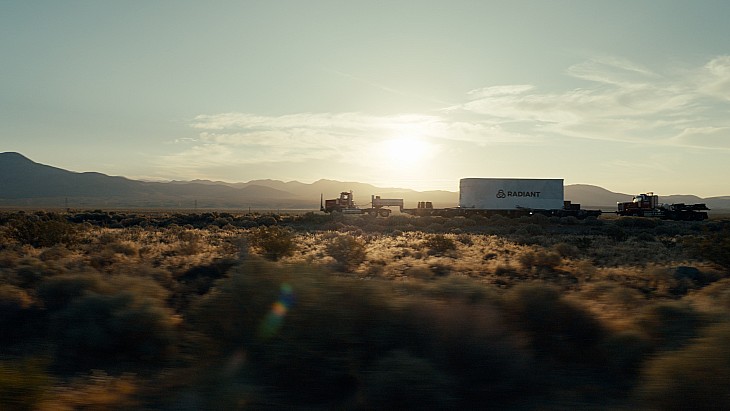
Radiant Nuclear has been selected by the US Navy to deploy its Kaleidos microreactor at Naval Weapons Station Crane in Indiana. According to World Nuclear News, the selection makes Radiant the only company chosen by all three military departments, Army, Navy, and Air Force, for their microreactor programs. The Crane unit would be the Navy’s first shore-based advanced micromodular reactor and the first power-producing nuclear reactor in Indiana.
Kaleidos is a factory-built, high-temperature gas-cooled reactor producing one megawatt of electricity, designed to be transported to a site and plugged in without cooling water, extensive excavation, or major on-site construction. It is intended to run for up to five years between refuelings over a twenty-year operating life. The reactor is currently undergoing testing at Idaho National Laboratory’s DOME facility, where Radiant won exclusive year-long access through a competitive selection.
The deployment falls under the Janus Program, announced in September by the Department of War, which aims to provide what it calls resilient, secure, and assured energy for defense installations and critical missions. Jeff Waksman, principal deputy assistant secretary of the Army for installations, energy, and environment, said the program was built to deliver real hardware rather than studies. Before the reactor arrives at Crane, the project will move through design refinement, prototype testing, environmental review, site preparation, and regulatory coordination with the Nuclear Regulatory Commission and the Naval Nuclear Propulsion Program, among others.
One megawatt is a modest amount of power, but the point of a microreactor is not the number. It is the demonstration that a reactor can be built in a factory, shipped as a unit, and operated for years at a remote site with minimal infrastructure. If that works for a naval base, it works for a mine, a data center, or an island grid, and the NRC’s new rule for federally authorized designs gives Radiant a defined path to those markets.
Source: World Nuclear News
Finland Licenses Onkalo, the World’s First Permanent Spent Fuel Repository

Finland’s government has granted an operating license for Onkalo, the world’s first permanent geological repository for spent nuclear fuel. The facility, blasted into 1.9-billion-year-old bedrock at Eurajoki in southwestern Finland, has been under construction for twenty-two years. It has capacity for 6,500 tonnes of uranium, enough to take the spent fuel from Finland’s five reactors, and cost about 1.16 billion dollars to build. Ilkka Poikolainen, chief executive of the operator Posiva, called it a great and historic day for the company and for Finland.
The disposal concept is deliberately simple. Spent fuel assemblies are sealed inside copper canisters chosen for corrosion resistance, the canisters are lowered into holes drilled in the floors of deep tunnels, and the holes are packed with bentonite clay and sealed with steel-reinforced concrete plugs. The fuel remains highly radioactive for tens of thousands of years; after roughly a hundred thousand years its radioactivity will have fallen to the level of natural uranium ore. The geology, the copper, and the clay are three independent barriers, each intended to hold if the others fail.
The license does not mean disposal begins immediately. Finland’s radiation and nuclear safety authority, STUK, must first verify and approve a set of commissioning tests and inspections. Sweden and France are building their own deep repositories, but Finland is expected to open first.
The technical case for deep geological disposal has been understood for decades. What has been missing almost everywhere is the political will to pick a site, keep a community’s consent across generations of governments, and finish the job. Finland has now done all three, and every country debating whether nuclear waste is a solved problem has a working example to point to.
Source: TechXplore
Fraunhofer ISE Runs Silicon-Rich Battery Cells Past a Thousand Cycles

Researchers at the Fraunhofer Institute for Solar Energy Systems ISE in Freiburg have cycled lithium-ion pouch cells with silicon-rich anodes more than a thousand times while retaining 83 percent of their original capacity. The cells, built on the institute’s own semi-automatic production line as part of the StrOboBatt project, are 25-ampere-hour, forty-layer full cells with a nickel-rich nickel-manganese-cobalt cathode and an anode in which a silicon-carbon composite makes up 51 percent of the active material.
Silicon is attractive because its theoretical capacity is about ten times that of graphite, the standard anode material. The catch is that silicon swells and cracks as it absorbs lithium, and cells with a lot of it have tended to die young. “Cycle life is one of the key hurdles to widespread industrial use of silicon-rich anodes,” said Lukas Dold, who leads the institute’s battery materials technology and scaling team. The anodes reached a specific capacity above 1,000 milliampere-hours per gram and an areal capacity above five milliampere-hours per square centimeter, and the cells delivered 280 watt-hours per kilogram in the research format, which the team expects to rise to about 330 watt-hours per kilogram in an industrially optimized design.
One of the more useful findings concerned mechanical pressure. The team tested cells under two levels of axial contact pressure, 300 and 1,000 kilopascals, cycling at a one-hour charge and discharge rate. The higher pressure produced significantly better long-term performance. “Axial pressure has a significant impact on long-term behavior of the cells,” said Marc Kissling, who leads the cell production and technology evaluation group. That is a design lesson for pack engineers as much as a materials result.
Energy density figures of 330 watt-hours per kilogram would put these cells meaningfully above today’s mainstream automotive chemistries. The thousand-cycle result does not settle every question about silicon, but it moves the material from a promising laboratory electrode toward something a cell maker could put in a product.
Source: Fraunhofer ISE
A Nickel-Cobalt Electrode Outperforms Platinum in Alkaline Electrolysis at a Fraction of the Cost

A team at the Korea Institute of Energy Research led by Kyung-Soo Kang and Hyun-Jun Lee has developed a hydrogen-evolution electrode for alkaline water electrolysis made entirely from nickel and cobalt, with no platinum or ruthenium. Published in Advanced Science, the work reports that the electrode produces hydrogen at roughly 40 percent of the overpotential required by a conventional platinum electrode, meaning it wastes less energy driving the reaction. In a unit cell 8.7 centimeters across, it ran at 11 percent lower cell voltage than a conventional nickel-electrode cell and survived 600 start-stop cycles without degrading.
The cost arithmetic is stark. The article cites platinum at about 58 dollars per gram and ruthenium at about 54 dollars per gram, against nickel at about two cents per gram and cobalt at about five cents, a material cost reduction of around 99 percent. Alkaline electrolysis has always been the cheaper, more rugged option for industrial hydrogen, but its water-splitting kinetics are about a hundred times slower than in acidic systems, which is why noble metals have crept back in to speed things up. The new electrode is a heterostructure that combines nickel oxide with a nickel-cobalt alloy, and the two phases work together to accelerate the reaction.
The team’s most important claim may be about manufacturing rather than chemistry. They fabricated electrodes 40 centimeters in diameter, an industrially relevant size, and Lee said this verifies the feasibility of scaling up. Kang said the research proves that non-noble-metal electrodes can achieve what he called world-class performance and durability in alkaline electrolysis.
The economics of hydrogen are dominated by electricity price and electrolyzer capital cost, and catalyst materials are one of the few line items in the latter that can be cut by orders of magnitude rather than percentages. A durable electrode that beats platinum on performance while costing almost nothing is the kind of result that shifts the cost curve for the whole system.
Source: TechXplore
Google and Voltus Target More Than a Gigawatt of Virtual Power Plant Capacity in PJM

Google and the demand-response company Voltus have announced a goal of gigawatt-scale virtual power plant capacity in PJM Interconnection, the grid operator serving about 67 million people from Illinois to Virginia. The commitment, which runs through 2040, expands an initial 100-megawatt target the two companies set in June 2026. “The first 100 megawatts was always the first bite,” Voltus chief executive Dana Guernsey told Canary Media. “We were always looking at how we bring this to scale, because scale is what we need.”
A virtual power plant aggregates thousands of flexible loads and distributed resources, from commercial buildings to batteries to industrial processes, and dispatches them as if they were a single generator. In PJM, the case for doing so has become urgent. Peak demand recently reached 162.6 gigawatts, the grid operator forecasts 30 to 34 gigawatts of new demand from large loads by the early 2030s, and according to the article the cost of meeting peak demand has risen more than eightfold in recent years. Every megawatt of flexible demand that can be reliably shed at peak is a megawatt of generation that does not have to be built or paid for.
Voltus already manages more than nine gigawatts of demand response and virtual power plant capacity nationwide and is aiming for twenty gigawatts by 2030. It acquired the battery software startup Brightfield AI in June 2026 and raised 225 million dollars in Series D funding earlier this month. Ellen Zuckerman, Google’s head of energy market development for the Americas, represents the other side of the partnership: a company whose data centers are a major source of the new load that is stressing PJM, and which has an interest in proving that load can be part of the solution.
The deeper implication is that the hyperscalers now see demand flexibility as something they must help build rather than merely buy. A gigawatt of virtual power plant capacity in the most constrained market in the country, backed by one of its largest new customers, is a test of whether the grid can grow faster by getting smarter than by getting bigger.
Source: Canary Media
The Case for Putting Variable Frequency Drives on America’s Fifty Million Motors
IEEE Spectrum this week made an argument that is easy to overlook because the technology is sixty years old. Some fifty million electric motors run in American factories and buildings, and together they consume about a third of the country’s electricity. Most of them run at a single speed, with output throttled by valves or dampers that waste much of the energy the motor draws. A variable frequency drive, a power-electronics device that adjusts the frequency and voltage fed to a motor, lets the motor run only as fast as the job requires, and the article reports that this cuts motor energy use by 40 to 60 percent.
Adoption is strikingly low. Citing a 2021 Lawrence Berkeley National Laboratory report, the article puts drives on about 16 percent of industrial motors and only 4 percent of commercial-sector motors. Toyota’s plant in Georgetown, Kentucky, installed drives on more than 200 motors in 2015 as part of a 1.25-million-dollar pilot and saved about 700,000 dollars a year in electricity, a payback under two years. “This is low-hanging fruit that gives a lot back and is reasonably simple,” said Nik Sawe of the think tank Energy Innovation. Neal Elliott of the American Council for an Energy-Efficient Economy, who wrote a book on efficient motor systems in 2002, said there remains a huge opportunity in varying motor speed.
Why so little uptake? Zack Valdez of the National Electrical Manufacturers Association pointed to a familiar split incentive: developers and builders prioritize lower upfront cost over the operating savings that accrue to someone else. Michael Reckamp of Danfoss Drives said momentum has picked up in recent years but the technology has not permeated enough to reach everyone who would benefit.
The headline claim comes from Kirk Anderson of ABB, who said that if a drive were added to every motor already installed, the freed-up electricity could supply as much as five years of data center growth without building any new generation. That is a remarkable number for a device invented in the late 1960s, and it reframes the capacity debate: the cheapest new gigawatts in the country may be the ones already being wasted in a motor running at full speed against a half-closed valve.
Source: IEEE Spectrum
A Startup Generates Net Power From a Geothermal Well a Mile Beneath the Pacific
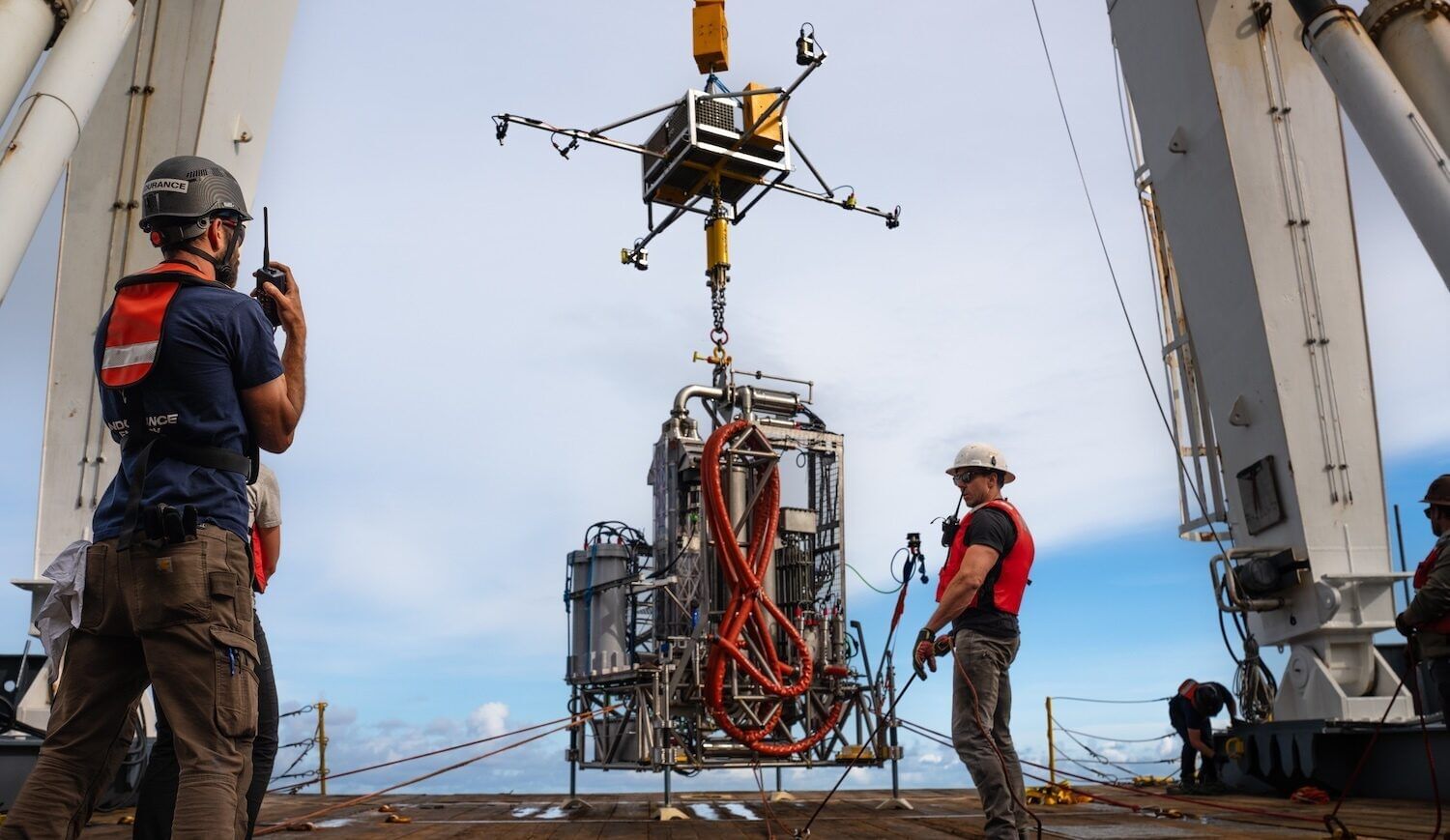
On September 27, 2026, a three-ton power unit called Adélie, sitting about a mile below the surface of the Pacific near Axial Seamount some 300 miles west of Oregon, drilled into the seafloor, ran hot fluid through an organic Rankine cycle turbine, and generated roughly 60 watt-hours over about 29 seconds. For nearly nine of those seconds the turbine produced more power than it consumed, and the surplus charged the unit’s backup batteries. Canary Media reported the result this week. The company behind it, Seattle-based Endurance Energy, was founded in January 2025 by former SpaceX engineer Andrew Redd and has raised 63 million dollars in venture funding.
The numbers are tiny, and the company does not pretend otherwise. Redd described the run as the first end-to-end demonstration of subsea geothermal as a concept, and invoked the engineering adage of making something exist before making it good. It was Endurance’s fifth deep-sea deployment but the first to combine drilling, generation, and data transmission back to Seattle in a single operation. The idea is that the mid-ocean ridges and volcanic seamounts where tectonic plates spread offer shallow, extremely hot rock that on land would require drilling miles down to reach, with the ocean itself as an unlimited cold sink for the power cycle.
Others have tried. Chinese scientists produced a few watts from a hydrothermal vent in 2016, and an Icelandic government-backed project drilled near the Mid-Atlantic Ridge but ran into seawater corrosion. The article gives a fair hearing to skeptics: geologist Emily Pope of the Center for Climate and Energy Solutions called the approach eyebrow-raising and questioned whether it adds enormous technical difficulty to an energy source for which demand at sea is limited.
Endurance’s answer is island nations. It has partnered with the Kingdom of Tonga on a planned two-megawatt commercial project, intends to redeploy a refurbished unit this winter with higher output targets, and aims to generate electricity from a commercial-scale system in 2027. If the corrosion and reliability problems can be solved, the resource is vast and sits conveniently near many places that currently burn imported diesel.
Source: Canary Media