Intelligence Augmentation Weekly Review 2026-10-20

Week In Review
The week’s biggest story was a proof, not a product. OpenAI’s claimed proof of the quasi-Riemann hypothesis, covered in AI Proved the Quasi-Riemann Hypothesis. What Happens Now?, is being treated by number theorists as the most significant AI-for-mathematics result to date. What makes it an intelligence augmentation story rather than an automation story is what happened next: the machine’s 49 pages were, by the mathematicians’ own account, poorly written, and it fell to humans to verify the argument, condense it to a readable dozen pages, and work out which of its tools might generalise. The division of labour that emerged, machine search and synthesis followed by human verification and interpretation, is the same one that shows up in nearly every other item this week.
Three studies looked at that division of labour empirically. A pre-registered trial with 228 critical care physicians, Indirect Influences of Artificial Intelligence Advice on Complex Sepsis Treatment Decisions, found that doctors given a mediocre algorithm’s recommendation chose the optimal treatment far more often than the algorithm itself would have, because the advice prompted them to reconsider rather than to comply. Following Delegation Traces to Study Human Oversight in Interaction with Multimodal AI watched what AI-literate users actually do after an AI answers, and found that “use it but verify” was the dominant policy even when trust was high. And Exploring Visual Access and Proactive AI Tutoring for Handwritten Mathematics showed that giving an AI tutor a live camera view of a learner’s handwritten work shifts its help toward checking what the learner is doing rather than lecturing. In all three, the AI’s value came from how it changed human thinking, not from its own accuracy.
Two papers took the longer and less comfortable view. Modeling the Coevolution of Human Skills and AI Adoption builds a game-theoretic model in which populations can lock into either high skill with low AI reliance or widespread adoption with degraded average skill, and identifies the parameter that decides which. Against that worry, Does AI-Assisted Development Homogenize Software? examined 50 long-lived open-source projects across the pre-LLM, LLM, and agentic eras and found no evidence that AI assistance makes code more uniform or worse; in Java, similarity actually fell. The two are not contradictory. One is a model of what could happen under certain incentives, the other a measurement of what has happened so far in one domain, and together they frame the open question of how to keep the good equilibrium.
On the hardware side of augmentation, non-invasive speech decoding had a strong and self-critical week. Logit Averaging During Training Sets a New State of the Art for Non-Invasive Speech BCI beat the winner of a major phoneme-decoding competition by a wide margin with a method the authors call the simplest one they tried, while How Large an Effect Would We Have Seen? audited three public scalp-EEG speech corpora and showed that the standard positive controls can be carried by facial muscle artefact rather than brain signal. The field advancing and policing itself in the same week is a healthy sign. Implanted interfaces moved toward routine clinical practice with Paradromics and Siemens Healthineers Launch Strategic Initiative, an effort to standardise the imaging that decides where an implant should go. And for a decidedly low-tech cognitive aid, Walking May Improve Your Attention Span reports a large wearable-tracked study linking daily step count to sustained attention and impulse control.
Items
AI Proved the Quasi-Riemann Hypothesis. What Happens Now?
The Riemann hypothesis, which concerns where the zeros of the zeta function lie and has resisted proof for about 160 years, has a weaker cousin. The quasi-Riemann hypothesis asks not that every nontrivial zero sit exactly on the critical line but that they all lie within some band around it. According to Quanta’s reporting, OpenAI announced a 49-page paper, completed on October 5, claiming that all nontrivial zeros have real part between 1/12 and 11/12, with a longer companion paper claiming a tighter band of 1/8 to 7/8. Jared Duker Lichtman of Stanford called it “the most significant AI-for-math achievement so far, by quite a margin,” and Maksym Radziwiłł of NYU noted that most of the consequences mathematicians want from the full hypothesis already follow from the quasi version.
The reaction from the field is a study in how expert judgement works alongside a powerful but unpolished tool. Radziwiłł said the papers “fall short of the standard of exposition and clarity in our area by a wide margin.” Peter Sarnak of Princeton said he will not call it a theorem until humans have checked every detail. Mathematicians have since condensed the 49-page argument into summaries of 7 to 13 pages for their colleagues. Quanta also reports that this paper was the only one of 722 that OpenAI released on October 6 to receive human editing before publication, and that the company declined to say who edited it.
The content of the proof is as interesting as its provenance. Rather than inventing new mathematics, the argument synthesised existing tools, including an overlooked family of functions built from metaplectic forms that Alexander Dunn of Georgia Tech had spent five years studying, and a 2021 formula by Dunn and Radziwiłł. Radziwiłł observed that the model’s confidence in applying their tools to this problem was “a pretty bold belief to have.” The machine’s contribution, in other words, was to search a large space of known techniques and bet on a combination that human specialists had not tried.
Whether this path leads to the full Riemann hypothesis is openly doubted. Will Sawin of Princeton expects that once the new methods are internalised, the field will still feel as far from the full result as before. Thomas Bloom of Manchester countered that people would have said the same about the quasi version a few weeks earlier. Either way, the practical shape of mathematical work has shifted: machines propose, humans verify, clarify, and decide what the result means.
Source: Quanta Magazine
Physicians Given Mediocre AI Advice Outperformed Both the Advice and Their Unaided Peers
A team including Venkatesh Sivaraman, Jean Feng, Suchi Saria, Jeremy Kahn, and Adam Perer set out to understand how AI recommendations actually change clinical decisions in sepsis, a condition where treatment choices are complex and time-pressured. The work had two parts: a retrospective evaluation of an AI treatment-recommendation system on 6,928 sepsis patients, and a pre-registered experiment with 228 US critical care physicians who made treatment decisions with different forms of algorithmic advice.
The headline finding is counterintuitive. Physicians who received a simple algorithmic recommendation chose the optimal treatment in 56.3 percent of decisions. Had they followed the recommendation every time, they would have been optimal in only 31.8 percent. And physicians given alternative presentations of the advice did worse, at 42.9 percent optimal. The doctors were not blindly accepting the system’s output, nor were they ignoring it. According to the authors, they “selectively adapted and improved weak advice, likely because it prompted them to reconsider their assessment.”
This is an indirect effect: the recommendation’s value lay in the reconsideration it triggered rather than in its own accuracy. That has practical consequences for how clinical AI should be evaluated and deployed. A system judged only by how often its advice is correct would have looked poor here, yet in the hands of experts it raised decision quality substantially. The authors argue that integrating AI into sepsis care requires attention to “indirect influences resulting from human-AI collaborative reasoning,” not just algorithmic performance.
The result also sharpens the design question for decision support more broadly. The format of the advice mattered as much as its content, and the format that worked best was the simplest. Systems that prompt an expert to re-examine their reasoning may be more valuable than systems that try to be right on their own.
Source: arXiv
Watching What People Actually Do After an AI Answers
Most studies of trust in AI ask people how much they trust a system. Agnese Chiatti, Matteo Matteucci, and Viola Schiaffonati instead propose observing what they call enacted delegation traces: the concrete choices users make about how much control to hand over after seeing the AI perform. The method is designed to separate what people say about trust from what they actually do with it.
In an online study, 56 AI-literate participants completed 392 video question-answering tasks with a multimodal AI assistant. After each AI response they rated their trust for that specific task and then chose a policy for similar tasks in future: reject the assistance, use it with verification, or delegate fully. Trust strongly predicted delegation, with an odds ratio of about 15. But the preferred policy by a wide margin was verification, and it often co-occurred with high trust ratings. People who trusted the system still wanted to check its work.
A second finding is that delegation rose as the session progressed, with an odds ratio of 1.22 per step even after accounting for trust. Experience with the system shaped behaviour in ways that the trust ratings did not capture. The authors conclude that trust and delegation are correlated but conceptually distinct, and that observable delegation behaviours reveal things self-reported trust cannot.
The practical lesson for anyone building human-in-the-loop systems is that verification is not a sign of distrust to be designed away. It is the default stance of informed users, and interfaces should make it cheap and fast rather than treating it as friction.
Source: arXiv
An AI Tutor That Can See the Student’s Handwriting Gives Better Help
Nachiket Kotalwar, Conrad Borchers, Carolyn Rosé, and colleagues built a multimodal tutoring platform that uses a phone camera to give an AI tutor a live view of a learner’s handwritten mathematics on paper. Most AI tutors see only what a student types into a chat box. This system watches the actual work as it unfolds, which is how a human tutor sitting beside a student operates.
The team ran a randomised online experiment with 117 adults solving calculus problems under three conditions: a text-only tutor that responded when asked, a tutor with visual access that responded when asked, and a tutor with visual access that intervened proactively. The study produced 2,140 tutor messages and 255,984 timestamped images of handwritten work linked to the tutoring exchanges and to learning outcomes.
Visual access changed the nature of the help. According to the authors, it “shifted assistance toward checking ongoing work,” meaning the tutor spent more effort confirming or correcting what the learner was doing rather than explaining concepts in the abstract. Proactivity added the capacity for error identification and directive hints, catching mistakes as they were made. Participants valued feedback tied to their written work, and those who received proactive intervention rated it as supportive, with about a third asking for it more often.
The result points toward a general principle for AI assistance in learning: the more of the learner’s actual process the system can observe, the more its help resembles coaching rather than reference lookup. The large linked dataset of handwriting, messages, and outcomes is also a resource for studying how people learn with assistance.
Source: arXiv
Modeling the Coevolution of Human Skills and AI Adoption
Giacomo Frigerio, Susanna Caruso, Giacomo Livan, and Vito Latora ask a question that most AI productivity studies skip: what happens to a population’s skills over time as more of it chooses to work with AI assistance? They answer it with a coevolutionary game model in which each individual chooses between working autonomously and working with AI. Practising independently strengthens competence; relying on AI gradually erodes it. Individuals also revise their strategy based on how well others are doing.
The model has two stable equilibria. In one, AI reliance is low and average capability is high. In the other, adoption is widespread and average capability has degraded. Which one a population ends up in depends critically on the ratio between how fast skills adapt and how fast people switch strategies. When people switch strategies often, capabilities stay fairly uniform across the population, but lock-in to high adoption becomes stronger. When people hold their strategies longer, lock-in weakens but the population splits into a highly skilled autonomous group and an AI-dependent group.
One result deserves particular attention: making AI output more diverse, which is often proposed as a remedy for homogenisation, makes widespread adoption harder to reverse in this model. The authors identify collective lock-in and skill polarisation as two distinct problems that call for different interventions.
This is a model, not a measurement, and its conclusions follow from its assumptions about how skill responds to practice and reliance. Its value is in naming the levers. If the goal is a population that is both AI-augmented and skilled, the policy question becomes how to keep the rate of skill adaptation high relative to the rate of strategy switching, which in practice means designing assistance that keeps people practising.
Source: arXiv
Fifty Open-Source Projects Later, AI Assistance Has Not Homogenized Code
A common worry about AI coding assistants is that they will make all software look the same, degrade quality, and bloat codebases. Luciano Marchezan, Romain Lefeuvre, Kevin Delcourt, Benoit Combemale, and Houari Sahraoui tested that worry against evidence. They took 50 long-lived Java and Python open-source projects from Software Heritage snapshots and compared three periods: before large language models, the period when LLM assistance was likely, and the period when agentic development could be detected.
They measured semantic similarity using embedding-based cosine similarity, syntactic similarity using a variant of CodeBLEU, quality using SonarQube metrics for maintainability, complexity, reliability, and security, and evolution using annualised growth rates and commit activity. The results ran against expectation. In Java, both semantic and syntactic similarity decreased significantly in the LLM and agentic eras compared with the pre-LLM baseline. In Python, there was no meaningful difference. Code quality was stable overall, and the agentic period showed significantly lower densities of code smells and technical debt as measured by the SQALE index. Structural growth actually slowed in the agentic era, particularly in file counts.
The authors conclude that the evidence “challenges the assumption that LLM- and agent-assisted development necessarily homogenizes code, degrades quality, or accelerates growth.” The study has limits, as the authors’ framing acknowledges: it covers mature open-source projects with established review practices, and detection of AI assistance is indirect. But it is a careful, multi-metric measurement where most of the discourse has been anecdote.
Read alongside the skill coevolution model above, this paper suggests that in at least one domain with strong norms of review and practice, the good equilibrium is holding.
Source: arXiv
The Simplest Method Wins: A New State of the Art for Non-Invasive Speech Decoding
Decoding speech from brain signals recorded outside the skull is hard because the signal is weak and noisy, so researchers routinely present the same stimulus many times and combine the recordings. Miran Özdogan, Gereon Elvers, Michael Bronstein, and Oiwi Parker Jones treat that combination step, called multi-trial aggregation, as an architectural design choice rather than a preprocessing afterthought, and systematically compared six ways of doing it, including three new attention-based variants.
The winner was the simplest option they proposed: averaging the model’s output logits across trials during training rather than only at inference. Across three datasets, four tasks, and two group sizes, training-time logit averaging outperformed every competing strategy in six of seven settings. On the phoneme classification task from the 2025 PNPL competition, it exceeded the competition winner by 17.4 absolute percentage points in balanced accuracy, a large jump for a benchmark that had already attracted serious effort.
The paper also pushes back on existing theory. The deep learning literature has explanations for why jointly training ensembles tends to underperform, and the authors report that their results do not fit those explanations, which suggests the theory is incomplete for this setting.
For the longer-term prospect of non-invasive interfaces that healthy people might use, the significance is that a substantial gain came from how the data were combined rather than from a bigger model or more data. Cheap, well-chosen design decisions still have a lot of headroom in this field.
Source: arXiv
How Large an Effect Would We Have Seen? Auditing Scalp-EEG Speech Decoding
Blessing Isoyiza Adeika and Onyema Osuagwu ask an uncomfortable methodological question of the scalp-EEG speech decoding literature. Studies in this area commonly validate their pipeline by first decoding overt, spoken speech as a positive control, then applying the same pipeline to imagined speech. But they rarely report the detection floor, the smallest signal the decoder could actually have found, so a null result on imagined speech is hard to interpret.
The authors audited three public corpora: the “Thinking out loud” dataset ds003626, KaraOne, and Track 3 of the 2020 International BCI Competition. The findings are sobering. Electrodes near the lips decoded overt speech at 0.743 accuracy and external channels at 0.707, while a 128-channel scalp montage reached only 0.423, with no signal in the 8 to 30 Hz band where cortical activity would be expected. In other words, the positive control was being carried substantially by facial muscle artefact rather than by the brain. Sensitivity also varied sharply by method: a simple band-power logistic regression detected injected signals as small as 0.54 microvolts, while the popular EEGNet architecture detected nothing up to 4.31 microvolts.
They also found metadata problems in ds003626, where condition codes contradicted their intuitive interpretation and changed between releases, which could silently corrupt analyses built on it.
Their recommendations are concrete: report accuracy restricted to brain-relevant frequency bands and on artefact channels separately, report how accuracy varies with frequency, and measure and publish detection floors. Read with the logit-averaging result above, this is the field doing what good fields do, advancing its best numbers while tightening the standards those numbers must meet.
Source: arXiv
Paradromics and Siemens Healthineers Launch Strategic Initiative to Build an Imaging Foundation for BCIs
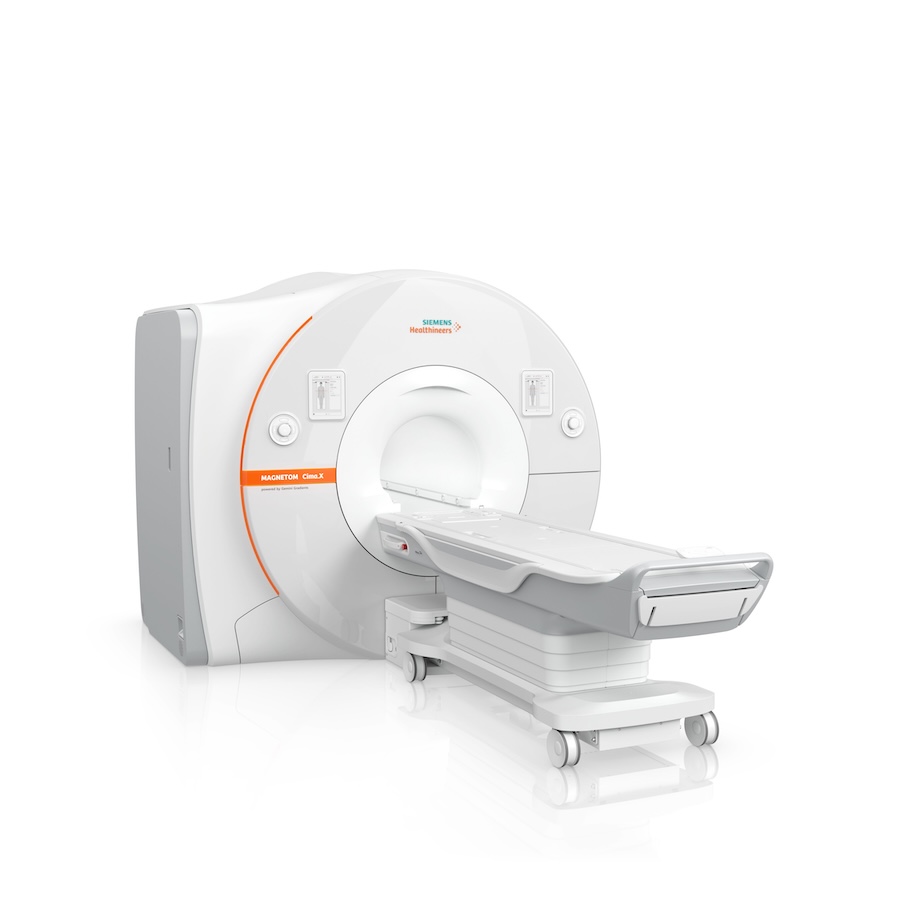
Paradromics, the Austin-based developer of the Connexus brain-computer interface, announced on October 19 a strategic collaboration with Siemens Healthineers to build a multimodal imaging platform for BCI clinical use. The aim is an end-to-end workflow covering patient assessment, surgical planning, implantation, and outcome tracking. Paradromics CEO Matt Angle summarised the premise: “BCI performance begins before an implant ever reaches the brain.”
The platform will combine structural MRI, functional MRI, vascular imaging, and CT to map brain anatomy, identify the functional regions a given patient uses for a given task, plan surgical trajectories, and locate implanted components afterward. A central goal is to develop an optimised, automated imaging package that can be deployed across medical centres rather than requiring bespoke neuroimaging expertise at each site. The collaboration also plans to compare the predictions of functional imaging against the neural recordings the implant later collects, which closes a loop that has rarely been closed systematically: did the scan point to the right place?
The initial focus is speech-motor function, which matches Paradromics’ current clinical study, with planned expansion to hand motor control and language restoration after stroke. William J. Marks Jr., the company’s chief clinical officer, framed the partnership as building on “established technologies and clinical workflows,” and Donald Hardie of Siemens Healthineers called BCIs “an important new frontier for neuroscience.”
The announcement matters because it addresses the unglamorous infrastructure that separates a research demonstration from a routine procedure. Implants will only scale to many patients and many hospitals if the pre-surgical and follow-up imaging is standardised, automated, and validated against outcomes. An imaging company treating BCI as a workflow to productise is a signal that the field is being planned for at clinical scale.
Source: Paradromics
Walking May Improve Your Attention Span

Not every cognitive aid is electronic. Nautilus reports on a study from Baylor College of Medicine, published in Scientific Reports, that linked objectively measured daily step counts to performance on tests of attention and self-control in more than 3,000 adults aged 18 to 93 drawn from the NIH All of Us Research Program. The distinguishing feature is the data source: step counts came from Fitbit devices rather than self-reported activity, which is notoriously unreliable.
Participants fell into three activity clusters averaging roughly 5,100, 8,900, and 14,200 steps per day. They completed cognitive assessments measuring sustained attention, cognitive control, delay discounting, which is the tendency to prefer smaller immediate rewards over larger later ones, and emotion recognition. After adjusting for age, education, and income, the more active groups performed better on attention and control measures. According to the report, each additional 1,000 steps per day was associated with incremental improvements in sustained attention, cognitive control, and delay discounting. Emotion recognition showed no association with activity.
The study has a clear limitation that the article is careful to state: cognition was assessed only once, so the design cannot show that changing a person’s activity level would change their attention. The association could run in either direction, or both could reflect something else. What the study does add is a large, wearable-measured dataset in which the relationship between movement and executive function holds across a wide age range and after controlling for the obvious confounders.
For anyone thinking about cognitive enhancement, the finding is a reminder that the dose-response relationship between ordinary physical activity and attention is large enough to show up in population data, and that it is available to everyone without a prescription or an implant.
Source: Nautilus