Longevity Weekly Review 2026-09-30

Week In Review
The week’s strongest thread is that aging is a property of the whole body, not of any single organ, and that the body pulls its parts toward its own age. The clearest demonstration came from Harvard, where transplanted hearts shifted toward their recipients’ molecular age: young hearts placed in old mice grew epigenetically older, old hearts in young mice grew younger, and the recipients’ own organs barely budged. That result cuts two ways. It suggests older donor organs may be more usable than transplant medicine assumes, and it warns that rejuvenating one tissue in isolation may not hold unless the systemic environment changes too. A new blood-based SASP Score built from UK Biobank proteomics reads that systemic environment directly, collapsing dozens of senescence-associated proteins into a single number that tracks mortality and disease risk. A natural experiment from post-war British sugar rationing showed that an exposure in the first thousand days of life still registers on those same kinds of clocks seven decades later.
Two items complicate the popular story that senescent cells and inflammation are simply villains to be removed. In killifish, knocking out cGAS reduced senescence markers but did not extend lifespan, a reminder that the same pathway that drives inflammation also supports DNA repair. At the level of cell biology, a study of aging heart cells found that handing cells fresh mitochondria restored a cleanup process that had been switched on so hard it had jammed. And comparative genomics across 58 mammals found that long-lived species guard their cancer-associated DNA more tightly and decorate their tumor-suppressor transcripts with more chemical marks, a layered defense that evolution arrived at without touching senescence at all.
On the translational side, the week offered concrete movement toward the clinic and toward the market. Lysoway’s oral lysosome activator LW-1017 cleared pathology in aged mouse models of both Parkinson’s and Alzheimer’s and is already in a Phase I safety trial. Heartseed intends to file for Japanese approval of its stem-cell-derived heart muscle therapy this year. Johns Hopkins’ immune-aging team won a $1 million XPRIZE milestone award to move inflammaging work into human testing. And an analysis from Longevity.Technology put a number on what all this could be worth: $173 billion a year in conditional value that depends on regulators recognizing aging itself as a treatable endpoint, with the pieces of that recognition converging around 2035.
Items
Transplanted Hearts Take On Their Recipients’ Molecular Age

Does an organ keep its own biological age, or does it adopt the age of the body it lives in? A preprint from Vadim Gladyshev’s group at Harvard Medical School, reported by Lifespan.io, answers with an unusually clean experiment. The team transplanted hearts between young, middle-aged, and old mice while leaving each recipient’s native heart in place, so that the graft and the host’s own organs could be compared side by side after four to six months.
Using three separate epigenetic clocks, the researchers found that young hearts placed in old mice acquired older methylation patterns, while old hearts placed in young mice grew younger. The recipients’ own organs, by contrast, showed no consistent change. RNA sequencing told the same story from a different angle: gene expression in young grafts drifted toward aging signatures inside older bodies, and old grafts shifted toward longevity-associated patterns inside younger ones. Mitochondrial pathways moved most strongly, falling in young hearts transplanted into old bodies and rising in old hearts transplanted into young ones.
The group then looked at human data from 407 heart transplants performed between 2002 and 2022, with detailed molecular analysis from 11 recipients, and found the pattern held. “The most striking finding is how strongly the age of the recipient influences the biological age of the transplanted heart,” Gladyshev said. Co-author Jesse Poganik noted that the work “straddles both the fundamental biology of aging and its clinical translation.”
The practical implications run in two directions. Older donor organs may be more viable than transplant programs currently assume, since a younger recipient appears to partially rejuvenate them. But the finding also raises a sobering question for the rejuvenation field: if a single organ is pulled back toward the body’s age, interventions that rejuvenate one tissue may not persist without a systemic change in the host environment. The work is a preprint and has not yet been peer reviewed.
Source: Lifespan.io
A Single Blood Score for Total Senescent Cell Burden
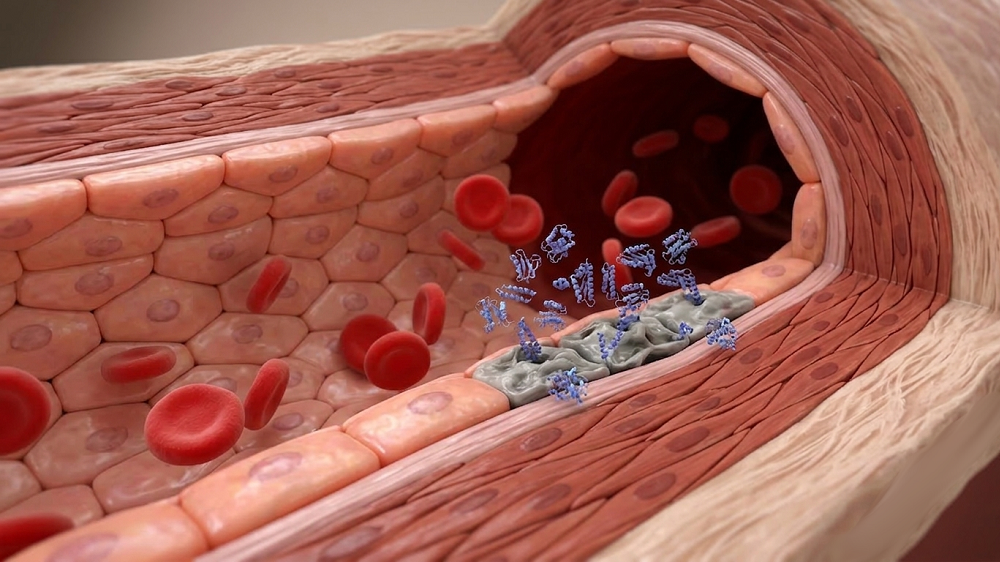
Senescent cells, which stop dividing but keep secreting inflammatory signals, are one of the best-studied drivers of aging, yet there has been no simple way to measure how many of them a person carries. Researchers have now built one. The SASP Score, reported by Lifespan.io, is a deep-learning biomarker that reads the combined signal of the senescence-associated secretory phenotype from proteins circulating in blood.
The team trained the model on data from 50,997 participants in the UK Biobank Pharma Proteomics Project, using a Guided AutoEncoder with Transformer architecture to capture the nonlinear relationships among 38 SASP-related proteins. Fifteen percent of the data was held back for validation. Rather than reporting each protein separately, the model compresses them into a single number meant to reflect overall senescent burden.
That number turns out to be predictive. According to the article, people with high SASP Scores were roughly 1.4 times as likely to die of any cause as those with low scores, and higher scores correlated strongly with dementia, stroke, and chronic kidney disease. The composite outperformed any individual protein. In an 18-month exercise intervention study, scores rose significantly among sedentary participants but stayed largely flat among exercisers, which the authors read as a protective effect.
The SASP Score is not a diagnostic for any specific condition. Its value is as a fast readout of whether an intervention is moving the senescence dial, sitting alongside epigenetic and proteomic clocks as one more instrument for measuring biological aging in humans without waiting decades for hard endpoints.
Source: Lifespan.io
Fresh Mitochondria Unjam the Cell’s Own Cleanup Machinery

Aging heart cells accumulate damaged mitochondria, and the usual assumption is that the cell’s disposal process, mitophagy, has simply weakened. A study in Aging Cell, reported by Lifespan.io, finds something more paradoxical. The protein BNIP3, which initiates mitophagy, is not suppressed in old heart cells but massively upregulated. Senescent cells contained more mitophagosomes than young ones. The cleanup system is running at full capacity and still cannot keep pace, so damaged mitochondria pile up anyway. The authors describe the process as “functionally saturated.”
The researchers traced the overdrive to energy scarcity. When ATP runs low, a regulator called HIF-3α rises and pushes BNIP3 expression up. The cell is trying to fix its energy problem by clearing bad mitochondria, but it cannot produce enough energy to finish the job, creating a self-reinforcing trap.
The intervention that broke the loop was to supply fresh mitochondria directly. Transplanting mitochondria derived from mesenchymal stem cells into artificially aged mice restored ATP levels, brought HIF-3α and BNIP3 back down, normalized mitophagy, reduced senescence markers, and improved heart function.
The result reframes mitochondrial transplantation from a blunt energy top-up into a way of resetting a regulatory circuit. It also fits a broader pattern in the field, where the goal shifts from forcing a stressed process harder to relieving the underlying scarcity that stressed it. The authors are careful to note that “it is not yet clear if this approach is safe for human beings.”
Source: Lifespan.io
Sugar Rationing in Infancy Still Shows on Aging Clocks Seventy Years Later
Post-war Britain rationed sugar for years after the Second World War. That policy created a natural experiment that a study in Nature Communications, discussed by Fight Aging, has now used to isolate the long-term effect of early-life sugar exposure from general caloric deprivation. Using UK Biobank data, the researchers compared people whose first 1,000 days of life fell under rationing with those who were not exposed.
The differences persisted for decades. According to the paper, exposure to rationing in the first 1,000 days was associated with a 9 percent lower incidence of aging-hallmark-related disease and a 19 percent lower risk of all-cause mortality, with roughly 60 percent of the survival benefit mediated through reduced disease incidence. Rationed individuals measured 1.0 to 1.2 years younger across multiple biological aging clocks, with lower organ ages particularly in the lung, heart, and liver.
What lifts this above a typical epidemiological association is the molecular layer. The study identified 47 altered proteins, with enrichment of AMPK and longevity pathways and suppressed mTOR signaling, the same nutrient-sensing axes that calorie restriction and rapamycin act on in animal studies. The early exposure appears to have left a lasting metabolic imprint of the kind geroscientists have been trying to induce pharmacologically.
Fight Aging’s writer stresses that the design is what makes this valuable: unlike famine cohorts, sugar rationing changed one dietary variable while overall nutrition remained adequate, so the effect can be attributed to sugar specifically. The finding does not tell adults what to eat, but it does suggest that developmental windows set the trajectory of aging in ways that current clocks can detect.
Source: Fight Aging
Deleting cGAS Reduces Senescence in Killifish but Does Not Extend Life
The cGAS-STING pathway senses stray DNA in the cytoplasm and triggers inflammation, and it has become a prime suspect in the chronic inflammation of aging. If it drives senescence and inflammaging, removing it should extend life. A study in the African turquoise killifish, discussed by Fight Aging, tested that prediction directly and got a negative answer worth paying attention to.
The researchers used CRISPR to knock out cGAS in killifish, a short-lived vertebrate that ages in months rather than years and has become a standard model for lifespan experiments. The knockout did what the theory predicted at the cellular level: senescence markers fell, and tissues maintained higher proliferative capacity into old age. But the fish did not live longer. In the authors’ words, cGAS “is not limiting for organismal longevity.”
Fight Aging’s commentary puts the result in context. cGAS is not only an inflammatory trigger. It also participates in DNA repair, and deleting it removes both functions at once. The net effect on lifespan may be zero because the harm from lost repair offsets the benefit of reduced inflammation, or because the inflammatory arm simply is not the rate-limiting damage in this species.
The lesson generalizes. Many aging interventions that suppress a maladaptive process also disable a protective one that shares the same machinery. Reducing senescence markers is not the same as slowing aging, and a target that looks clean in cell culture may wash out in a whole organism. Negative results like this one, published rather than shelved, are what keep the field from chasing biomarkers instead of outcomes.
Source: Fight Aging
Long-Lived Mammals Guard Their Cancer Genes More Tightly
Larger, longer-lived animals have vastly more cells and more time in which any one of them could turn cancerous, yet they do not get proportionally more cancer. A study in Nature Communications, discussed by Fight Aging, examined how evolution solved this problem across 58 mammalian species by comparing the genomic regions that correspond to known human cancer-associated sites.
The researchers identified those homologous sites in each species’ genome and measured how much they had changed over evolutionary time. In long-lived mammals, cancer-associated sites showed “greater evolutionary conservation relative to non-cancer sites,” while in short-lived mammals no such difference appeared. Long-lived species, in other words, have been under stronger selective pressure to keep those particular sequences intact.
The second layer of defense sits on RNA rather than DNA. The team examined two epigenetic marks, 5-methylcytosine on DNA and m6A on messenger RNA. Long-lived species had lower global m6A levels overall but a “pronounced enrichment of m6A at cancer-associated loci,” and their tumor-suppressor genes carried proportionally more m6A-modified transcripts. The authors describe the combination of tightened sequence conservation and targeted RNA modification as “a multilayered molecular strategy that reduces cancer risk in long-lived mammals.”
For the longevity field, comparative studies like this one map the design space that nature has already explored. Cancer suppression is a prerequisite for any serious lifespan extension in humans, and knowing which loci and which regulatory marks long-lived species have invested in points toward targets that are at least evolutionarily plausible.
Source: Fight Aging
An Oral Lysosome Activator Clears Parkinson’s and Alzheimer’s Pathology in Aged Mice

Most neurodegeneration drugs target one misfolded protein. Lysoway Therapeutics, based in Cambridge, Massachusetts, is instead targeting the cell’s disposal system, on the theory that a stronger cleanup process can handle multiple kinds of debris. Longevity.Technology reports preclinical results for the company’s oral small molecule LW-1017, published in Scientific Reports.
LW-1017 activates TRPML1, a calcium channel in the lysosomal membrane. Opening that channel releases calcium that sends regulatory proteins into the nucleus, where they switch on the genes for autophagy and for building new lysosomes. The drug does not attack any particular protein aggregate. It raises the cell’s general capacity to digest them.
The company tested it in aged mouse models of both diseases. In Parkinson’s models, LW-1017 reduced abnormal alpha-synuclein, preserved dopamine neurons, and improved movement. In Alzheimer’s models, it reduced amyloid and tau pathology, lowered brain inflammation, and improved cognition. Founder and CEO Yongchang Qiu said the compound “achieved robust, sustained central target engagement at oral doses as low as 3 mg/kg,” which matters because getting a drug across the blood-brain barrier at a tolerable dose is where many candidates fail.
LW-1017 is now in a Phase I trial in healthy volunteers, assessing safety, tolerability, and pharmacokinetics rather than efficacy. Mouse models of neurodegeneration have a long record of over-promising, so the preclinical results should be read as a hypothesis about a mechanism rather than a prediction about patients. But a single oral drug that improves lysosomal function across two major age-related brain diseases is exactly the kind of geroscience candidate the field has been arguing should exist.
Source: Longevity.Technology
Heartseed Moves Toward Japanese Approval for Stem-Cell-Derived Heart Muscle

Heart failure is managed, not repaired: existing drugs reduce strain on a damaged heart but do not replace the muscle that was lost. Heartseed, a Tokyo-based clinical-stage company, is attempting the replacement directly, and Longevity.Technology reports that it intends to file for regulatory approval in Japan within 2026.
The therapy, HS-001, starts with induced pluripotent stem cells from a donor, converts them into highly purified ventricular cardiomyocytes, and organizes those cells into spheroids that are transplanted into the heart wall. Because the cells are allogeneic, they can be manufactured in advance rather than derived from each patient, which is what makes a scalable product possible.
The planned filing rests on one-year data from patients who received the spheroids through open-chest surgery, which the company characterizes as showing “promising safety and efficacy outcomes.” Specific numbers were not disclosed in the announcement. A separate catheter-based delivery route is enrolling patients; if it works, it would remove the need for surgery and open the therapy to a much larger population, though its efficacy is unproven.
If HS-001 is approved, it would be among the first treatments to add functioning heart muscle rather than compensate for its absence. The company says its work will be featured across U.S. networks in the Breakthroughs public service announcement series, a sign of how far regenerative cardiology has come from laboratory curiosity toward a product that patients may soon be offered.
Source: Longevity.Technology
Johns Hopkins Immune-Aging Team Wins a $1 Million XPRIZE Milestone

XPRIZE Healthspan is a seven-year, $101 million competition to demonstrate interventions that restore muscle, cognitive, and immune function in older adults. Longevity.Technology reports that a Johns Hopkins team led by Sean Leng, the Johns Hopkins-SunInflam group, has received $1 million in Milestone 2 funding as one of ten finalists selected from roughly 200 initial applicants, six of them from the United States.
The team’s focus is inflammaging, the chronic low-grade inflammation that rises with age and is linked to frailty, cognitive decline, and poor response to infection. What sets the entry apart is its conservatism. Rather than a novel compound, the approach draws on nearly forty years of Leng’s immunology research and more than 200 peer-reviewed papers, aiming to take findings that have been validated repeatedly in the laboratory “out of the mouse model and cell-culture stage and into something closer to a real intervention.”
The award is as much about infrastructure as science. Milestone funding gives the team the clinical testing capacity to run a human trial measuring functional outcomes across muscle, brain, and immune system, which is precisely the kind of multi-domain endpoint that regulators have not yet learned to evaluate.
The selection also signals something about how the competition’s judges are thinking. A field known for speculative therapies chose to reward decades of accumulated, unglamorous evidence about how the immune system ages. If the trial produces measurable functional improvement in older adults, it will be one of the first rigorous demonstrations that targeting inflammaging directly pays off in people rather than mice.
Source: Longevity.Technology
The $173 Billion That Longevity Biotech Cannot Unlock Until Regulators Recognize Aging

Estimates of how much longevity biotech is worth usually blur two very different things: revenue from drugs approved for conventional diseases, and revenue from treating aging itself. An analysis from Longevity.Technology deliberately separates them. It puts the existing pipeline’s conventional-indication value at roughly $230 billion a year and then identifies a further $173 billion a year that exists only as a “call option,” exercisable if regulators come to recognize gerotherapeutic endpoints.
The methodology is more careful than the headline figure suggests. From the full pipeline, only 660 assets qualified for consideration. The analysis tracks 192 staggered product lifecycles peaking in 2052, seventeen years after a projected first approval, and applies a 35 percent probability to each, described as the published real-world rate at which an already-approved drug gains any new indication.
The 2035 target date rests on three timelines converging. ARPA-H committed $144 million over five years to its PROSPR program in February 2026, funding seven teams to build home-based data collection around the World Health Organization’s Intrinsic Capacity measure, while XPRIZE Healthspan runs trials through 2029 with judging in 2030. The FDA’s Biomarker Qualification Program has fully qualified only five surrogate endpoints in its history, none for aging. And the drug-fee legislation known as PDUFA moves in five-year cycles: the current cycle ends in fiscal 2027, making the next one the earliest vehicle for a “Multi-Disease Therapeutic Breakthrough Designation,” after which a standard five-to-seven-year registrational cycle would follow.
The authors describe the $173 billion as conditional value, not a forecast, and insist that keeping it separate from the $230 billion baseline is “rather usefully, the entire point.” The piece is a useful corrective to both hype and dismissal: the money is real, but it is gated behind specific regulatory achievements that the field can name, work toward, and track.
Source: Longevity.Technology