Longevity Weekly Review 2026-10-07

Week In Review
The Aging Research and Drug Discovery meeting in Boston set the agenda this week, and the headline from it was commercial rather than academic. Eli Lilly and Novo Nordisk, whose GLP-1 drugs are among the best-selling medicines in history, each presented molecular evidence that their products slow biological aging as measured by proteomic and epigenetic clocks. MIT Technology Review’s account, Weight-loss drugs show signs of slowing biological aging, say drugmakers, reports Novo’s finding of a two to three year reduction in proteomic age across a ten-thousand-person trial, and Steve Horvath calling that “a pretty strong effect.” Fight Aging’s analysis, The Drive to Class GLP-1 Receptor Agonists as Geroprotective Drugs, supplies the counterweight: the mortality and clock data are real, but nothing in them yet separates the drug from the calorie restriction it induces. The two pieces together are the most important story in the field right now, because the question of whether a mass-market drug is a geroprotector will be settled in trials that the drugmakers can afford to run.
The same meeting produced a regulatory signal that may matter as much over the long run. Lifespan.io reports in FDA Leaders Name Longevity a Priority at ARDD that senior agency officials said aging and longevity will appear in the next update of the FDA’s regulatory science focus areas, and sketched two possible routes to a broad aging indication. Both routes depend on biomarkers, and two items this week show how fast that toolkit is maturing. An Aging Clock Based on Images of Hematopoietic Stem Cell Nuclei reads age directly from the three-dimensional shape of chromatin, while Genflow’s canine gene therapy study, Genflow gene therapy nudges aging clock in dogs, is an example of a company using methylation clocks as the primary endpoint for an intervention that regulators have no other way to score.
On the mechanistic side, two papers tie cellular housekeeping to immune function in aging. Lifespan.io’s Declining Autophagy Impairs Senescent Cell Clearance shows that the loss of chaperone-mediated autophagy in old cells not only lets them drift toward senescence but also disarms the macrophages that should remove them, and that a small-molecule activator pushes aged mice back toward youthful readings. Fight Aging’s Anti-CXCR3 Therapy Reduces Harmful Immune Cell Infiltration into the Brain attacks the opposite immune failure, T cells invading the aging brain, and finds that blocking one chemokine receptor protects neurons and cognition in a tauopathy model. Polyamines from the Gut Microbiome Affect Life Span in Flies adds a cleanly designed demonstration that a single bacterial metabolite can extend lifespan by quieting immune gene expression.
Two heterodox pieces round out the week. Fight Aging argues in Healthspan May Not Be a Usefully Robust Metric for Progress in Rejuvenation Biotechnology that single-mechanism therapies should be judged on whether they fix their target, not on lifespan, since one repaired cause of aging can be masked by the others. And in Longevity.Technology’s ‘Show me the error bars before you sell me longevity’, investor Jim Flynn of Deerfield Management says the word “longevity” is a misnomer and that the sector should be assessed the way any drug program is: by genetics, by market fundamentals, and by probabilistic cash flows with honest uncertainty attached. Read against the GLP-1 and FDA news, both pieces are asking the same question from different directions: what, exactly, should count as evidence that aging has been treated?
Items
Lilly and Novo Report That GLP-1 Drugs Slow Molecular Aging Clocks

At the Aging Research and Drug Discovery conference in Boston, Eli Lilly and Novo Nordisk each presented data suggesting their GLP-1 weight-loss drugs reduce biological age as measured by molecular clocks. Antonio Regalado’s report for MIT Technology Review frames it as the moment the two largest beneficiaries of the obesity drug boom began openly positioning their products as anti-aging medicines.
Novo Nordisk’s analysis drew on a trial of 10,052 participants, half on semaglutide and half on placebo. Using proteomic aging clocks, which estimate biological age from the levels of key blood proteins, the company reported a reduction of roughly two to three years in biological age for those on the drug. One clock built around heart-related proteins showed reductions of up to four years. Eli Lilly presented a smaller study of tirzepatide, sold as Mounjaro and Zepbound, using epigenetic clocks that track chemical changes to DNA, and likewise found that molecular aging slowed in people taking the drug.
The expert reaction quoted in the piece is cautiously positive. Steve Horvath, who developed the first widely used epigenetic clock, said that “two years is a pretty strong effect, in my book.” Vadim Gladyshev of Harvard described the drugs as potential “geroprotectors” in unhealthy populations, a careful qualification: the trial participants were people with obesity and cardiovascular risk, and whether healthy people would see any benefit remains unknown. Side effects, especially muscle loss, were raised as a concern for any preventive use.
The commercial stakes explain the timing. Tirzepatide alone generated over $36 billion in revenue last year, according to the article, and a longevity indication would extend the market far beyond obesity. Public money is following the question: the federal ARPA-H agency has allocated $38 million for a Texas study of semaglutide’s anti-aging effects in healthy people over 60. If that trial and others like it confirm the clock readings, the first drug widely prescribed to slow aging may be one that tens of millions of people already take.
Source: MIT Technology Review
Is It the Drug or the Diet? A Skeptical Reading of GLP-1 Geroprotection
Fight Aging’s commentary on the GLP-1 campaign takes the opposite stance from the conference presentations, and does so by granting every piece of evidence the drugmakers cite. The post, published October 1, works from a peer-reviewed review in Experimental Gerontology that assembles the case for classing GLP-1 receptor agonists as geroprotective drugs. The question it raises is not whether the drugs help, but what the help is made of.
The evidence base is substantial. The SELECT trial reported a 19 percent reduction in all-cause mortality in obese patients without diabetes, a hazard ratio of 0.81. The FLOW trial showed a 24 percent reduction in a composite kidney endpoint. A 2025 study found semaglutide significantly decelerated three epigenetic clocks, DunedinPACE, PCGrimAge, and PhenoAge, over 32 weeks. The review proposes mechanisms running through the hypothalamic GLP-1 receptor, AMPK and SIRT1 signaling, and short-chain fatty acids produced by the gut microbiome.
The author’s objection is that every one of these outcomes is also what calorie restriction produces, and GLP-1 drugs work principally by reducing calorie intake. Calorie restriction remains the most reliable way to extend healthy life in mice, outperforming nearly every pharmacological intervention tested against it. A drug that makes people eat less should therefore be expected to slow their aging clocks and reduce their mortality, with no additional mechanism required. As the post puts it, “it seems unlikely that one can analyze the human GLP-1 receptor agonist study data obtained to date and responsibly claim that GLP-1 receptor agonism is doing something meaningfully more for aging than only reducing calorie intake.”
The post acknowledges preclinical hints of direct effects on brain biology at doses below those needed for weight loss, and does not dismiss them. Its argument is about the burden of proof. Repositioning a successful drug for new indications is standard industry practice, and the longevity framing fits that playbook. Separating a specific geroprotective action from the effect of simply eating less would require trials designed to hold calorie intake constant, which is not what the existing data provide. Until that is done, the honest description of GLP-1 drugs is that they are an effective way to deliver the benefits of calorie restriction to people who could not otherwise sustain it.
Source: Fight Aging
FDA Officials Say Aging Will Join the Agency’s Regulatory Science Priorities
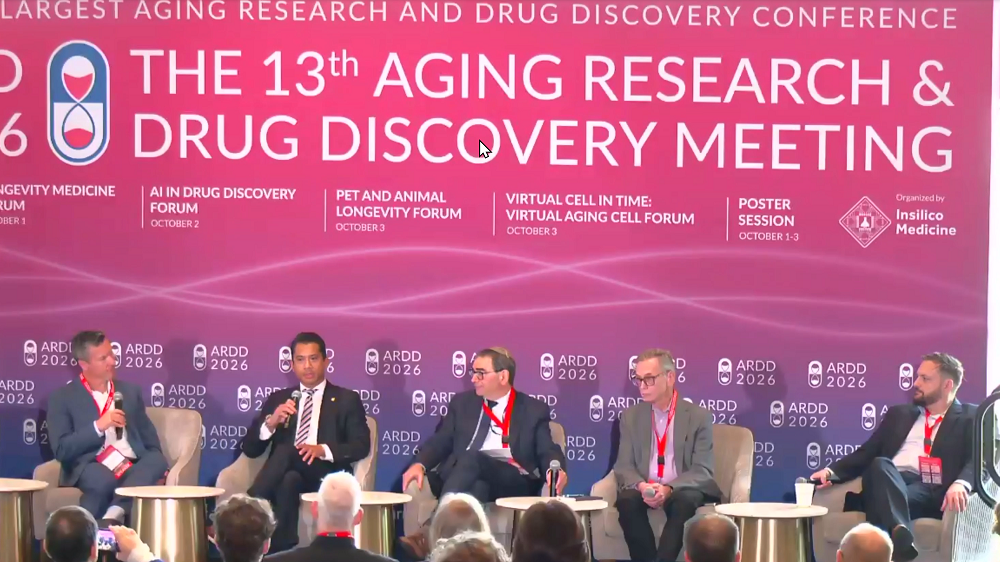
For years the longevity field’s central complaint has been that regulators do not recognize aging as something a drug can treat, which leaves companies to pursue narrow disease indications and leaves investors unable to value the broader opportunity. At the 2026 Aging Research and Drug Discovery meeting in Boston, a panel of senior FDA officials gave the first concrete sign that this is changing. Arkadi Mazin’s report for Lifespan.io describes who said what and what the agency intends to do next.
The panel included Lowell Zeta, Deputy Commissioner for Strategic Initiatives; Steven Kozlowski, the agency’s Chief Scientist; Jeffrey Siegel, Director of the Office of Drug Evaluation Sciences; and Justin Penzenstadler of the Office of Cardiology, Hematology, Endocrinology, and Nephrology. The substantive announcement came from Kozlowski, who said that “aging and longevity will be one of those topics” in the forthcoming update to the FDA’s Focus Areas of Regulatory Science, with a tentative release in fiscal year 2027. Zeta called it “a defining moment, an inflection point for the future of FDA.”
The officials went further than a listing and described two possible frameworks for demonstrating that a treatment affects aging broadly rather than a single disease. One accumulates evidence across multiple age-related conditions, so that a drug shown to help with several of them earns a claim about the underlying process. The other measures deterioration across physical and mental capacities over time, building on the concept of intrinsic capacity developed in geriatrics. Either path requires agreed-upon biomarkers, and the panelists recommended that industry form a pre-competitive consortium to standardize them for use in trials.
The practical advice was conventional and, for that reason, encouraging: companies should bring their protocols to the agency through the ordinary Investigational New Drug process rather than waiting for a special pathway. The FDA is signaling that it will engage with aging as an indication on its existing terms. That falls short of a formal recognition of aging as a disease, but it is the kind of incremental institutional shift that precedes one.
Source: Lifespan.io
Genflow’s SIRT6 Gene Therapy Nudges Methylation Age in Elderly Beagles

Genflow Biosciences presented interim results from its SLAB study, for Sarcopenia and Longevity in Aged Beagles, at the Animal Longevity Summit in Toronto. Eleanor Garth’s report for Longevity.Technology lays out the design and the numbers with unusual care, including the parts that did not reach significance. The trial is one of the few randomized, blinded, controlled tests of a gene therapy for aging in a large mammal.
The study enrolled 24 beagles over ten years old and split them across a vehicle control arm, two doses of a plasmid DNA therapy called GF-1004, and a benchmark arm using an AAV8 viral vector. Both treatments deliver SIRT6c, a variant of the SIRT6 gene derived from centenarians that is thought to enhance the enzyme’s deacetylase activity and its recruitment to DNA repair. The question is whether introducing this variant late in life can shift the biology of an already old animal.
At day 182, DNA methylation age fell by 1.08 years in the low-dose plasmid group and 0.48 years in the high-dose group, against 0.07 years in controls. Ten of twelve plasmid-treated dogs showed a reduction. None of these differences was statistically significant, with p-values of 0.31, 0.64, and 0.80, which the article states plainly. Muscle biopsies showed preservation of type II fibers and higher density of Pax7-positive satellite cells in treated animals, strongest in the high-dose and AAV8 groups. Frailty scores showed no separation through day 259, and ultrasound muscle measurements were confounded by a 48 percent muscle-mass increase in the control group. All 18 treated dogs survived versus five of six controls, also not significant.
Tolerability was generally good, with one low-dose dog showing elevated alkaline phosphatase and one AAV8 dog under review for sustained liver biochemical changes. The confirmatory methylation endpoint has been moved to day 320. Genflow plans a larger multisite study in about 80 client-owned aged dogs, intends to discuss the program with the FDA’s Center for Veterinary Medicine, and is developing a separate mRNA-LNP version of SIRT6c for human sarcopenia. CEO Eric Leire said that “the largest reductions in biological age were in the dogs receiving our SIRT6c gene therapy, which was well tolerated.” The trend is suggestive and the honesty about its limits is a model for how such results should be reported.
Source: Longevity.Technology
Restoring a Cellular Recycling Pathway Helps the Immune System Clear Senescent Cells

Chaperone-mediated autophagy is one of the cell’s quality-control systems: the chaperone protein HSC70 recognizes damaged proteins and delivers them to lysosomes through the LAMP2A receptor for degradation. The pathway declines with age. A study in Nature Aging, reported by Arkadi Mazin for Lifespan.io, asked whether that decline explains two linked features of old tissue, the accumulation of senescent cells and the failure of immune cells to remove them.
The researchers compared fibroblasts from four-month-old and 23-month-old mice after inducing senescence with palbociclib. Young cells responded by ramping up chaperone-mediated autophagy; old cells did not. When LAMP2A was reduced in young fibroblasts, the cells acquired senescence-like features while remaining able to proliferate, suggesting the pathway’s loss primes cells for senescence before any trigger arrives. Medium collected from these deficient cells induced senescent changes in neighboring normal cells, showing the effect spreads through secreted factors.
The most consequential finding concerned macrophages, the immune cells responsible for engulfing senescent cells. Secretions from autophagy-deficient fibroblasts suppressed chaperone-mediated autophagy in macrophages, and that in turn reduced their ability to clear targets. In mice with LAMP2A deleted specifically in macrophages, senescent cell burden rose and wound healing slowed. The picture is a feedback loop: aging cells that cannot maintain themselves also disable the cells meant to remove them.
The intervention closes the loop from the other side. CA77.1, a small molecule that activates chaperone-mediated autophagy, was given to aged mice. Treated animals showed lower senescence-associated readings than untreated aged mice, with several measures moving toward young-control levels. In a lung fibrosis model, treatment starting two days after injury substantially reduced subsequent fibrosis and preserved body weight, though starting at day seven did not. The result points to a drug target that acts upstream of senolytics, reducing the production of senescent cells and restoring their clearance at once.
Source: Lifespan.io
Blocking One Immune Receptor Keeps T Cells Out of the Aging Brain
In the aging brain, and especially in neurodegenerative disease, T cells from the periphery cross into brain tissue where they do not belong, and growing evidence links that infiltration to neuron loss. A study in Neuron, summarized by Fight Aging, identifies the chemokine receptor CXCR3 as the signal that draws them in and shows that blocking it protects neurons and cognition in a mouse model of tau pathology.
The researchers first built an acute model by injecting interferon-gamma into the hippocampus, which triggers rapid T cell entry. Antibody blockade of CXCR3, or genetic deletion of either the receptor or its ligand CXCL10, reduced that infiltration, establishing the receptor as the chemotactic axis involved. They then moved to a chronic tauopathy model, in which tau protein accumulates and drives neurodegeneration over months, and administered systemic anti-CXCR3 antibody over an extended period.
The chronic treatment “markedly reduced parenchymal CD4+ and CD8+ T cell accumulation, attenuated neurodegeneration, and improved aspects of cognition,” according to the paper. Single-cell RNA sequencing and flow cytometry showed accompanying changes in the brain’s immune landscape: microglia expressed less MHC-II, a marker of antigen presentation that fuels T cell activation; activated CD4+ T cell populations shrank; and the CD8+ T cells that remained showed higher levels of terminal exhaustion, meaning they were less capable of attacking tissue.
The attraction of the approach is that it targets the traffic rather than the pathology. Tau and amyloid-directed therapies attempt to remove the protein aggregates that initiate disease, with mixed clinical results. Cutting off the immune invasion they provoke is a complementary strategy, and antibodies against chemokine receptors are an established drug class in other inflammatory conditions. The result also fits a broader reading of brain aging as partly an immune disorder, in which the barrier between body and brain erodes and the consequences accumulate over decades.
Source: Fight Aging
A Deep Learning Clock Reads Age From the Shape of a Stem Cell’s Nucleus
Most aging clocks measure chemistry: DNA methylation, protein levels, metabolites. A study in Aging Cell, reported by Fight Aging, takes a different route and asks whether age can be read from the physical architecture of chromatin inside a single cell nucleus. The answer, at least for blood-forming stem cells in mice, is yes, and the method comes with the ability to explain what it sees.
The tool is ChromAgeNet, a convolutional neural network trained on three-dimensional microscope images of hematopoietic stem cell nuclei stained with DAPI, a dye that binds DNA. The model learns to distinguish nuclei from young mice from those of aged mice based on the spatial organization of chromatin. It achieved an area under the receiver operating characteristic curve of 0.77, with a margin of 0.03, and outperformed classical machine learning models built on handcrafted image features.
Explainable AI techniques then identified which structural properties carried the signal. Three stood out: chromatin entropy, a measure of disorder in how DNA is packed; peripheral heterochromatin, the dense DNA at the nuclear edge that thins with age; and chromatin condensates, localized clusters whose pattern shifts in old cells. These correspond to known age-related changes in nuclear organization, which gives confidence that the model is detecting biology rather than imaging artifacts.
The practical application is screening. Because the readout requires only a stained image, the framework can serve as “a phenotypic screening tool for aged HSCs treated with epigenetic drugs to detect rejuvenation.” A candidate compound can be applied to old stem cells and the question of whether their nuclei now look younger answered at throughput. Hematopoietic stem cells are a central target in immune aging, and an image-based clock is a step toward testing rejuvenation strategies against them directly rather than inferring effects from downstream blood markers.
Source: Fight Aging
A Single Bacterial Metabolite Extends Fly Lifespan
The gut microbiome is correlated with almost everything in aging, which makes clean causal evidence rare. A study in mBio, reported by Fight Aging, isolates one class of bacterial products, the polyamines putrescine and spermidine, and shows they alone are enough to lengthen the life of fruit flies. The design is what makes it notable.
The researchers raised gnotobiotic flies, animals colonized with a single defined bacterial species, using strains of Escherichia coli that were either intact or had their polyamine biosynthesis genes deleted. The flies were fed a polyamine-free diet, so the only source of these molecules was the bacteria in their gut. Comparing the two groups removes the dietary confound that has troubled earlier work on spermidine, which is also found in foods and sold as a supplement.
Flies carrying polyamine-producing bacteria lived significantly longer than those carrying the deletion mutant. Gene expression analysis pointed to the mechanism: the flies with polyamine-producing microbes showed suppressed expression of the immune response genes TotM and Halo. Chronic immune activation is a known driver of aging in flies as in mammals, and the data suggest bacterial polyamines extend life in part by keeping the host’s immune response quiet.
The authors describe this as the first systematic isolation of a single bacterial metabolite’s effect on host longevity using animals with defined genetic deletions in their microbes. That is a methodological template as much as a result. The same approach, engineering a microbe to make or not make one compound and housing it in an otherwise germ-free host, can now be applied to the long list of other microbial products suspected of influencing aging, moving the field from association toward mechanism.
Source: Fight Aging
Why Lifespan May Be the Wrong Yardstick for a Single Therapy
Fight Aging’s opinion piece of October 1 takes aim at a habit so ingrained in the field it is rarely questioned: judging an aging intervention by whether it extends lifespan or healthspan. The argument is that aging has many distinct causes, that a therapy addressing one of them may produce no measurable change in lifespan while still working exactly as intended, and that treating lifespan as the scorecard therefore misjudges individual therapies and the field’s progress alike.
The post’s examples are familiar. Senolytic drugs reverse a range of age-related conditions in mice but do not extend lifespan as effectively as calorie restriction, which the author reads not as evidence that senescent cells are unimportant but that their contribution to any given disease is partial. Amyloid-beta clearance in Alzheimer’s is theoretically sound and has delivered little benefit for advanced patients, because by the time symptoms appear other mechanisms dominate progression. In each case a correct intervention looks like a failure when assessed against an outcome that depends on everything else going wrong too.
The piece illustrates the logic with a boat that has two problems, a deteriorating hull and a fouled propeller. Fixing either alone leaves the vessel going nowhere, and a trial of hull repair would conclude it does nothing. Only the combination shows an effect. The author argues the same structure applies to aging, where lifespan and healthspan “are the ultimate result of very effective comprehensive treatment” and should not be the metrics used to evaluate a monotherapy.
The proposal that follows is twofold. Individual therapies should be assessed on whether they achieve their specific goal, such as reducing a particular form of molecular damage, with the degree of that reduction as the primary readout. And funding should shift toward testing combinations of therapies, each targeting a different cause of aging, since that is where lifespan effects are expected to emerge. It is a heterodox position in a field that increasingly promises healthspan to investors and regulators, and it sharpens the debate over what the new biomarker-based endpoints should actually measure.
Source: Fight Aging
An Investor Asks the Longevity Sector to Show Its Error Bars

Jim Flynn is Managing Partner and CEO of Deerfield Management, a New York healthcare investment firm, with 38 years in the industry. In a conversation with Phil Newman of Longevity.Technology, he delivers a sustained critique of how the longevity sector presents itself, not from hostility to the goal but from the standpoint of someone whose job is to decide which drug programs deserve money. His opening claim is that “longevity” is a misnomer, and that companies which pitch a drug for its longevity benefit while seeking approval for an unrelated acute indication are conceding that longevity is not yet measurable or definable in a way regulators can act on.
He is equally skeptical of two of the field’s favored narratives. On prevention, he notes that GLP-1 drugs represent the refinement of a decades-old concept rather than a new one: Byetta, around 2005, required twice-daily injections and delivered minimal weight loss, and the current drugs are better versions of the same idea. On AI drug discovery, he argues that many companies lack a functional loss function, a way of being wrong that generates learning, and that a credible platform must predict, test, and iterate on cycles of three months or less.
The standards he proposes are the ones he applies everywhere. Every investment reduces to probabilistic cash flows with quantifiable error bars. Genetic validation matters, and he cites Matt Nelson’s finding that genetic support for a target roughly doubles the probability of clinical success. Market fundamentals must be worked through: disease prevalence, diagnosis rates, payer willingness, and recruitment costs. He offers Nuvalent as the model, a company Deerfield founded and wholly owned for five years, took public at around $800 million, and saw acquired by GSK for roughly $10.6 billion. Longevity.Technology’s own pipeline modeling, which projects $230 billion a year in risk-adjusted peak sales plus $173 billion in further upside, is put to him as the counterpoint.
Flynn’s constructive suggestion is a non-profit longevity center in New York that would provide neutral information on evidence-based healthspan interventions, which he hopes to see operating within 18 to 24 months. The piece is valuable because it shows what the field looks like to a sophisticated capital allocator who is not already a believer, and because the discipline he describes is the same one the FDA’s new interest will eventually demand.
Source: Longevity.Technology