Longevity Weekly Review 2026-10-21

Week In Review
The week’s most consequential result came from a screen that asked a simple question: of roughly a hundred genes, which one makes an old cell’s gene expression look young again without erasing what kind of cell it is? The answer, reported in Nature Aging, was a splicing factor called SRSF1, and the transcriptomic reprogramming screen that found it went on to show reduced frailty and longer median lifespan in aged mice. That is a different route to rejuvenation than the Yamanaka-factor approach now in human trials, and it suggests the search for safer reprogramming levers is far from exhausted. Two other mechanistic papers this week sit in the same tradition of finding a single regulator whose decline with age explains a lot: an RNA helicase called MTR4 that keeps blood-vessel lining cells from turning senescent, and an immune signaling pathway in bone marrow that drains NAD+ from bone-forming cells and can be blocked with a drug.
The clinic produced two small but real human datasets. Atrogi’s muscle-targeted oral drug added lean mass and leg power while shedding fat in a 13-person study, and Monte Rosa’s NLRP3-silencing pill cut a panel of inflammatory markers sharply in 108 people with obesity and cardiovascular risk. Neither is marketed as an aging drug, yet both address what the field has long argued are core aging processes, sarcopenia and chronic inflammation, and both are heading into Phase 2. A preclinical cousin, an antisense oligonucleotide against miR-128-3p, restored muscle in aged mice by switching on mitochondrial programs, and its developers are explicitly chasing the muscle loss that accompanies GLP-1 weight-loss drugs.
Comparative biology supplied the week’s most memorable images. A Science paper from the Dog Aging Project found that large dogs age faster at the epigenetic level and that the acceleration concentrates in transposable elements, the ancient viral remnants whose silencing weakens with age. At the opposite extreme, the genome and epigenome of Jonathan, a 194-year-old giant tortoise, showed that the switches governing his mitochondrial and DNA-repair genes have barely drifted in nearly two centuries. Read together, the two studies make the same point from either end: the orderliness of the epigenome, not merely the sequence beneath it, tracks how fast an animal ages.
Two pieces this week push back on how the field thinks and funds. A review argues that NAD+ and SIRT1 therapies have disappointed because raising the amount of a molecule says nothing about the functional reserve of the system that uses it, and proposes measuring that reserve instead. And an analysis of pharmaceutical deal flow concludes that Big Pharma is buying rather than building, which for longevity biotechs means the exit is an acquisition into an indication-specific program rather than an aging label. The week’s clinical items, each framed around obesity, heart disease, or sarcopenia rather than aging itself, are a case study of exactly that dynamic.
Items
A Splicing Factor That Makes Old Cells Young Without Changing What They Are
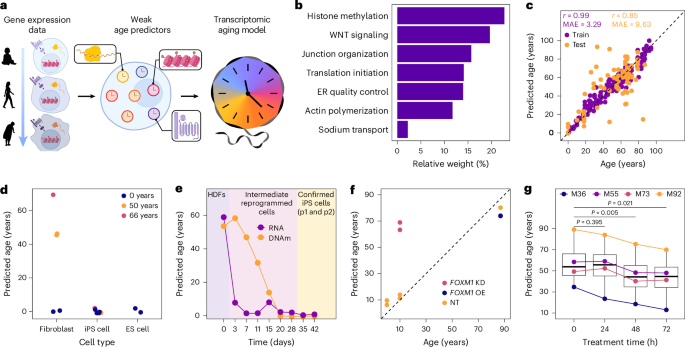
Partial reprogramming with the Yamanaka factors can reverse signs of aging in cells and animals, but it carries a known hazard: push too far and cells lose their identity and drift toward pluripotency, with tumor risk to match. A team led by Alexandru Plesa, Sascha Jung, and Helen Wang at the Wyss Institute, Harvard Medical School, and MIT set out to find reprogramming factors that avoid that trade-off. Their paper, published in Nature Aging on October 14, describes a screen built around an interpretable transcriptomic age predictor trained on human fibroblasts from donors aged one to 96.
With that clock in hand, the researchers overexpressed roughly 95 candidate genes one at a time in aged fibroblasts and asked which ones moved the predicted transcriptomic age downward. The standout was SRSF1, an RNA-processing and splicing factor. According to the paper, three days of SRSF1 induction reduced predicted transcriptomic age by a median of about 16 years while producing what the authors call robust youthful transcriptional signatures without loss of cellular identity. In cell culture, SRSF1 reduced senescence-associated beta-galactosidase activity, lowered proteostatic stress and inflammatory signaling, improved collagen synthesis in aged cells, and enhanced wound-healing capacity.
The mouse results are what elevate this from an interesting screen to a candidate intervention. In aged mice engineered for inducible SRSF1 expression, the authors report that frailty progression was reduced by 44 percent and median lifespan was extended by 14 percent. The groups were small, nine to ten animals per arm, so the lifespan figure should be read as a signal to follow rather than a settled effect size. But a single splicing factor that produces a youthful transcriptome, preserves cell identity, and improves healthspan in vivo is a notable addition to the short list of rejuvenation levers.
The broader significance is methodological. The study demonstrates that an aging clock can be used not just to measure but to screen, turning a transcriptomic predictor into a discovery engine for geroprotective genes. If the approach generalizes to other cell types and to larger libraries, it offers a systematic way to find reprogramming factors that are safer than the pluripotency-inducing set now entering human trials.
Source: Nature Aging
An Oral Muscle Drug Adds Lean Mass and Leg Power in a First Human Study

Atrogi, a Swedish biotech, reported the first human data for ATR-258 on October 14. The compound is a GRK2-biased beta-2-adrenergic receptor agonist, meaning it is designed to engage one signaling arm of a receptor found on skeletal muscle while leaving the others alone. Conventional beta-2 agonists, the family that includes asthma drugs, can build muscle but bring cardiovascular and metabolic side effects that have kept them out of chronic use. Atrogi’s bet is that a biased molecule can keep the muscle-building signal and discard the rest.
The study was an eight-week, open-label, single-arm, investigator-initiated trial in 13 overweight or obese adults, with no placebo group and three ascending dose levels. According to the company’s report, lower-extremity muscle power improved by roughly 13 percent from baseline, mean fat mass fell by 1.1 kilograms, and lean mass rose by 0.8 kilograms, with both body-composition changes reaching statistical significance. The drug was described as well tolerated.
Thirteen people and no control arm is the smallest kind of evidence, and the figures will need to survive a blinded trial. But the direction of the result matters because of what is happening around it. GLP-1 weight-loss drugs are now taken by millions, and a persistent concern is that a meaningful fraction of the weight lost is muscle. A once-daily oral agent that preserves or adds lean mass during fat loss would have an obvious place alongside them, and a separate one in sarcopenia, the muscle wasting of old age for which no approved drug exists.
Atrogi says it plans a Phase 2 trial in 2027 targeting muscle-sparing weight loss and sarcopenia, and will present the full findings at the International Conference on Cachexia, Sarcopenia and Muscle Wasting in Washington, DC in December. CEO Paul Little described the company as Phase 2-ready with a first-in-class oral GRK2-biased beta-2 modulator, and chief scientific officer Tore Bengtsson emphasized the combination of fat loss with lean-mass gain as the differentiating profile.
Source: Longevity.Technology
A Pill That Silences the Inflammasome Cuts Inflammatory Markers in 108 People

The NLRP3 inflammasome is the cellular machine that converts stress signals into the release of interleukin-1 and related cytokines, and it is one of the most-cited drivers of inflammaging, the chronic low-grade inflammation that rises with age and underlies atherosclerosis, gout, and much else. Drugging it directly has proven hard. Monte Rosa Therapeutics took a different route: MRT-8102 is an oral molecular glue degrader that tags NEK7, a protein the inflammasome needs in order to assemble, for destruction. No NEK7, no inflammasome.
On October 16 the company reported results from GFORCE-1, a Phase 1 trial in 108 people with obesity and elevated cardiovascular risk. Participants received 5, 20, or 40 milligrams daily or placebo for four weeks, followed by four weeks of observation. According to the report, NEK7 levels dropped by 80 to 90 percent at every dose. The inflammatory readouts followed: high-sensitivity C-reactive protein fell by 85 percent, calprotectin by 56 percent, interleukin-6 by 54 percent, serum amyloid A by 51 percent, and S100A12 by 46 percent. Lipoprotein(a), a genetically determined cardiovascular risk factor that diet and statins barely touch, declined by 24 percent.
Safety was unremarkable in the best sense. No serious adverse events occurred, and side effects were reported in 33 percent of treated participants against 30 percent on placebo. Four weeks is short and biomarkers are not outcomes, but the breadth and size of the reductions are striking for an oral agent, and the lipoprotein(a) effect was not something the mechanism obviously predicted.
Monte Rosa plans a Phase 2b trial, GFORCE-2, in people with stable coronary artery disease in the first half of 2027, a gout study starting around the turn of the year, and a hidradenitis suppurativa study in early 2027. Those are disease indications, which is how any inflammasome drug will reach the market. The longer-term question is whether damping the inflammasome in otherwise healthy older people slows the accumulation of age-related damage, and a well-tolerated oral degrader is the kind of tool that makes such a trial conceivable.
Source: Longevity.Technology
An RNA Helicase That Keeps Blood Vessels Young, and Fades With Age
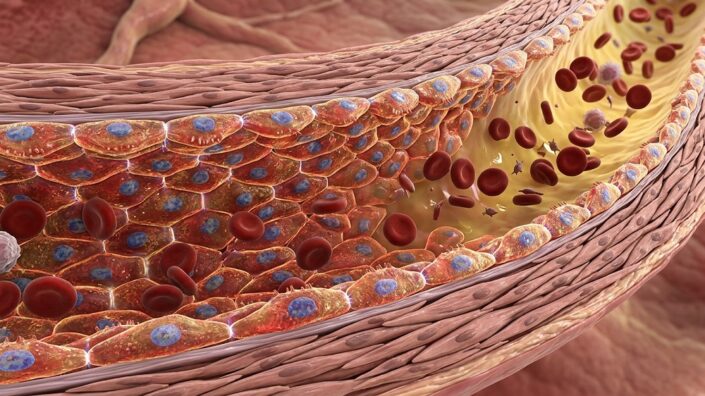
The endothelium, the single-cell-thick lining of every blood vessel, is where vascular aging begins. When endothelial cells turn senescent they stiffen vessels, leak inflammatory signals, and set the stage for atherosclerosis. A paper in Aging Cell, reported by Lifespan.io on October 19, identifies a protein called MTR4 as a guardian against that transition. MTR4 is an RNA helicase, an enzyme that unwinds and processes RNA, and it is known to help maintain RNA quality and regulate the cell cycle.
The researchers induced senescence in human umbilical vein endothelial cells using DNA-damaging agents, oxidative stress, or repeated replication, then manipulated MTR4 in both directions. Silencing it drove senescence markers up substantially. Overexpressing it in already-senescent cells partially reversed the senescent phenotype, including what the authors describe as broad reductions in the senescence-associated secretory phenotype, the cocktail of inflammatory signals that makes senescent cells harmful to their neighbors. Mechanistically, MTR4 physically stabilizes BUB3, which in turn stabilizes BUBR1, a checkpoint kinase that protects DNA during cell division. BUBR1 is itself a well-known longevity gene in mice, so the chain from MTR4 to a known anti-aging effector is short.
The in vivo work extends the story. Comparing three-month-old and twenty-month-old mice confirmed that MTR4 declines with age. Aged mice engineered to overexpress Mtr4 showed improved vascular function and more exploratory behavior. In the nematode C. elegans, worms overexpressing the gene reached lifespans the authors say approach those of well-known longevity mutants, while worms with reduced expression lived significantly shorter lives.
Translation is the obvious gap. There is no drug that raises MTR4, and a gene therapy to the endothelium is a long road. But the paper adds a specific, druggable-in-principle node to the vascular aging map, and the BUBR1 connection ties it to a pathway that has already extended lifespan in mammals.
Source: Lifespan.io
How Marrow Fat Starves Bone of NAD+, and a Drug That Stops It

Bone marrow fills with fat as we age, and bone-forming cells become scarcer and weaker. A paper in Advanced Science by Li and colleagues, reported by Lifespan.io on October 16, traces a direct chain of causation between the two. The link runs through macrophages, the resident immune cells of the marrow, and through cGAS-STING, a signaling pathway that evolved to detect viral DNA but is increasingly recognized as a driver of age-related inflammation when it is triggered by the cell’s own leaking mitochondrial DNA.
The authors found that aged marrow adipocytes secrete elevated levels of the protein DPP4, which activates STING in nearby macrophages via the TLR4 receptor. Activated STING pushes the macrophages to produce CD38, an enzyme that sits on the cell surface and degrades extracellular NAD+ and its precursor NMN. The result is that bone-forming cells next door are starved of the NAD+ they need for mitochondrial function and differentiation. Each link in the chain, fat to DPP4 to STING to CD38 to NAD+ loss, is a potential point of intervention.
The intervention they chose was to block STING with the inhibitor H-151 and simultaneously supply NMN. In mice aged 12 to 18 months, the combination preserved bone density and microstructure, increased new bone formation, and restored NAD+ levels and mitochondrial function in bone-forming cells. The authors report that the effect matched alendronate, the standard bisphosphonate osteoporosis drug, which works by a completely different mechanism of suppressing bone resorption rather than restoring formation.
The finding also helps explain a puzzle in the NAD+ literature. NMN and related precursors have produced mixed results in humans, and one reason may be that supplying NAD+ precursors is futile when CD38 is degrading them as fast as they arrive. Pairing a precursor with something that quiets the inflammatory signal driving CD38 expression is a more rational design, and this paper supplies the specific upstream target.
Source: Lifespan.io
Blocking One MicroRNA Restores Muscle in Aged Mice
Elenae Therapeutics has reported preprint results showing that an antisense oligonucleotide against miR-128-3p restores muscle mass and function in aged mice, as covered by Fight Aging on October 14. MicroRNAs are short regulatory RNAs that each suppress dozens or hundreds of genes, so knocking one down can shift an entire program at once. In this case the program favored mitochondrial biogenesis and energy production while suppressing inflammatory and fibrotic signaling, a pattern the authors note resembles the effects of established longevity interventions.
The benefits were not confined to aging skeletal muscle. According to the report, the same inhibition improved cardiac function and limited adverse remodeling after experimental heart attack, and it ameliorated both skeletal and cardiac muscle pathology in mouse and pig models of Duchenne muscular dystrophy. A single molecular lever that helps aged muscle, injured heart, and dystrophic muscle alike suggests miR-128-3p sits near a central control point for muscle maintenance rather than a disease-specific one.
Fight Aging’s commentary makes the commercial logic explicit. The muscle loss that accompanies GLP-1 receptor agonist therapy has created a large and immediate market for anything that preserves lean mass during weight loss, and that pull is now funding work that would once have been justified only on sarcopenia grounds. Antisense oligonucleotides are a mature modality with approved products in other diseases, which shortens the path from a mouse result to a human trial compared with a gene therapy.
The work is a preprint and the numbers remain to be scrutinized. But together with the Atrogi result this week, it marks a shift in muscle aging from a neglected corner of geroscience to one with two mechanistically distinct candidates and a clear route to patients.
Source: Fight Aging
Why Big Dogs Age Faster: Lost Control Over Jumping Genes
Great Danes live half as long as Chihuahuas, and the reason has never been fully explained. A paper in Science from the Dog Aging Project, reported by Fight Aging on October 16, provides the most detailed molecular answer yet. The researchers generated 1,640 DNA methylation profiles from 894 dogs enrolled in the project, paired with genetic and demographic data, and built methylation clocks that predict a dog’s age with a median error of 0.82 years.
Those clocks confirmed that larger breeds show molecular profiles consistent with accelerated epigenetic aging, and that dogs whose epigenetic age ran ahead of their chronological age faced elevated mortality risk. The more specific finding concerns where in the genome the acceleration lives. Age-related loss of methylation was concentrated in transposable elements, the remnants of ancient viral insertions that make up a large fraction of mammalian genomes and are normally kept silent by methylation. LINE1 elements were the most affected class. Larger dogs showed 31 percent stronger age-associated demethylation in transposable elements than smaller dogs, according to the report. Sex differences were most pronounced on the X chromosome.
The implication is that aging, at least in dogs, involves a progressive failure to keep jumping genes suppressed, and that big dogs fail faster. When transposable elements wake up they can copy themselves into new locations, damage the genome, and produce nucleic acids that the cell’s antiviral sensors mistake for infection, triggering chronic inflammation. That last step connects this paper to the STING story in bone this week: the same sensor that marrow fat triggers through DPP4 is also what transposable element activity trips.
Dogs are an unusually good model because they share our environment, receive veterinary care, and span a fivefold range of body size within one species. If the transposable element signature proves causal rather than merely correlated, the therapeutic agenda is already partly stocked: reverse transcriptase inhibitors that block transposon copying are approved antiviral drugs, and several groups are testing them against aging.
Source: Fight Aging
What a 194-Year-Old Tortoise’s Genome Says About Staying Young
Jonathan, an Aldabra giant tortoise living on the island of St Helena, is estimated to be 194 years old, making him the oldest known land animal alive. A paper in Science Advances, reported by Fight Aging on October 19, sequenced his genome and, for the first time in a giant tortoise, his epigenome, then compared both to younger Aldabra tortoises and to other tortoise species.
The genome comparison turned up what the report describes as unique gene variants in most aging pathways relative to other giant tortoises. Named examples include IGF1R, the receptor for insulin-like growth factor 1 and one of the most conserved longevity regulators across species; DCLRE1B, a DNA repair gene involved in telomere maintenance; and XRCC6, better known as Ku70, a core component of the machinery that repairs double-strand DNA breaks. Variants in growth signaling and DNA repair are precisely where comparative longevity biology would predict them.
The epigenetic result is the more novel one. The researchers analyzed the entropy of Jonathan’s DNA methylation, a measure of how disordered the pattern of on-off marks has become. Regions of low entropy, meaning marks that have stayed crisp and consistent, were enriched for the promoters of genes in the mitochondrial electron transport chain and in RNA metabolism. In most animals the methylome blurs with age, and that blurring is the basis of epigenetic clocks. Jonathan’s control switches for energy production and genomic maintenance appear to have held their pattern for nearly two centuries.
A single animal cannot establish causation, and Jonathan’s variants may be as much a feature of his lineage as of his longevity. But the study offers a concrete hypothesis that fits the week’s dog findings from the opposite direction: animals that age slowly keep their epigenome orderly, animals that age quickly let it decay. Low methylation entropy at mitochondrial and repair genes is a measurable target, and one that reprogramming approaches could in principle aim at.
Source: Fight Aging
Why NAD+ Boosters Underdeliver: The Case for Measuring SIRT1 Functional Reserve

NAD+ precursors such as NMN and NR are among the most widely consumed longevity supplements, justified by a chain of reasoning that runs from NAD+ to the sirtuin enzyme SIRT1 to the stress-resistance programs SIRT1 controls. Human results have been underwhelming. A review in the journal Biology, covered by Lifespan.io on October 15, argues that the problem is not the biology but the measurement, and introduces a concept the authors call SIRT1 functional reserve: the remaining operational flexibility of SIRT1-dependent processes under a defined stress demand.
The review gives three reasons why simply raising NAD+ or SIRT1 abundance has not worked. First, NAD+ is compartmentalized within the cell and consumed by competing enzymes such as CD38, so total cellular NAD+ says little about how much actually reaches SIRT1 where it is needed. Second, SIRT1 exists in multiple isoforms, and the v2 and v3 variants that accumulate with age are less functionally capable, so measuring total SIRT1 protein overstates the working capacity. Third, SIRT1 operates within interconnected networks, and the authors caution that enhancing its activity may yield progressively smaller benefits if other determinants of adaptation become limiting.
The proposed alternative is to measure reserve directly: characterize which SIRT1 isoforms are present and where, map NAD+ distribution rather than its total, track reactive oxygen species, and relate all of it to cellular health markers, with attention to cell type, stress history, and tissue. That is a demanding assay, but it would let a trial distinguish people whose SIRT1 system has spare capacity worth boosting from those whose bottleneck lies elsewhere.
The argument lands with particular force alongside this week’s bone paper, which found CD38 on macrophages degrading NAD+ before bone-forming cells could use it. Both point to the same conclusion: NAD+ interventions will work when they are targeted at the right compartment and paired with measures that address why the molecule is being lost, and the supplement-and-hope model was never going to show that.
Source: Lifespan.io
Big Pharma Isn’t Building Longevity Drugs. It’s Buying Them.

An analysis by Eleanor Garth at Longevity.Technology, published October 16, lays out the economic machinery that determines how longevity science reaches patients. The pharmaceutical industry faces a patent cliff the report sizes at a 100 billion dollar revenue gap by 2028, widening to 370 billion by 2032, at the same time that internal research productivity keeps falling. The piece invokes Eroom’s Law, Moore’s Law in reverse: drug approvals per inflation-adjusted billion dollars of R&D have halved roughly every nine years since 1950.
The response has been to buy. Life-sciences mergers and acquisitions reached 240 billion dollars in 2025, up 81 percent year on year, with Big Pharma accounting for 70 percent of deal spending versus 36 percent the year before. By the report’s figures, 43 percent of late-stage pipeline value now originates outside the acquiring company, and about 65 percent of industry pipelines come from small and mid-cap biotechs, compared with 15 percent in 2003. The GLP-1 market is the exemplar: Pfizer spent over 20 billion dollars on deals after its internal obesity candidates failed, and obesity and MASH deals account for roughly 42 billion dollars in potential value since the start of 2025. Named longevity-adjacent transactions include Lilly’s 2.75 billion dollar acquisition of Insilico and the Roche and Chugai deal for Gero worth up to a billion.
For longevity biotech specifically, the report finds that Big Pharma runs 62 percent of registered trials across eight aging-pathway mechanisms, but overwhelmingly in de-risked, indication-specific disease settings rather than aging itself. It estimates that the large companies will capture about 60 percent of the value created by small and mid-cap longevity biotechs.
The practical lesson is not cynical. A startup with a geroprotective mechanism should expect to prove it in a defined disease, as Atrogi is doing in sarcopenia and Monte Rosa in coronary disease this week, and to be acquired at that point. The aging label, if it ever comes, will be an afterthought attached to drugs already on the market for something else. That is a slower path to a declared anti-aging medicine, but it is also a path with a working business model behind it.
Source: Longevity.Technology