Resource Abundance Weekly Review 2026-10-08

Week In Review
The week’s strongest thread is the physical construction of a Western battery-metals supply chain, project by project, and the surprising places new supply is coming from. Oak Ridge National Laboratory reported that Element3 has opened the first new US lithium operation in half a century, and its ore is the wastewater that Permian Basin oil wells already bring to the surface. In Ontario, Rock Tech cut the capital estimate for its lithium refinery by more than half, a reminder that the cost of building a plant is as much a variable as the geology beneath it. Westwin Elements committed $502 million to a nickel refinery in Mississippi backed by $1.7 billion in signed sales, and Lynas agreed to buy the largest ionic-clay rare earth resource outside China. Supply that had been switched off came back too, as a Brazilian court cleared Sigma Lithium to restart one of the world’s largest hard-rock lithium mines.
A second theme is water as a mine. The Element3 story is one example, but the research press produced two more. Engineers in Tokyo showed that hot liquid tin can pull magnesium out of desalination brine while distilling fresh water at the same time, and a Chinese Academy of Sciences team scaled a system that uses an electrolyser’s own waste heat to desalinate seawater, so that hydrogen and drinking water come out of one box. Both are early, but both treat the energy input as the central design problem rather than an afterthought, which is what separates a resource story from a chemistry demonstration. In the same spirit, Technion researchers reworked water electrolysis so that the anode makes a saleable epoxide instead of venting oxygen, a direct attack on the economics of green hydrogen.
The third theme is where the next tonne comes from when conventional ore is contested. Europe’s Circuit4EU programme is trying to industrialise the robotic disassembly of laptops and dishwashers so that rare earths can be recovered rather than imported. At the other extreme of scale, The Metals Company published its case that seabed nodule collection is a bounded, recoverable disturbance, an argument from a party with an obvious interest but one built on a decade of monitoring data. Taken together, the week describes a resource base that is widening on every front: new mines, cheaper refineries, salt water, scrap, and the ocean floor.
Items
Oilfield Wastewater Becomes America’s First New Lithium Mine in 50 Years

Oak Ridge National Laboratory reported this week that Element3, a Texas company, has launched the first domestic lithium mining project in the United States in 50 years. The facility sits in Midland, in the heart of the Permian Basin, and its feedstock is produced water, the salty wastewater that comes up alongside oil and gas and that operators normally pay to dispose of. According to ORNL, the plant can produce 3,000 tons of lithium a year, nearly half of current US output, and it officially opened in February 2026.
The chemistry came out of Oak Ridge. ORNL developed a process that selectively extracts lithium chloride from oilfield brines and converts it into battery-grade lithium carbonate powder. Element3 licensed the technology in 2024, and it went on to win an R&D 100 Award. Scaling from a bench process to a commercial plant was supported by the METALLIC centre, a minerals-to-materials research facility launched in April 2025 that draws on ORNL and eight other Department of Energy national laboratories. ORNL’s team contributed expertise in extraction and separation methods, autonomous laboratories, and nanomaterials.
The significance is less the tonnage than the source. Lithium brine operations elsewhere depend on evaporation ponds in deserts or on hard-rock mines and overseas refining. Here the brine is already being pumped, already handled, and already a liability. Turning it into a product changes the economics of both the oilfield and the battery supply chain. “We want to optimize material processing methods, reduce environmental impact and recover more value from materials,” said ORNL’s Parans Paranthaman. Element3 chief executive Hood Whitson credited the lab for letting the company “leverage existing technology to solve our challenges and accelerate our path to market.”
Source: Oak Ridge National Laboratory
Rock Tech Halves the Price Tag on an Ontario Lithium Refinery
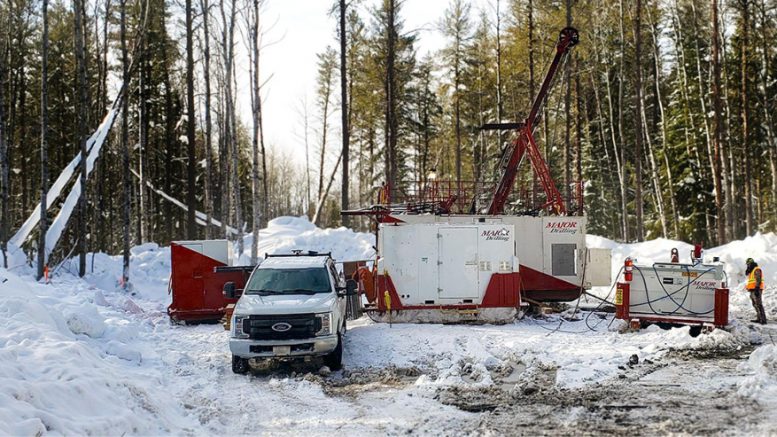
Rock Tech Lithium released a preliminary definitive feasibility study this week that puts the capital cost of its Red Rock lithium converter in Ontario at C$596 million, or about US$421 million. The Northern Miner reports that this is a 54 percent reduction from the roughly $1.3 billion estimated earlier. The plant would produce around 30,000 tonnes of lithium salts a year, slightly below the 32,000 tonnes of lithium carbonate equivalent in the previous plan, and the company says it would be the lowest capital cost yet achieved for a lithium converter in the Western supply chain.
Location explains part of the story. The site is a former paper mill at Red Rock, about 900 kilometres northwest of Toronto, owned by the BMI Group. It comes with 1.4 square kilometres of land, 120 megawatts of available power, natural gas, and rail. Reusing brownfield industrial infrastructure rather than building from scratch is a recurring theme in Western efforts to compete with Chinese processing costs. BMI has proposed a $200 million equity investment in the project, with a further $30 million proposed for initial engineering and permitting from partner contributions and government support. Construction is targeted for the second half of 2027 and first production for 2029.
The Northern Miner is careful to note that the company has not explained most of the reduction, and that inconsistent reporting units make a direct comparison with the earlier estimate difficult. Design optimisation, procurement assumptions, and scope changes are all possible contributors. Even with that caveat, a halved capital estimate for a mid-sized lithium hydroxide plant is a meaningful data point. Processing, not mining, has been the chokepoint in Western lithium, and the cost of a converter sets the price at which North American lithium can reach a battery plant. “The Red Rock converter can be built at a highly competitive capital cost – a level not yet achieved within the Western lithium supply chain,” said chief executive Mirco Wojnarowicz.
Source: The Northern Miner
Westwin Elements Commits $502 Million to a US Nickel Refinery
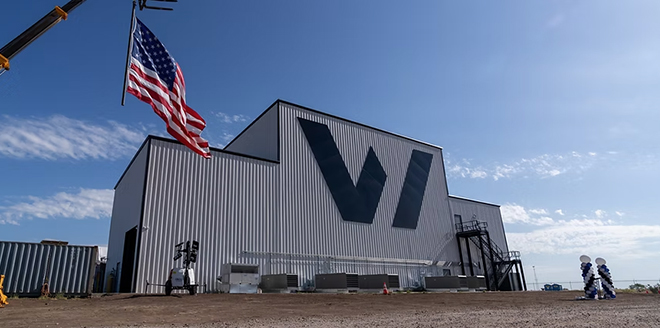
Westwin Elements plans to invest $502 million in a commercial-scale nickel refinery at the Belwood Industrial Site in Natchez, Mississippi, with commissioning targeted for 2029. The plant would initially produce 18,000 tonnes a year of high-purity Class 1 nickel, the grade used in batteries, aerospace alloys, and defence applications. Nickel sits on the US critical minerals list, and the project is framed as an expansion of domestic supply for those markets.
The technology is carbonyl refining, a century-old process in which nickel is converted to a gas and then decomposed back to very pure metal. Westwin has been running it at a 20-tonne-per-year demonstration plant in Lawton, Oklahoma, where it has produced nickel powder above 99.9 percent purity. The Natchez site, about 145 kilometres southwest of Jackson, sits beside a Mississippi River inland port, which matters for a business that moves bulk feedstock in and metal out.
What makes this more than an announcement is the order book. The privately held company, founded in 2022, has raised or secured $100 million from private investors and family offices, and it reports $1.7 billion in binding multi-year sales agreements. These include a seven-year contract with the metals trader Traxys for 10,000 tonnes a year of high-purity nickel briquettes. The plant is expected to create 134 full-time jobs averaging $84,000 a year. “Westwin was founded with the mission of delivering a win for the West and restoring the blue-collar American dream by bringing a critical industry back home,” the company’s chief executive said.
Source: The Northern Miner
Lynas Buys the Largest Ionic-Clay Rare Earth Resource Outside China
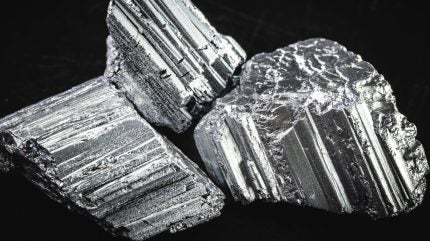
Australia’s Lynas Rare Earths agreed this week to acquire Meteoric Resources in an all-share deal valued at about $674 million, or A$968 million. Meteoric shareholders will receive 0.0207 Lynas shares for each of theirs, worth A$0.286 per share and a 68.4 percent premium to the previous close. The prize is the Caldeira project in Minas Gerais, Brazil, which Mining Technology describes as the largest known ionic clay rare earth oxide resource outside China under the JORC reporting code.
Ionic clay deposits matter because of what they contain and how they are worked. The reported resource holds 802,000 tonnes of neodymium-praseodymium oxides, the magnet metals, and 41,000 tonnes of dysprosium-terbium oxides, the heavy rare earths that let those magnets keep working at high temperatures inside motors. Heavy rare earth supply has been almost entirely a Chinese business, sourced from ionic clays in the country’s south. Clay deposits can be leached with mild salt solutions rather than crushed, roasted, and acid-cracked like hard-rock ores, which tends to mean lower capital intensity.
Caldeira already has a completed definitive feasibility study with expected development capital above $500 million, or A$721.3 million. Lynas has committed an unsecured interim funding facility of up to A$110 million while the scheme goes through shareholder and court approval. Board chair John Humphrey said the combined operations would “deliver on our Towards 2030 growth objective of adding resource and scale” and help Lynas “maintain its leading position in the global rare earths supply chain.” For buyers of magnets in Japan, Europe, and the United States, it means a second credible source of the heavy rare earths that have been hardest to secure.
Source: Mining Technology
Brazil’s Grota do Cirilo Lithium Mine Cleared to Restart
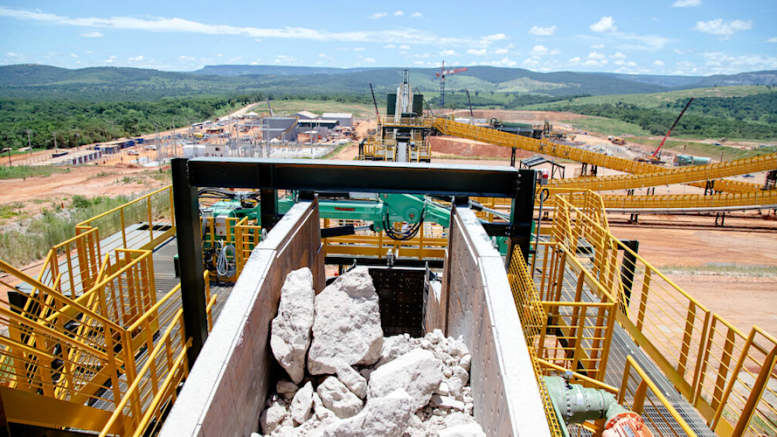
A Brazilian federal appeals court this week upheld Sigma Lithium’s environmental licences, allowing the company to resume operations at Grota do Cirilo in Minas Gerais. An emergency shutdown order had been issued the previous week following a lawsuit by Ngolo, an organisation representing local Quilombola communities. Senior federal judge Mônica Sifuentes found that a prolonged stoppage would inflict lasting economic harm on the Vale do Jequitinhonha region and reinstated the permits. Sigma’s Nasdaq-listed shares rose as much as 6.7 percent on the news.
Grota do Cirilo is among the world’s largest hard-rock lithium deposits, and its scale is what makes a one-week closure a global supply event. After a technological upgrade to its processing plant in late 2024, the operation demonstrated output above 950 tonnes of lithium oxide concentrate a day, passing 1,000 tonnes on several occasions. Sigma projects 330,000 tonnes of annualised concentrate production by the end of 2027, which it says is achievable from the existing Mine 1 South Pit and current processing infrastructure without new capacity.
The episode is a reminder that lithium supply is constrained as much by permits and courts as by geology, and that the two can move in opposite directions within days. The court’s reasoning, that the regional economy depends on the mine continuing, also reflects something that is easy to miss in supply-chain discussions: a large modern mine in a poor region is often the most significant economic institution for hundreds of kilometres. The resumption puts one of the world’s largest hard-rock sources of the metal back on line.
Source: The Northern Miner
Europe’s Circuit4EU Bets on Robots to Mine Rare Earths from E-Waste

IEEE Spectrum this week profiled Circuit4EU, a European Union programme launched on 4 September 2026 to advance ten technologies for recovering critical raw materials from electronic waste. The three-and-a-half-year project brings together 21 partners across nine countries under the coordination of Arts et Métiers ParisTech, a French engineering school. Its purpose is to make the EU’s Critical Raw Materials Act target plausible: a quarter of annual rare earth consumption sourced from recycling by 2030.
The engineering problem is that e-waste is a dreadful ore. The valuable material is scattered among glued housings, mixed plastics, sharp edges, and hazardous components, and every model is assembled differently. Circuit4EU’s approach is to industrialise disassembly rather than shredding. Machine learning and computer vision assess the value of components in laptops and circuit boards, robotic arms strip motherboards and memory from laptops, dishwashers, and e-scooters, and targeted desoldering and chemical processes recover the metals. Digital product passports would carry origin, composition, and recycling information with each device so that future machines know what they are looking at. One expert quoted notes that visible-light imaging has limits and that X-ray inspection may be needed, although that would affect the economics.
Project coordinator Nicolas Perry frames the central question as “how deep to go,” meaning at what point further disassembly costs more in energy and labour than the recovered material is worth. The target is Technology Readiness Level 7, a working prototype in a factory setting, with the hope that pilots are integrated directly by the industrial partners. The article also raises a human factor: some residents believe their sorted electronics end up incinerated, and recovering that trust is part of recovering the material. Whether urban mining competes with primary rare earth production will depend on exactly the cost per gram that this programme is designed to find out.
Source: IEEE Spectrum
Hot Liquid Tin Turns Desalination Brine into a Magnesium Mine

Desalination plants produce two things: fresh water and a concentrated brine that is usually pumped back into the sea. Researchers Toranosuke Horikawa and Masatoshi Kondo at the Institute of Science Tokyo have published a process in the journal Desalination that treats that brine as feedstock. Brine is brought into contact with molten tin at 300 to 400 degrees Celsius. The water flashes off as distilled water while the dissolved minerals are absorbed into the metal. The loaded tin is then heated to about 700 degrees under vacuum, which drives off chlorine and sulphur compounds as gases, and slow cooling causes magnesium-rich precipitates to form that can be separated as magnesium oxide.
The numbers from the laboratory are striking. The magnesium concentration in the precipitate reached about 280 times that of the original brine, the ratio of magnesium to sodium rose roughly 5,300-fold, and more than 99 percent of the magnesium absorbed by the tin was recovered. The authors estimate the electricity requirement at about 1.7 kilowatt-hours per kilogram of magnesium recovered. Because the process runs on heat, they sketched a conceptual design for a sunny location such as Egypt in which a 15-metre solar concentrator could produce about 970 kilograms of fresh water and 2.8 kilograms of magnesium a day.
Magnesium is a light structural metal, and the sea holds an effectively unlimited supply of it. Kondo and Horikawa call their approach “mining without digging,” obtaining resources “not from newly excavated ores, but from water streams that are currently treated as waste.” The work is at an early stage. The next steps the authors list include a continuous system with tin circulation, long-term stability, materials compatibility, product purification, and economic evaluation. But the concept, in which the same heat that makes fresh water also makes metal, is exactly the kind of coupling that turns a waste stream into a second product line.
Source: TechXplore
A 250-Kilowatt Seawater System Makes Hydrogen and Fresh Water Together

Electrolysers want pure water, and seawater wrecks them. The usual solution is to bolt a desalination plant onto the front of a hydrogen plant and pay for both. A team at the Chinese Academy of Sciences, reporting in Nature Energy, has demonstrated an alternative at pilot scale: an alkaline electrolyser coupled to a low-temperature seawater distiller that runs on the electrolyser’s own waste heat. The distilled water feeds the electrolysis cells, and the surplus is fresh water available for other uses.
The system was first run as a 20-kilowatt pilot producing 3.8 normal cubic metres of hydrogen and 1.2 kilograms of fresh water an hour, and it operated stably for 100 days. It was then scaled to 250 kilowatts, producing 48 normal cubic metres of hydrogen and 31.6 kilograms of fresh water an hour. Because heat that would otherwise be dumped is doing useful work, the researchers report a 14.4 percent improvement in electrical efficiency compared with conventional freshwater electrolysis on its own.
Hydrogen production from seawater is attractive given its abundance, the authors note, but direct seawater electrolysis has proved difficult. The integrated approach sidesteps that problem with conventional, proven electrolysis hardware and a thermal trick. The energy source is simply electricity, so the system can sit beside solar or any other generator. The team says further testing in other settings is needed before commercial viability can be judged. The attraction for coastal, water-scarce regions is obvious: a hydrogen plant that pays part of its own way in drinking water, with the desalination energy already accounted for.
Source: TechXplore
Technion Electrolyser Makes a Saleable Chemical Instead of Venting Oxygen

Every water electrolyser produces two gases, and only one of them is worth anything. Hydrogen is the product. Oxygen is vented, and the electricity spent making it is simply lost. Researchers at the Technion, the Israel Institute of Technology, report in Nature Communications a membrane-free electrolysis design in which the oxygen-evolving half of the reaction is replaced by the synthesis of an epoxide, a class of reactive chemical that is a basic feedstock for polymers, coatings, adhesives, and pharmaceuticals.
The approach uses bromide-mediated paired electrosynthesis. Hydrogen is generated at one electrode while, at the other, bromide is oxidised and used to convert an organic substrate into an epoxide. Both products form at 98 percent Faradaic efficiency, meaning almost all of the electrical charge goes into the intended reactions, and the team reports current densities compatible with industrial-scale electrolysis. Principal investigator Avner Rothschild noted that only about 2 percent of the charge was lost to side reactions. Lead researcher Guilin Ruan described the result as “a conceptual shift in which all components work together.”
The economic point is simple. Green hydrogen is expensive mainly because electricity is expensive and half of it is spent making worthless oxygen. If the anode produces a chemical that currently has to be made by other energy-intensive routes, the same kilowatt-hours generate two revenue streams. Membrane-free operation also removes one of the costlier and more failure-prone components of a conventional cell. The article gives no cost figures, and the usual questions about catalyst life and substrate supply remain. But the design is explicitly intended for large-scale adoption, and it points at a general strategy: do not ask how to make hydrogen cheaper, ask what else the electrons could be making at the same time.
Source: TechXplore
The Metals Company Lays Out Its Case on Seabed Nodules

The Metals Company, the most advanced of the firms seeking to collect polymetallic nodules from the Clarion Clipperton Zone of the Pacific, published a point-by-point response this week to the six environmental objections most often raised against the practice. It is an interested party making its own case, and should be read as such. But it is a case assembled from more than a decade of research, 22 offshore campaigns, and a monitoring dataset the company puts at 32,617 benthic and 42,036 pelagic biological occurrences, collected with 18 marine research institutions and published in journals including Nature and Science Advances.
On seafloor sediment plumes, TMC cites its own test data and MIT research indicating that 95 percent of disturbed sediment resettles within one to two kilometres because the particles clump. On midwater plumes, it says return water is discharged at 2,000 metres, below the depths at which tuna and marine mammals typically feed, and dilutes to background levels within tens of kilometres and two to four days. On carbon, it argues that seafloor sediments hold under 5 percent of ocean carbon and quotes MIT professor Thomas Peacock’s testimony to Congress that “it was established in about 2020 that this is not an issue.” On biodiversity, it points to a 2025 Nature study showing recovery of microscopic organisms 44 years after disturbance, and to its own trials in which microbial density reached 30 percent and diversity 50 percent of pre-disturbance levels within a year. On habitat, it notes that at least 43 percent of the zone is already protected and that even if half of all exploration contracts went into production, 0.18 percent of the global seafloor would be affected.
The nodules themselves are a remarkable resource: loose, metal-rich rocks lying on the abyssal plain that can be collected rather than blasted and dug. Whether that supply ever reaches a battery plant is a regulatory and political question as much as a technical one, and this document is part of the campaign to answer it. TMC’s own framing is that it is “building a carefully managed metal commons that will be used, recovered, and reused again and again.” Critics will contest the specific numbers. What the piece does establish is that the environmental debate over nodules is now one about measured, published quantities rather than about the unknown.
Source: The Metals Company