Resource Abundance Weekly Review 2026-10-15

Week In Review
The strongest thread this week is capital finally moving into cheaper ways of making the metals that modern industry runs on. Hertha Metals broke ground in Texas on a plant that turns iron ore and natural gas into steel or high-purity iron in a single furnace, with the company claiming a quarter off the cost of the blast furnace route and a tolerance for low-grade ore that conventional mills lack. Trafigura signed a ten-year, $2 billion contract with EnergyX for lithium pulled from brine by direct extraction rather than evaporation ponds or hard-rock mines, the kind of bankable offtake that turns demonstration plants into commercial ones. And in Chile, Aclara and the steelmaker CAP switched on a demonstration plant that converts rare earth oxides into the neodymium and praseodymium metal that magnet makers need, a step in the chain that has been almost entirely Chinese.
A second thread is evidence that supply responds to demand faster than forecasters expect. The International Nickel Study Group, which in April was predicting a shortage, now sees a surplus for 2026 and a larger one for 2027, driven by Indonesian output that keeps rising and by battery makers substituting toward cheaper lithium-iron-phosphate chemistry. The same dynamic shows up at the project level: Idaho Copper’s revised study for the CuMo deposit cut initial capital by more than half by starting small and sorting ore before milling, making a low-grade orebody worth developing. Europe, for its part, selected 46 strategic projects under its Critical Raw Materials Act, nineteen of them focused on recycling, which the Commission says could meet its extraction benchmarks for several materials outright.
The research items this week are about doing the same job with less of a scarce input, or getting a useful product out of something that was being thrown away. Vienna researchers found that an electrolyser’s platinum coating can be made about 88 percent thinner without losing its protective function, a direct cut to the cost of hydrogen from water. A UC San Diego team working with Toyota built a battery binder from polyacrylic acid, cellulose, and citric acid that replaces fluorinated polymers and a toxic solvent, and that lets spent electrodes be recycled by soaking in water. Another Vienna group turned polystyrene packaging, old CDs, and LEGO bricks into sponges that pull water out of the air and release it under sunlight. And a meta-analysis of more than a hundred field trials concluded that fertilisers recovered from sanitation systems perform as well as the mined and synthesised products they would replace.
Taken together, the week shows the ordinary mechanism of abundance at work. High prices and supply worries in 2022 and 2023 drew capital into iron, lithium, rare earths, nickel, and copper. Three years on, the plants are being built, the forecasts are flipping from deficit to surplus, and the laboratories are quietly removing platinum, fluorine, and virgin phosphate from processes that used to depend on them.
Items
Hertha Metals Starts Building a One-Step Iron and Steel Plant in Texas
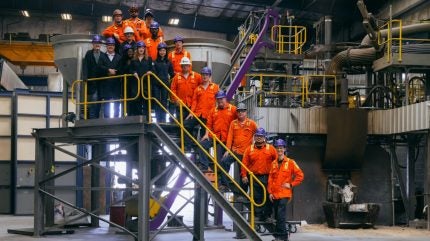
Hertha Metals has begun construction of a facility it calls Hertha Chalyx in Conroe, Texas, which the company describes as the first modern iron and steel innovation complex in the United States. The plant is designed to produce roughly 10,000 tonnes a year of a mix of steel-grade and magnet-grade high-purity iron. Its first customers are expected to be the American rare earth magnet manufacturers now coming online, which need very pure iron as a feedstock and have had few domestic sources.
The technology is the point. Conventional steelmaking reduces iron ore in a blast furnace fed with coke, then refines the resulting pig iron in a separate vessel. Hertha’s process takes iron ore and natural gas into one furnace and produces either liquid steel or high-purity iron directly, according to the company. Crucially, it claims the method accepts any grade of ore, including the low-quality material that blast furnaces reject or that requires costly beneficiation. If that holds at scale, it widens the usable resource base considerably, since low-grade iron ore is vastly more abundant than the premium grades that integrated mills prefer.
Hertha says the process produces steel and iron at about 25 percent lower cost than the blast furnace route, with lower emissions when running on natural gas and further reductions available if hydrogen is substituted. The company raised $133.65 million in a Series A round co-led by Khosla Ventures and Doerr Capital to fund the build.
Operations are scheduled to begin in late 2027, with the first magnet-grade iron expected in early 2028. The Conroe plant is explicitly a stepping stone: Hertha says its purpose is to prove the business case and generate the operating data needed for a proposed 500,000-tonne-per-year facility. As CEO Laureen Meroueh put it, the past two years were about proving the technology through production, and Chalyx is about demonstrating that it can deliver commercially.
Source: Mining Technology
Trafigura Commits $2 Billion to Lithium Pulled Straight from Brine
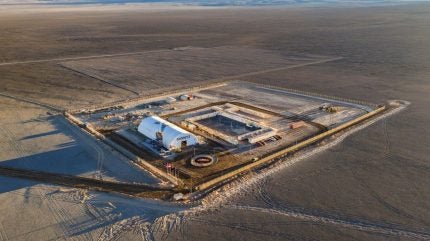
Commodity trader Trafigura has signed a binding ten-year agreement with Energy Exploration Technologies, known as EnergyX, to buy 100,000 tonnes of battery-grade lithium products. The contract is valued at more than $2 billion and is structured as take-or-pay, meaning Trafigura commits to paying for the volume whether or not it ultimately takes delivery. That structure matters because it is the kind of guaranteed revenue that lenders look for before financing a new plant.
The lithium will come from two projects. Project Lonestar, in Texas, will supply lithium hydroxide, with Trafigura taking 30 percent of phase one output. Black Giant, in Chile’s Antofagasta region, will supply lithium carbonate, with Trafigura securing 66 percent of its first phase. Both use EnergyX’s proprietary direct lithium extraction technology, which the company already runs at demonstration facilities it describes as the largest of their kind in each country.
Direct lithium extraction is the technology the lithium industry has been waiting on for a decade. Conventional brine operations pump lithium-rich water into vast evaporation ponds and wait a year or more for the sun to concentrate it, consuming land and water and recovering only part of the lithium. Direct extraction instead passes brine through a selective medium that captures lithium in hours and returns the depleted water underground. It promises to unlock brines that are too dilute, too cold, or too wet for ponds, including the oilfield brines of the American South.
Commercial-scale production is targeted for 2028 in Chile and 2029 in Texas. EnergyX has also lined up a $690 million letter of intent from the US Export-Import Bank and a $225 million strategic investment from the Italian energy company Eni for the Chilean development. Daniel von Arx, who heads battery metals at Trafigura, called long-term offtake an important step in moving projects into production.
Source: Mining Technology
Chile Opens a Plant That Turns Rare Earth Oxides into Magnet Metal
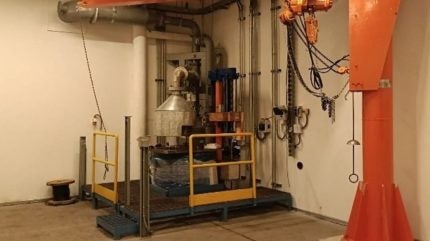
Aclara Resources and the Chilean steelmaker CAP have inaugurated a rare earth metals demonstration plant at CAP’s Huachipato steelworks in Talcahuano, in Chile’s Biobío region. The two companies operate the venture as a 50/50 joint venture called Aclara Metals, and the regional governor, Sergio Giacaman, attended the opening.
The plant addresses a step in the rare earth supply chain that gets less attention than mining but is just as concentrated. Separating rare earth oxides from ore is one challenge; converting those oxides into metal that can be alloyed into permanent magnets is another, and it has been done almost exclusively in China. The Chilean facility uses molten salt electrolysis to reduce neodymium and praseodymium oxides to metal, with a capacity of up to 175 kilograms of rare earth metal per day at a minimum purity of 99.5 percent.
Phase one will produce neodymium and praseodymium metals. A second phase under consideration would add dysprosium to make the neodymium-praseodymium-dysprosium alloy used in magnets that must hold their strength at high temperatures, the kind found in electric vehicle motors and wind turbine generators. The company names electromobility, robotics, and wind power as the target markets.
The demonstration plant’s operating data will feed the basic engineering for a prospective industrial-scale facility in Louisiana, and will also be used to build a predictive digital model for process optimisation. Aclara’s chief resource officer, Ramón Barúa, described the plant as another step toward an integrated rare earth supply chain, one that would run from Aclara’s ionic clay deposits in Brazil and Chile through separation and metal-making to magnet manufacturers outside China.
Source: Mining Technology
The Nickel Shortage That Wasn’t: Forecasters Flip to Surplus
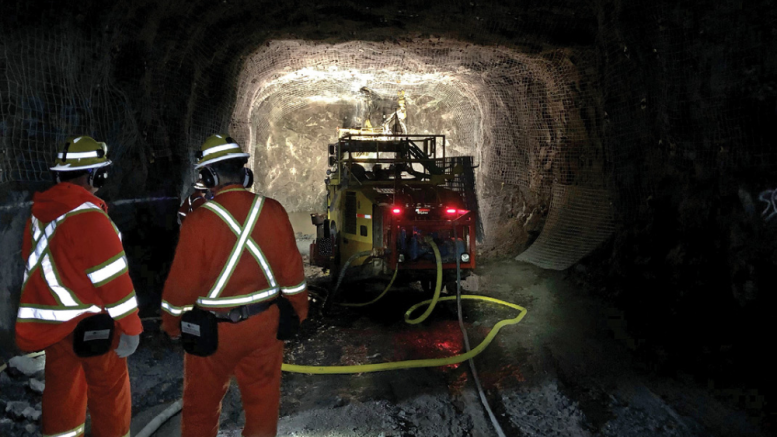
The International Nickel Study Group, a Lisbon-based intergovernmental body, has reversed the deficit it forecast for 2026 and now expects the nickel market to be in surplus this year and next. In April the group projected a 32,000-tonne shortfall. Its October update instead puts 2026 production at 3.87 million tonnes against demand of 3.85 million tonnes, a surplus of about 19,000 tonnes, growing to roughly 70,000 tonnes in 2027 as output reaches 4.07 million tonnes against consumption of 4 million. That follows a 2025 surplus of 299,000 tonnes.
The reversal came because supply revisions outran demand revisions. The group raised its production forecast by 153,000 tonnes while raising consumption by 102,000 tonnes. Demand is still growing briskly, at a forecast 7.6 percent in 2026, with global stainless steel production up 5 percent to about 33 million tonnes in the first half of the year. The metal is simply arriving faster than it is being used.
Indonesia is the reason. Chinese-backed projects there have expanded capacity for both stainless steel feedstock and battery materials, and the country accounted for roughly two-thirds of global mined nickel in 2025. Even with Jakarta approving lower ore quotas for 2026 than for 2025, the installed base keeps producing. The other half of the story is substitution on the demand side: the report notes that nickel’s role in batteries has grown more gradually than anticipated because lithium-iron-phosphate chemistry, which uses no nickel, accounted for more than 55 percent of global electric vehicle battery deployment in 2025, up from nearly 50 percent the year before.
The consequences for higher-cost producers are visible. BHP has suspended its Western Australia Nickel assets and agreed to sell the Kambalda concentrator to Gold Fields. Vale’s Voisey’s Bay produced 10,400 tonnes of finished nickel in the second quarter and its Sudbury operations 6,700 tonnes, while Glencore guided to 70,000 to 80,000 tonnes for the full year. For consumers, though, the picture is the reverse: a metal that three years ago was the subject of shortage warnings is now plentiful and cheaper, because new supply came on and engineers found a way to use less of it.
Source: The Northern Miner
Idaho Copper Cuts Upfront Cost of a Giant Low-Grade Deposit by 62 Percent

Idaho Copper has released an updated preliminary economic assessment for its CuMo copper-molybdenum-silver project, located about 60 kilometres northeast of Boise in the Boise National Forest. The headline change is a 62 percent reduction in initial capital cost, to $1.1 billion, compared with the company’s 2020 study. Post-tax net present value at an 8 percent discount rate rose more than fourfold to $1.8 billion, the internal rate of return doubled to 18.5 percent, and payback is estimated at 5.9 years over a 46-year mine life.
CuMo is an enormous but very low-grade orebody. Measured and indicated resources stand at 2.2 billion tons grading 0.08 percent copper, 0.05 percent molybdenum, and 2.5 grams per tonne silver, containing 3.8 billion pounds of copper, 1.5 billion pounds of molybdenum, and 165.5 million ounces of silver. A further 2.5 billion tons sit in the inferred category at slightly lower grades. Deposits like this are common in the American West and have historically been uneconomic because moving and milling that much rock to extract so little metal costs too much.
The study’s answer is to start with a smaller plant and to sort ore before milling. Modern sensor-based ore sorting scans crushed rock and rejects barren material before it reaches the energy-intensive grinding circuit, effectively raising the grade of what gets processed. CEO Andrew Brodkey said that starting small and sorting ore reduces upfront capital materially, with rapid payback driven by the sorting. A $658 million expansion is planned for year five once cash flow is established.
Over the first 21 years the mine would produce an average of 41.6 million pounds of copper, 30.5 million pounds of molybdenum, and 1.3 million ounces of silver annually. The improved economics do rest partly on higher metal price assumptions: copper at $5 per pound and molybdenum at $25 per pound, both up 66 percent from the prior study, and silver at $50 per ounce. A prefeasibility study is planned for 2027 with completion targeted in 2028. Investors were unmoved, with shares falling 4 percent to $3, but the broader lesson is that processing technology keeps converting marginal rock into reserves.
Source: The Northern Miner
Europe Picks 46 Projects to Mine, Refine, and Recycle Its Own Critical Minerals
The European Commission has designated 46 strategic projects under its Critical Raw Materials Act, selected from 102 applications. The projects span 16 member states, including Finland, Sweden, Germany, France, Spain, Portugal, Poland, and Romania, and cover 15 of the 17 materials the EU classes as strategic. Strategic status brings streamlined permitting and priority access to financing, which is what makes a designation list a production story rather than a policy one.
The breakdown is telling. Eight projects focus on extraction, 11 on processing, 19 on recycling, and eight are integrated across stages. Recycling is the largest single category, reflecting both Europe’s limited geology and the large stock of metal already sitting in its scrapped vehicles, electronics, and industrial equipment. The battery value chain dominates by material: 12 projects involve nickel, 10 cobalt, seven lithium, five manganese, and four graphite. Magnesium and tungsten projects serve defence and aerospace, and rare earth projects target permanent magnets.
The Act sets benchmarks for 2030: 10 percent of the EU’s annual consumption of strategic materials should come from domestic extraction, 40 percent from domestic processing, and 25 percent from recycling. According to the Commission, the selected projects could fully meet the extraction benchmark for several materials and the processing targets for lithium and rare earth elements.
The article does not give investment totals or single out individual projects, and the proof will be in which of the 46 reach construction. But the shape of the list is itself informative about where Europe thinks the cheapest new supply lies: not in the ground so much as in refining imported concentrates and in recovering metal from the urban mine it already owns.
Source: Mining Technology
An Electrolyser Coating 88 Percent Thinner Still Does Its Job

Researchers at TU Wien’s Institute of Materials Science and Technology have worked out how thin a platinum protective coating can be inside a water electrolyser before it stops working. Their answer, published in ACS Applied Materials & Interfaces, is that a 24-nanometre layer holds up under electrochemical stress, compared with the 200 nanometres that is the current industry standard. That is a reduction in platinum use of roughly 88 percent for this component.
The component in question is the bipolar plate of a proton exchange membrane electrolyser, the machine that splits water into hydrogen and oxygen using electricity. The plates are made of titanium, which is strong and conductive but corrodes in the acidic, oxidising environment inside the cell. Manufacturers coat them with platinum to prevent that corrosion. Platinum is one of the scarcest and most expensive metals in industrial use, and the plates are a significant part of an electrolyser stack’s cost.
The team tested coatings at several thicknesses. The 24-nanometre coating remained largely intact and released minimal metal ions into the electrolyte. An 8-nanometre coating, by contrast, developed significant defects and leaked substantially more titanium and platinum ions, which would both degrade the plate and poison the membrane. The result establishes a practical floor, and the researchers say the saving could make electrolysis noticeably less expensive.
Cheaper electrolysers matter because the cost of hydrogen from water is set by two things: the price of electricity and the capital cost of the equipment. Work like this chips at the second term, and because it addresses a material that cannot be mined in much greater quantity at any price, it is substitution of the purest kind, using engineering knowledge to replace most of a scarce input with nothing at all.
Source: TechXplore
A Battery Glue Made from Cellulose and Citric Acid That Recycles in Water

Engineers at the University of California San Diego, working with Toyota Research Institute of North America, have developed a water-based binder for lithium-ion battery electrodes that replaces the fluorinated polymers and toxic solvent the industry currently relies on. The work was published in Nature Communications on October 9.
Every battery electrode is a powder of active material glued to a metal foil. The standard glue is polyvinylidene fluoride, a fluoropolymer that must be dissolved in N-methyl-2-pyrrolidone, a solvent that is toxic, expensive, and energy-intensive to recover. The same chemical stability that makes the fluorinated binder reliable also makes spent electrodes hard to take apart, forcing recyclers to use harsh chemicals or high temperatures. The lead researcher, Chen, noted that the stability which makes these binders good at their job is exactly what makes batteries much harder to recycle.
The new binder combines three cheap, familiar ingredients: polyacrylic acid for even spreading and flexibility, carboxymethyl cellulose, a plant-derived material, for strength and adhesion, and citric acid as a crosslinker. All dissolve in water. Batteries built with it matched conventional cells initially and, according to the researchers, held their capacity longer after hundreds to thousands of charge cycles. The binder worked with lithium-iron-phosphate and nickel-rich cathodes and with graphite and silicon anodes, covering the main chemistries in production today.
At end of life, electrodes made with the new binder are simply soaked in water. The coating releases cleanly from the foil without residue, and the recovered active material, regenerated through direct recycling, produced batteries that performed as well as new ones. The authors describe the polymers as inexpensive and widely used, though the article gives no cost comparison. The combination of eliminating a toxic solvent recovery step at the factory and a chemical or thermal step at the recycler points toward both cheaper batteries and cheaper recovered metals.
Source: TechXplore
Old CDs and LEGO Bricks Become Sponges That Pull Water from Air

Chemists at the University of Vienna have converted common waste plastics into porous materials that absorb moisture from the atmosphere and release it as liquid water when gently warmed. The work, by Anastasiia Naryshkina, Paul Schweng, and Robert Woodward, appears in the journal Chem Circularity.
The feedstocks are ordinary: polystyrene packaging, polycarbonate from old CDs, acrylonitrile butadiene styrene from LEGO bricks, and mixed plastic waste. What they share is an aromatic structure, carbon rings in the polymer backbone. The researchers cross-link these chains into a rigid, highly porous network, then treat it with sulfuric acid to attach sulfonic acid groups, which strongly attract water molecules. The result is a material riddled with tiny channels whose walls are lined with moisture-grabbing chemistry.
Performance is substantial. The polystyrene-derived sponge absorbed about 60 percent of its own weight in water from humid air and about 20 percent in desert-like dry conditions. Releasing the water takes about an hour of mild heating, which sunlight can supply. The materials survived repeated capture-and-release cycles, which the researchers say means they can generate water over and over again.
Atmospheric water harvesting is a long-sought route to drinking water in places with no rivers, aquifers, or coastline, and the usual obstacle is the cost of the sorbent. Making it from waste plastic that currently has negative value addresses that directly. The article mentions no cost figures and no scale-up plan, and the team says it is still assessing long-term performance and overall resource requirements. But a process that takes a disposal problem as its input and yields fresh water as its output is the right shape.
Source: Phys.org
Fertiliser Recovered from Sanitation Systems Matches the Mined Kind

A meta-analysis led by Germany’s Institute for Social-Ecological Research, published in Frontiers in Environmental Science, finds that fertilisers recovered from resource-oriented sanitation systems perform as well as conventional mineral fertilisers in crop trials. The study, by Corinna Schröder and colleagues, is the broadest assessment yet of a category of product that has been promising in principle and under-evaluated in practice.
Resource-oriented sanitation separates waste streams at source, for instance collecting urine, which carries most of the nitrogen, phosphorus, and potassium that humans excrete, apart from solids and flush water. The separated streams are processed into fertiliser products that the study classifies as mineral, organic, or organic-mineral depending on their nutrient composition. The researchers identified 13 such product types.
The team compiled more than 450 datasets from over 200 sources across 32 countries, then ran a formal meta-analysis on 134 datasets from 68 sources covering 31 crop species in field, pot, and hydroponic trials. They examined nutrient content, heavy metals, organic contaminants, and agronomic performance. The core finding is that there is no systematic yield disadvantage compared with mineral fertilisers, and yields were generally significantly higher than unfertilised controls. Effects did depend on the nutrient form, soil type, and crop management, as they do for any fertiliser. Co-author Martina Winker summarised the result plainly: recycled fertilisers from separately collected streams are not second-class fertilisers.
The significance is in the scale of the resource being wasted. Phosphorus is mined from a handful of rock deposits concentrated in a few countries, and nitrogen fertiliser is made from natural gas, yet cities flush both into treatment plants and waterways every day. The study does not address economics, and collection infrastructure is the real barrier. But establishing that the recovered product is agronomically equivalent removes the first objection to building that infrastructure.
Source: Phys.org