Resource Abundance Weekly Review 2026-10-22

Week In Review
Copper had a good week, and not because anyone found a new mountain of it. Hudbay and Mitsubishi sanctioned the $2.1 billion Copper World mine in Arizona, a deposit grading under half a percent copper that becomes a 15-year, 100,000-tonne-a-year operation through scale and in-pit crushing rather than geological luck. Fortescue sold its first copper concentrate cleaned by the Toowong Process, a low-temperature chemical treatment that strips arsenic from concentrates smelters would otherwise refuse, which matters because many of the world’s remaining large copper bodies are exactly the dirty kind. And Atomionics drove a quantum gravimeter around an Indian iron ore mine for three weeks and reproduced, within five percent, a resource estimate that had taken four years and thirty kilometres of drilling. Taken together these are three different levers on the same quantity: the cost of turning rock that is already known to exist into metal that can be sold.
Rare earths moved in the same direction by a different route. Phoenix Tailings announced a $375 million separation plant in Rochester, New York that will take both mined and recycled feedstock, filling the processing step where Western supply chains have been thinnest. In South Africa, the Steenkampskraal monazite mine is preparing its first concentrate exports from a deposit grading around 14.5 percent rare earth oxides, one of the richest anywhere, with the national minerals institute working on downstream separation. The rare earth problem has never been scarcity in the ground. It has been the absence of anyone outside China willing to run the chemistry, and that is now changing plant by plant.
Three research results this week share a premise that waste streams are poorly designed feedstocks rather than worthless ones. A Max Planck group used machine learning to treat the impurities in scrap iron as alloying ingredients, producing castings that were stronger or more ductile than the conventional recipe at lower cost. Worcester Polytechnic Institute upcycled mixed battery waste into cathodes and anodes that roughly doubled cell cycle life against commercial materials, with a claimed profitability gain over ordinary recycling. ETH Zurich found that a single cheap reagent breaks acrylic glass back into its monomer at 98 percent yield, with no solvent, at a temperature existing plants can already reach. In each case the economic argument is made explicitly, which is what separates a recycling story from a recovery business.
Hydrogen rounded out the week with a pairing worth reading together. The Korea Institute of Energy Research reported a nickel-cobalt electrode that matches platinum’s performance at a material cost roughly a thousandth as high, and has already scaled it to 40-centimetre electrodes. Meanwhile the International Energy Agency published a careful decomposition of why Chinese electrolysers are so cheap, and the answer is sobering for anyone who thinks the stack is the problem: it accounts for only six to nine percent of the levelised cost of hydrogen, and electricity dominates the rest. Cheap catalysts are welcome, but hydrogen becomes abundant when power does. The same logic runs through everything above. Copper, rare earths, recycled metal, and fuel all get cheaper when the energy and the chemistry to process them do, and this week delivered progress on both.
Items
Hudbay and Mitsubishi Commit $2.1 Billion to a Low-Grade Arizona Copper Mine
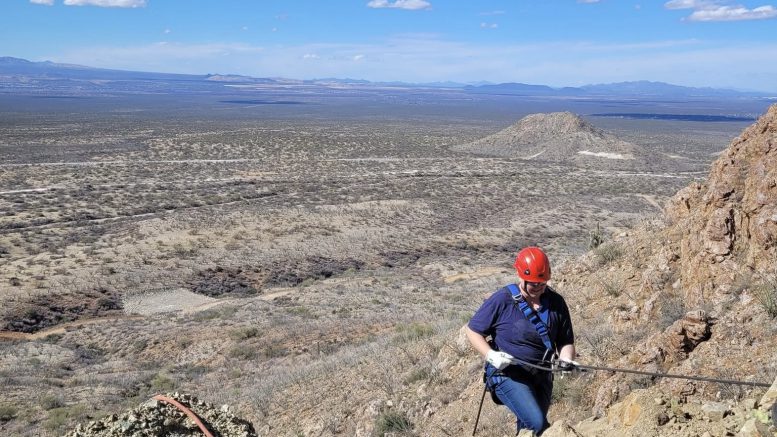
Hudbay Minerals and Mitsubishi have made the construction decision on Copper World, an open-pit copper project about 50 kilometres southeast of Tucson. The Northern Miner reports a capital cost of $2.1 billion, up from $1.3 billion in the 2023 prefeasibility study, with first production targeted for the second half of 2029. Hudbay holds 70 percent after Mitsubishi’s $600 million buy-in, and the company’s own cash contribution is around $500 million, the rest coming from a $230 million precious metals stream and a planned $650 million debt facility.
What makes the project interesting is how ordinary the rock is. Proven and probable reserves stand at 390 million tonnes grading 0.47 percent copper, and the broader measured and indicated resource of 1.2 billion tonnes grades just 0.40 percent. A century ago nobody would have called this ore. Today it supports average production of 102,000 tonnes of copper a year over the first decade at a cash cost the company puts at $1.65 per pound, against a copper price near $5. The base-case after-tax net present value is $1.2 billion with a 17 percent internal rate of return, rising to $2.3 billion and 22 percent if copper reaches $6.
The engineering behind those numbers is incremental and well understood: an in-pit crushing and conveying system from year four, and a concentrator expansion from 60,000 to 90,000 tonnes per day in year five that lifts output to around 120,000 tonnes a year. A further expansion scenario, dependent on federal permits, would extend mine life from 15 years to 37. Hudbay is also evaluating a fully permitted concentrate leach facility that would produce copper cathode on site, adding an estimated $377 million to project value and removing the need to ship concentrate to overseas smelters.
The project is expected to employ more than 1,000 people during construction and 500 once operating. Chief executive Peter Kukielski described it as one of the most attractive copper growth projects in the Americas on grade, cash cost, and capital intensity. The deeper point is that the reserve base of the world’s most important industrial metal keeps growing not because the earth yields new discoveries but because the threshold of what counts as mineable keeps falling.
Source: The Northern Miner
Fortescue Sells Copper Concentrate Cleaned of Arsenic by a Low-Temperature Process
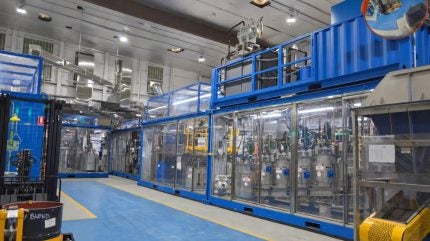
Fortescue has completed the first commercial sale of copper concentrate treated with its Toowong Process, shipping more than 40 tonnes from a demonstration plant in Brisbane. Mining Technology reports the process is a hydrometallurgical treatment operating at low temperature and pressure that reduces arsenic in copper concentrate from levels as high as 7 percent to below 0.25 percent, while retaining 99.9 percent of the copper and locking the arsenic into a stable solid.
Arsenic is one of the quiet constraints on copper supply. Smelters penalise concentrate with elevated arsenic and refuse it outright above certain thresholds, which leaves a large fraction of known copper deposits, particularly in the Andes, stranded or discounted. The conventional fix is roasting, which is energy-intensive and produces toxic emissions that require elaborate controls. Fortescue says the Toowong Process matches roasting on capital and operating cost while using less energy and avoiding the by-product handling problem.
The company acquired the technology in 2022 and spent four years developing it, logging more than 3,000 hours of testing across seven campaigns. It is now evaluating the process on concentrate from its Cañariaco project in Peru, which is the kind of large, complex deposit that benefits most. Gus Pichot, Fortescue’s growth and energy chief executive, framed it plainly: the company looks for problems others treat as barriers and works out how to solve them.
Industry forecasts cited in the article have copper demand rising by more than half by 2050. Meeting that will mean mining ore bodies that are lower grade and dirtier than those of the past. A treatment that turns unsellable concentrate into sellable concentrate at comparable cost does not add a single tonne to geological reserves, but it moves a large tranche of them from the uneconomic column to the economic one.
Source: Mining Technology
A Quantum Gravimeter on an SUV Matches Four Years of Drilling in Three Weeks

Atomionics, a Singapore-based quantum sensing company, has published results from a three-week survey of an active iron ore mine in India using GRAVIO, a quantum gravimeter mounted on a sport utility vehicle. Mining Technology reports that the resulting three-dimensional density model estimated the contained iron to within 5 percent of the operator’s own figure, a number the operator had established through more than 30,000 metres of drilling over four years.
A quantum gravimeter measures local gravity by dropping a cloud of laser-cooled atoms inside a vacuum chamber and timing their fall with extreme precision. Because the measurement is absolute, it needs no base station corrections, and it can detect the density contrast of a dense ore body against surrounding rock from the surface. Atomionics feeds the gravity readings into a machine learning inversion tool it calls ORE-O to produce the density model. The system worked despite the vibration and noise of ongoing mining, and identified extensions of the deposit deeper than the existing drill holes reached.
The economics are the point. Drilling out a deposit of this kind typically costs $4 million to $6 million and takes years, and the article notes that the gravimeter survey produced results suitable for guiding drilling decisions within weeks without interrupting production. Mikhail Zeldovich of Atomionics was careful not to oversell it, saying the company is not asking anyone to stop drilling but to use the survey to illuminate the subsurface in three dimensions first.
Atomionics is now running an early access programme that offers free validation surveys to partners with existing drill data, and is developing a drone-mounted version for terrain without road access. Exploration is where mining’s cost inflation has been most severe, and a tool that tells a company where to drill before it drills attacks that problem directly.
Source: Mining Technology
Phoenix Tailings Will Build a $375 Million Rare Earth Separation Plant in New York
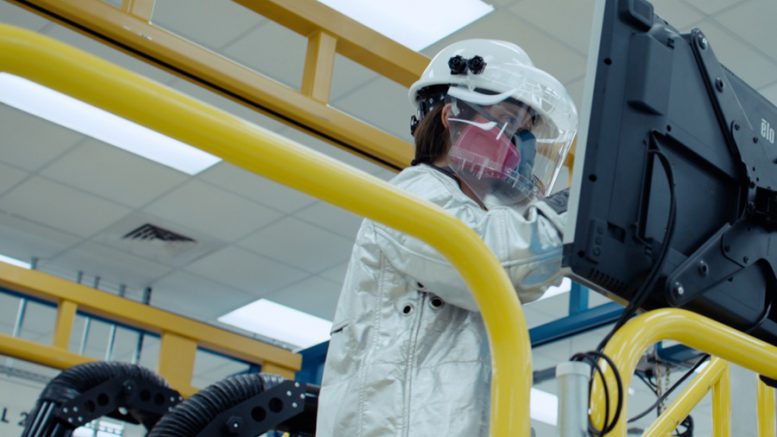
Phoenix Tailings plans to build a rare earth separation facility at Eastman Business Park in Rochester, New York, which it calls Freedom Separation. The Northern Miner reports a cost of $375 million for a plant that will process more than 18,000 tons of rare earth feedstock a year, both mined and recycled, and produce more than 4,400 tons of separated rare earth oxides at full capacity. Production is to begin ramping in 2027 and reach capacity in 2028.
Separation is the step in the rare earth chain that the West has been slowest to rebuild. Mining a monazite or bastnaesite concentrate is comparatively simple; splitting the fifteen chemically near-identical lanthanides into individual oxides pure enough for magnet makers is a solvent-extraction operation that China has dominated for three decades. Phoenix already runs metallisation plants in Exeter, New Hampshire and Burlington, Massachusetts that convert oxides into neodymium-praseodymium and heavy rare earth metals, so the Rochester plant closes the gap between concentrate and metal within the company’s own operations.
The financing reflects how seriously governments now treat that gap. The company has secured a $500 million conditional loan commitment from the Department of War’s Office of Strategic Capital, and New York State is contributing $3 million in performance-based tax credits. The 46,500-square-metre facility sits on existing industrial infrastructure at the former Kodak campus, which shortens the build. The broader $1.2 billion Freedom programme across the three states is expected to support more than 500 jobs, with 200 at Rochester once operating.
Chief executive Nick Myers said technology can give America control over its critical supply chains but it takes skilled people to turn that promise into production. The company has not disclosed which oxides the plant will prioritise. What it has disclosed is enough to show that non-Chinese separation capacity is moving from announcements to construction schedules.
Source: The Northern Miner
South Africa’s Steenkampskraal Mine Targets First Rare Earth Exports This Year
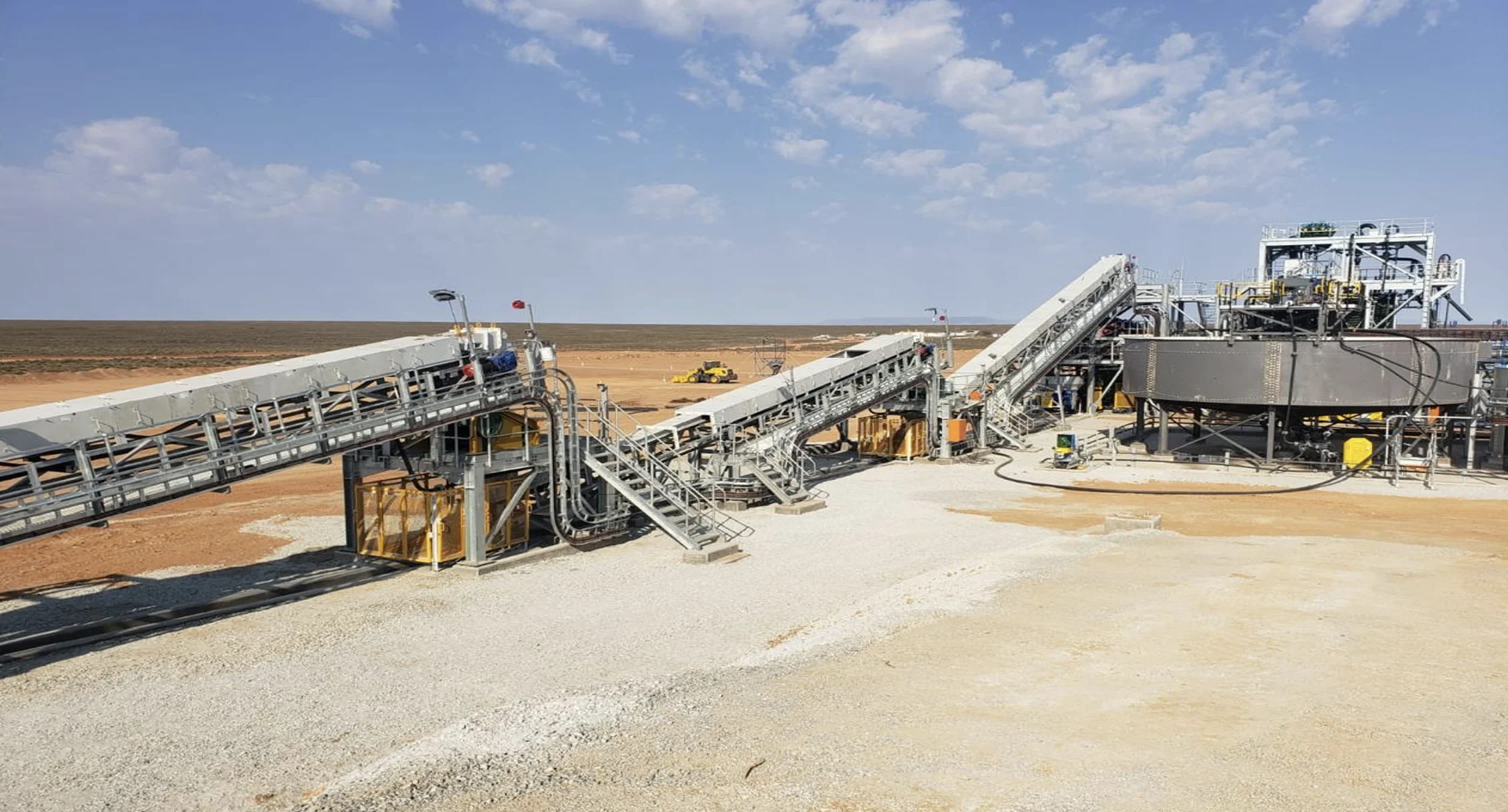
The Steenkampskraal mine in South Africa’s Western Cape, which formally reopened on October 6, is aiming to ship its first rare earth concentrate before the end of the year. The Northern Miner reports the deposit is a monazite body grading roughly 14.5 percent total rare earth oxides, an exceptionally high figure for the sector, where many producing mines work ore below 2 percent. The mine is owned by Steenkampskraal Holdings and Bora Mining Investments, which restarted operations in 2024, with partial funding from South Africa’s Industrial Development Corporation.
Steenkampskraal has a long history. It was mined for thorium in the mid-twentieth century, and the monazite still carries thorium alongside the rare earths, which complicates handling but also means the geology is unusually well characterised. High grade matters for cost in a straightforward way: the less rock that must be mined, crushed, and chemically attacked per kilogram of oxide, the cheaper the concentrate.
The more significant development is downstream. Mintek, South Africa’s national minerals research organisation, is working with the project on processing technology with the aim of producing high-purity separated products domestically rather than exporting concentrate for others to refine. Mintek chief executive Molefi Motuku noted that moving from a mineral resource to a high-purity product requires much more than mining, and depends on the ability to understand the mineral and develop and optimise the processing route.
The article does not give production targets, offtake partners, or cost figures for the downstream stages, and those will determine whether Steenkampskraal becomes a meaningful supplier or a boutique one. But a rich deposit in a mining jurisdiction with a serious metallurgical institute behind it is a credible addition to the slowly widening set of rare earth sources outside China.
Source: The Northern Miner
Machine Learning Turns Scrap Iron’s Impurities into Alloying Ingredients

Researchers at the Max Planck Institute for Sustainable Materials have built a machine learning framework that designs high-performance alloys directly from dirty scrap, treating the copper, tin, and other contaminants that normally degrade recycled metal as deliberate alloying additions. The work, published in Science Advances, focused on ductile iron, a material produced at around 120 million tonnes a year for engine blocks, pipes, and machine parts.
The conventional approach to impure scrap is dilution: blend it with virgin iron until the contaminant levels fall within specification. That wastes primary metal and energy. The Max Planck team instead used tree-search algorithms and neural network models to explore compositions and processing parameters such as temperature and holding time, with a second screening model filtering candidates before they were cast and tested. Experimental results fed back into the models in an iterative loop.
Across 17 ductile iron designs the results were substantial. Phys.org reports tensile strength up to 15.2 percent higher at comparable elongation, or elongation at fracture up to 73.2 percent higher at comparable strength, relative to existing data for recycled iron. Manufacturing cost came out 8.1 percent lower than the conventional route that blends scrap with virgin feedstock, because less primary iron was needed.
The researchers propose extending the method to recycled steels, aluminium, and copper alloys, and integrating it with automated experimental platforms. Ductile iron was a sensible starting point because of its high impurity tolerance, and the harder cases lie ahead. But the principle generalises: the quality ceiling of recycled metal is set by the chemistry we know how to design around, not by the scrap itself, and that ceiling just moved.
Source: Phys.org
Upcycled Battery Waste Makes Cells That Last Twice as Long

A team at Worcester Polytechnic Institute led by Yan Wang has shown that mixed lithium-ion battery waste can be upgraded into cathode and anode materials that outperform commercial equivalents. Published in Advanced Energy Materials, the study converted low-nickel cathode waste into NMC622, a higher-nickel chemistry used in current electric vehicles, and purified and modified recovered graphite into battery-grade anode material. Pouch cells built entirely from the upcycled materials retained 70 percent of capacity after 2,590 cycles, roughly double the cycle life of cells made with commercial materials.
The distinction between recycling and upcycling matters here. Conventional battery recycling breaks spent cells down to metal salts, which are then sold back into the supply chain at commodity prices and have to be rebuilt into cathode material from scratch. Upcycling keeps the crystal structure of the recovered material and adjusts its composition directly, which is less energy-intensive and produces a product with higher value. TechXplore reports the process uses more than 95 percent of the waste material.
The economic case is stated explicitly. Against a reference recycling route, the team calculated a 22.9 percent increase in profitability, a 27 percent reduction in greenhouse gas emissions, and 29.4 percent lower energy consumption. The improved performance of the upcycled materials is attributed to better lithium-ion transport and cycling stability in the cathode and improved interfacial kinetics and durability in the graphite.
The paper demonstrates full pouch cell assembly using only upcycled components, though it does not give a timeline for commercial scale. Battery scrap volumes are rising fast as the first generation of electric vehicles ages out, and a process that turns that stream into a premium product rather than a commodity changes the business case for collecting it in the first place.
Source: TechXplore
A Single Cheap Reagent Breaks Acrylic Glass Back into Its Building Blocks

Chemists at ETH Zurich have found that a single commercially available N-hydroxyimide reagent is enough to depolymerise acrylic glass, the polymethyl methacrylate used in windows, signage, aquariums, and car lights, back into its monomer with no solvent at all. Published in Nature Chemistry, the process reaches monomer yields as high as 98 percent and produces high-purity product even from dyed or contaminated starting material.
Acrylic can in principle be recycled by heating it until the polymer chains unzip, but existing methods need temperatures above 400 degrees Celsius and give impure product that must be cleaned up before reuse. The ETH route runs at just over 200 degrees, which Phys.org reports is within reach of standard equipment. Lead author Richard Whitfield said the only surprise was that one chemical was sufficient. Anastasios Anastasaki, who leads the group, emphasised that the method could be implemented using existing infrastructure and standard processes, which is the barrier that has stopped previous chemical recycling approaches from being adopted.
Chemical recycling of plastics has a credibility problem because so many announced processes depend on exotic catalysts, high pressures, or purified feedstock that never materialise at scale. A one-reagent, solvent-free reaction that tolerates dirty input and runs on standard plant is closer to the kind of chemistry industry actually adopts.
ETH Zurich has filed a patent application and is seeking licensees. The team’s next steps are to scale the process and to study the reaction mechanism in enough detail to design faster catalysts. Acrylic is a modest tonnage polymer compared with polyethylene, but it is a high-value one, and recovering its monomer at near-quantitative yield turns a disposal cost into a feedstock.
Source: Phys.org
A Nickel-Cobalt Electrode Matches Platinum for Hydrogen at a Thousandth of the Material Cost

The Korea Institute of Energy Research has developed a hydrogen-evolution electrode made entirely from nickel and cobalt that performs on par with platinum in alkaline water electrolysis. Published in Advanced Science, the electrode combines nickel oxide, which accelerates the splitting of water molecules, with a nickel-cobalt alloy that speeds up hydrogen evolution. TechXplore reports that it delivers the same hydrogen production rate at roughly 40 percent of the overpotential a conventional platinum electrode requires.
The cost comparison is stark. Platinum runs about $58 per gram and ruthenium about $54, against $0.02 for nickel and $0.05 for cobalt, a material cost reduction the institute puts at 99 percent. Precious-metal catalysts have been one of the arguments for why electrolysers would remain expensive at scale, both for cost and for supply, since global platinum-group metal production is small relative to the quantities a multi-terawatt hydrogen economy would require.
Performance has been demonstrated beyond the lab bench. A unit cell of 8.7 centimetres diameter showed 11 percent lower cell voltage than conventional nickel-electrode cells, and stability held through 600 start-stop cycles, which matters for electrolysers coupled to intermittent renewable power. The team has fabricated electrodes 40 centimetres across and is targeting 5,000 square centimetres for megawatt-scale systems, with process optimisation for mass production under way.
Lower overpotential translates directly into less electricity per kilogram of hydrogen, and electricity is where most of the cost of green hydrogen sits. An electrode that is both cheaper to make and more efficient to run addresses the two halves of that equation at once.
Source: TechXplore
The IEA Explains Why Chinese Electrolysers Are Cheap, and Why It Matters Less Than You Think
The International Energy Agency has published a commentary by Herib Blanco, Uwe Remme, and Timur Gül that dissects the cost gap between Chinese and Western electrolysers and arrives at a conclusion that reframes the hydrogen cost debate. Chinese alkaline electrolysers sold for $500 to $1,100 per kilowatt in 2025, against $1,900 to $2,500 for non-Chinese units, and auction bids in China have gone as low as $170 per kilowatt. China holds nearly 70 percent of global manufacturing capacity and two-thirds of installed electrolysis capacity.
The decomposition is where it gets interesting. Chinese stack manufacturing costs are almost 60 percent below those in advanced economies, driven by cheaper materials for diaphragms, nickel electrodes, seals, and frames, by economies of scale, and by overcapacity so severe that 35 gigawatts a year of manufacturing capacity chased under 2 gigawatts of demand in 2025, forcing below-cost bidding. But the stack is only 15 to 20 percent of a project’s capital cost. Engineering, procurement, and construction account for more than half, and balance-of-plant equipment such as power electronics and compressors another 25 to 30 percent, and these are priced locally. A European project using a Chinese stack saves only about 8 percent on capital cost, from roughly $2,300 to $2,150 per kilowatt. Importing the balance of plant as well brings it to $1,800.
The deeper finding concerns what hydrogen actually costs. The electrolyser accounts for 55 to 65 percent of the levelised cost of hydrogen, but the stack itself is only 6 to 9 percent. Electricity dominates the rest. Cheaper Chinese stacks also tend to be less efficient and shorter-lived, which raises electricity costs and claws back part of the capital saving. China’s real advantage, the authors argue, lies in lower electricity costs, cheaper capital, and preferential loans, not in the stack alone.
The IEA also notes the market is shifting. Forty Chinese manufacturers pledged in November 2025 to end below-cost bidding and inflated efficiency claims, and the government set mandatory efficiency standards in March 2026. Global manufacturing capacity hit 58 gigawatts a year in 2025 at under 10 percent utilisation, with 22 gigawatts of that outside China. The authors doubt that China will dominate electrolysers the way it dominates solar modules and batteries, because electrolysers are heavy, bespoke, and maintenance-intensive in ways that favour local manufacture. For anyone counting on hydrogen as a route to abundant fuel, fertiliser, or steel, the message is that cheap power is the prize, and the hardware is a solvable second-order problem.
Source: International Energy Agency