Robotics Weekly Review 2026-09-26

Week In Review
The week’s robotics news was dominated by the factory floor, and for once the factory floor was where the substance was. The International Federation of Robotics reported that five million industrial robots are now at work worldwide, more than double the count of seven years ago, with China installing well over half of last year’s new units and the United States overtaking Japan as the second-largest market. Against that backdrop, Boston Dynamics opened a training center for Atlas humanoids inside Hyundai’s Georgia Metaplant, where the robots are learning parts sequencing before a planned move into component assembly by the end of the decade. What makes the Boston Dynamics story more than another humanoid announcement is the industrial framing: a named plant, a named first task, and a stated production capacity that the parent company intends to fill.
Two supply-side pieces put that ambition in perspective. Apptronik’s chief executive warned that America does not yet have the domestic supply base for gears and motor materials that a humanoid industry at scale would require, with actuators making up the majority of a robot’s bill of materials. And a Humanoids Daily analysis of the projected boom in PEEK, a high-performance plastic, set a bank analyst’s bullish demand forecast against a materials engineer’s reminder that plastics have fatigue limits and that today’s humanoids were designed around metal. Together these items describe an industry whose constraint is shifting from whether the robots can be made to work toward whether the parts, materials, and factories exist to make them in volume.
The software layer moved in the opposite direction, toward openness. Alphabet’s Intrinsic open-sourced the core of its own manipulation stack, including real-time control, pose estimation, motion planning, and grasp planning, under a permissive license. Days later Qualcomm agreed to acquire PickNik, the steward of the MoveIt manipulation framework, with a public commitment to keep MoveIt open and community-governed. Read together, the two moves suggest that the large chip and cloud companies see the arm-control layer as infrastructure to be commoditized rather than a moat to be defended, which is good news for the thousands of smaller integrators building on the Robot Operating System.
On the research side, three results showed learned control closing real capability gaps. A KAIST quadruped ran a full marathon on one battery charge, with an energy cost of transport lower than a human’s, in work published in Nature. ETH Zurich showed that an ordinary five-fingered robotic hand can be taught to walk on its fingers and still manipulate objects, untethered from any arm. And Skild AI described a humanoid that learned to play soccer through 140 years of simulated self-play, a striking result even if its transfer to commercial work remains unproven. Rounding out the week, IEEE Spectrum profiled Barbara Mazzolai, whose manifesto for sustainability robotics asks the field to design for life cycle, accessibility, and coexistence with the natural world, a useful counterweight in a week otherwise focused on scale.
Items
IFR: Five Million Industrial Robots Now Work in Factories Worldwide
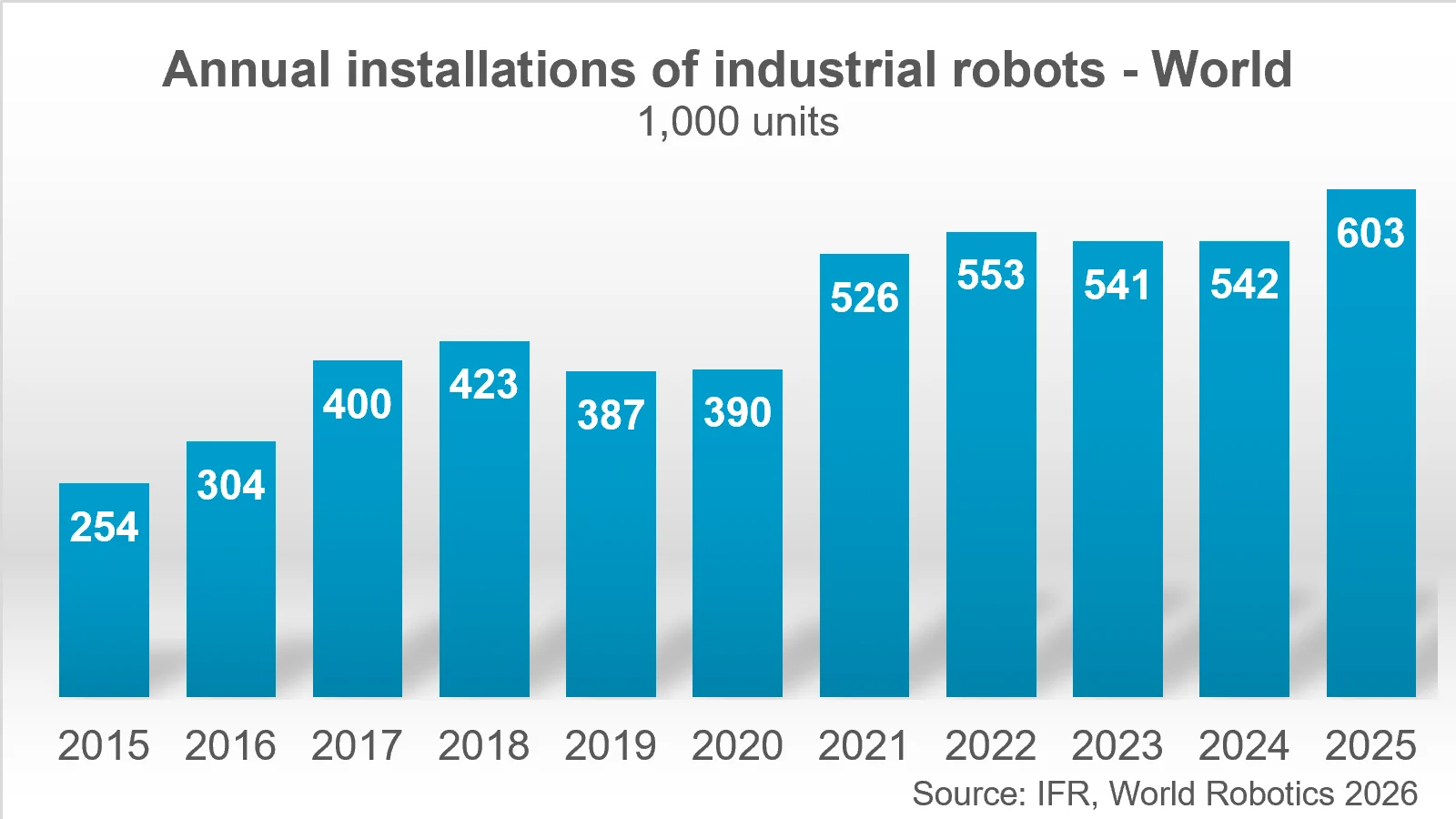
The International Federation of Robotics released its annual World Robotics report this week, and the headline figure is a round one: five million industrial robots are now operating in factories around the world. That is a 9 percent increase on the prior year and, according to IFR President Jane Heffner, more than double the operational stock of seven years ago. Annual installations passed 600,000 units in 2025, up 11 percent, and the federation forecasts 655,000 installations in 2026 and 806,000 by 2029.
The geographic breakdown is where the story gets interesting. China installed 354,000 units in 2025, up 20 percent, and now accounts for 59 percent of all global deployments. That single-country share is remarkable, and it reflects both the depth of Chinese manufacturing and the aggressiveness with which Chinese firms have adopted automation as labor costs have risen. The United States, meanwhile, overtook Japan as the second-largest market with nearly 38,500 installations, up 12 percent, while Japan fell 19 percent to about 36,000 units.
The rest of the top tier tells a mixed story. South Korea was roughly flat at 30,000 units, Germany dipped 8 percent to under 25,000, and India climbed 15 percent to nearly 10,500 units to claim sixth place. Among smaller markets, Brazil stood out with a 38 percent jump to 4,300 units, while Mexico slipped 7 percent and Canada rose 5 percent. The pattern suggests that growth is concentrating in economies that are actively building new manufacturing capacity rather than in the mature robot markets of Japan and Germany, which are largely replacing rather than expanding their installed base.
For readers who follow humanoids, the IFR figures are a reminder of scale. The entire global humanoid fleet is measured in the tens of thousands. The installed base of conventional industrial arms is five million and growing by several hundred thousand a year. Whatever humanoids eventually become, the automation of the world’s factories is already well underway, and it is being done overwhelmingly by six-axis arms, SCARA robots, and delta pickers that nobody makes a video about.
Source: The Robot Report
Boston Dynamics Opens an Atlas Training Center Inside Hyundai’s Georgia Metaplant
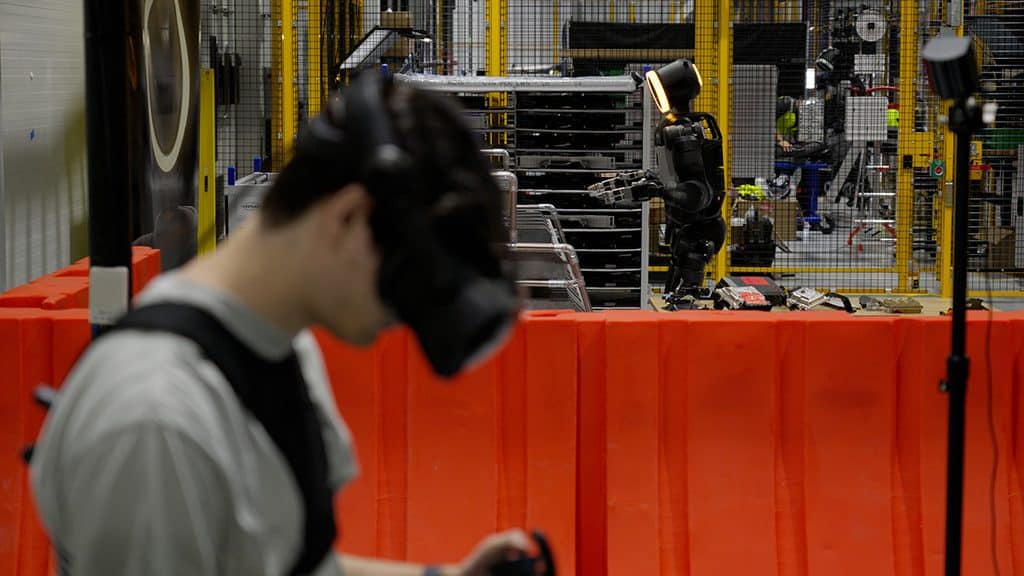
Boston Dynamics announced the opening of the Robotics Metaplant Application Center, or RMAC, at Hyundai Motor Group Metaplant America near Savannah, Georgia. The center is a testbed and training facility where Atlas humanoid robots are being integrated directly into Hyundai’s automotive manufacturing operations. The first tasks are logistics sequencing and parts preparation: taking components from storage and arranging them in the order an assembly line will consume them. Component assembly, a substantially harder problem, is targeted for 2030.
The numbers attached to the announcement are what set it apart from the typical humanoid press release. Hyundai Motor Group says it intends to deploy 25,000 Atlas units across its global plants within the next few years, and a new U.S. production facility is planned with capacity to build 30,000 robots annually. The current RMAC facility is operational now, with a move to a site roughly ten times larger planned for 2027. Boston Dynamics also said it is in discussions to extend the model into aerospace, semiconductors, logistics, food and beverage, and life sciences.
Zack Jackowski, Boston Dynamics’ chief product and technology officer, framed the effort as “pioneering physical AI at enterprise scale” and emphasized a “clear strategy to optimize our supply chain, production, testing, and deployment capabilities.” That language is telling. The hard part of humanoid deployment is not the demo; it is the unglamorous work of supply chains, quality systems, and training on real tasks in a real plant. Placing the training center inside the customer’s factory, rather than in a lab in Massachusetts, is a structural bet that the robots will learn faster where the work actually is.
The obvious caveat is that 25,000 robots is an intention, not a delivery, and 2030 is a long way off. But the sequencing task is a real job that Hyundai currently pays people to do, and the announcement names a place, a task, and a timeline. By the standard the field’s press usually applies to humanoids, that is unusually concrete.
Source: Boston Dynamics
Apptronik’s CEO Says America Is Missing the Parts to Build Humanoids
Jeff Cardenas, chief executive of Austin-based Apptronik, delivered a pointed warning this week: the United States does not have the domestic supply base for the components that humanoid robots need most. “We have major shortages in things like gears where we don’t have the supply base that we need,” he said, singling out precision gearing and the rare-earth materials that go into electric motors. His broader point was that software leadership is not enough. “It’s not just enough to have the software. We’ve also got to have world-class hardware.”
The economics explain why this matters. According to Cardenas, actuators, the motor-and-gearbox units that drive each joint, can account for up to 60 percent of a humanoid’s bill of materials. Apptronik has developed more than 80 distinct electric actuators since its founding, which is itself a signal of how much of the engineering effort in humanoids goes into the parts rather than the brain. The company’s partner Schaeffler is developing a forming process that it says cuts gearbox manufacturing cost by more than 25 percent and material consumption by more than 75 percent, with mass production planned for 2027.
The competitive framing is straightforward: China has deep industrial robotics infrastructure and a mature component ecosystem, while the United States leads in AI models but has hollowed-out precision manufacturing. New Federal Communications Commission restrictions on foreign-produced advanced robotic devices add pressure to localize, but localization requires suppliers that do not yet exist at scale. Apptronik itself has raised nearly one billion dollars, including a 520 million dollar Series A extension, and its Apollo 2 robot is focused on material moving and sorting for partners including Mercedes-Benz, GXO, and Google DeepMind.
Cardenas also offered a measured view on the consumer question, predicting that humanoids would enter homes within years while cautioning that genuinely useful household robots would take longer. Coming from the head of one of the best-funded American humanoid companies, the message is a useful corrective: the bottleneck the industry talks about least is the one that may bind first.
Source: Humanoids Daily
The PEEK Boom in Humanoids: A Bank Analyst’s Bull Case Meets a Materials Engineer’s Skepticism
A Humanoids Daily analysis this week examined a specific, testable claim about the humanoid supply chain: that a million humanoid robots by 2030 would create a boom in demand for PEEK, or polyether ether ketone, a high-performance thermoplastic. Barclays analyst Katie Richards told Bloomberg that such a fleet would generate roughly 10,000 tons of PEEK demand, about 10 kilograms per robot, and that beyond a million units the opportunity becomes “pretty exponential.” PEEK currently sells for around 1,000 yuan per kilogram, and the global market is projected to exceed 1.56 billion dollars by 2034, with Chinese producers announcing 26,000 tons of new capacity starting next year.
The counterargument came from Yu Fei, robotics technical general manager at Kingfa Sci. & Tech., one of China’s largest engineering plastics producers. Yu’s estimate is that today’s humanoids use only 6 to 10 kilograms of engineering plastics in total, across all polymer types, not PEEK alone. More fundamentally, PEEK’s fatigue strength trails metal by roughly two orders of magnitude, which means parts cannot simply be swapped from aluminum to plastic without redesign. Current humanoids were designed around metal, and no company has yet replaced metal in load-bearing lower-body components such as thighs. At current prices, PEEK can raise the bill of materials in places where its weight or wear advantages are marginal.
Kingfa’s own capacity tells the same story. The company makes 20,000 tons of high-temperature nylon and 11,000 tons of liquid crystal polymer annually, but only 1,500 tons of PEEK. Its view is that reinforced engineering plastics could cut weight by up to 50 percent versus aluminum, but only if robots are structurally redesigned around them. Berenberg analyst Sebastian Bray took a middle position, describing robotics as “an offshoot of consumer electronics” that is “notoriously cost-sensitive,” and predicting that humanoids will support small but profitable niches in specialty polymers rather than transform global demand.
The piece is worth reading as a model of how to evaluate supply-chain claims in this field. The number that matters is not robot volume alone but kilograms of a given material designed into each machine, and that depends on actuator specifications and cost pressure that have not yet settled. With only a handful of Chinese robotics companies producing more than a thousand units a year, both the bulls and the skeptics are extrapolating from a small base.
Source: Humanoids Daily
Intrinsic Open-Sources the Core of Its Manipulation Stack
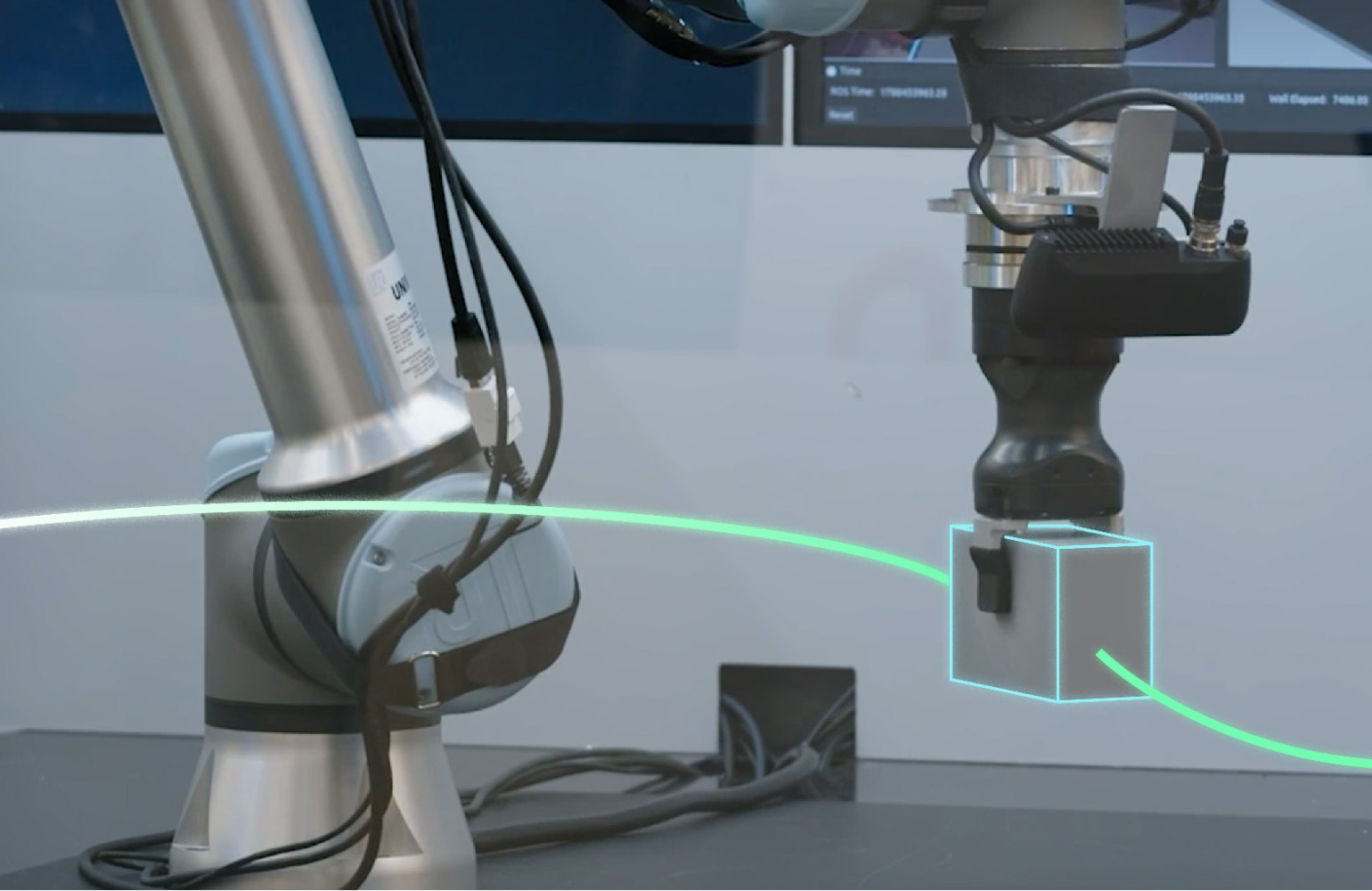
Intrinsic, the robotics software company under Alphabet, released Intrinsic Core, an open-source suite of tools compatible with the Robot Operating System, on GitHub under an Apache 2.0 license. The release is not a toy or a demo wrapper. As chief technology officer Brian Gerkey put it, “This is not us coming by and dropping off some code and saying, ‘Have fun.’ What we’re sharing is the core of our own software stack.”
The components map onto the hard problems of industrial manipulation. Intrinsic Control is a hardware-agnostic real-time control framework that supports sensor-based control and lets behavior adapt during execution. Pose estimation, built on NVIDIA’s FoundationPose, locates 3D parts in six degrees of freedom so that workcells no longer need rigid fixtures to hold parts in known positions. Motion planning generates collision-free paths automatically, replacing joint-by-joint programming. Grasp planning adapts gripper approach to where a part actually is. Simulation runs on Gazebo, camera calibration is automated, and pre-configured drivers ship for robots, grippers, and 3D cameras from manufacturers including FANUC and Universal Robots.
Alongside the platform, Intrinsic released the Open Machine Tending Solution, a reference design for loading and unloading CNC machines that works with both Intrinsic Core and the ROS Suite and can be customized to different equipment. Machine tending is one of the most common and least automated jobs in small and mid-sized manufacturing, precisely because every shop’s setup is different. A configurable open reference design attacks that problem at its root.
The scope is deliberately bounded. Intrinsic Core targets developers already familiar with ROS who are deploying manipulation in commercial settings, and it supports robotic arms but not mobile robots or humanoids for now. Geoffrey Biggs, chief technology officer of the Open Source Robotics Foundation, called the release “both the first step and a demonstration of where robotics development is going.” Read alongside Qualcomm’s MoveIt commitment the same week, that direction looks like a consensus among the large players that the manipulation software layer should be shared infrastructure.
Source: The Robot Report
Qualcomm to Acquire PickNik Robotics and Keep MoveIt Open Source
Qualcomm Technologies agreed to acquire PickNik, the Boulder, Colorado company that has stewarded the MoveIt open-source manipulation framework for a decade. MoveIt is the software most ROS-based robotic arms use to plan and execute motion; it originated at Willow Garage, the lab that created ROS itself, and PickNik was founded in 2015 to carry the work forward. Google was an early customer, and the company competed in the Amazon Picking Challenge before rebranding its commercial product as MoveIt Pro in 2024. The purchase price was not disclosed.
The significance lies in what Qualcomm promised. The company committed to keeping MoveIt 1 and MoveIt 2 open source under their existing licenses with community-driven roadmaps, to continue supporting MoveIt across third-party hardware rather than only its own chips, and to maintain development of Space ROS, the space-qualified variant of the framework. For the large community of integrators and researchers who depend on MoveIt, that pledge matters more than the acquisition itself. PickNik CEO Dave Grant said “MoveIt is entering an exciting new chapter with the resources and support to help expand its impact.”
The strategic logic is clear. Qualcomm bought Arduino in October 2025 and introduced a general-purpose robotics architecture supporting vision-language models in January 2026. Owning the manipulation framework that sits between those models and the motors lets Qualcomm offer a complete stack, from its Dragonwing processors through the Arduino VENTUNO Q board to motion planning, which it demonstrated at ROSCon in Toronto. The company wants Snapdragon-class silicon to be the default brain for robots the way it is for phones.
The pattern of the week is worth naming. Alphabet’s Intrinsic is giving away its control and planning stack; Qualcomm is buying the most widely used open planning framework and promising to keep it open. Both moves treat the arm-control layer as something to build a platform on top of rather than something to sell. If that holds, the cost of building a competent manipulation application should fall, and the differentiation will move to perception, learning, and the application itself.
Source: The Robot Report
KAIST Robot Dog Runs a Full Marathon on a Single Battery Charge

A quadruped robot named RAIBO2, developed at the Korea Advanced Institute of Science and Technology, completed the Sangju Marathon in South Korea alongside human runners in 4 hours and 19 minutes. The robot averaged 2.64 meters per second over the full 42.2-kilometer course, which includes 286 meters of elevation change, and finished with battery to spare. The result was published this week in Nature.
The engineering story is about efficiency rather than speed. RAIBO2 used 1,280 watt-hours of its 2,016 watt-hour battery, giving it an estimated 25 additional kilometers of range beyond the marathon distance. Its cost of transport, the standard measure of energy per unit weight per unit distance, was 0.25, which the researchers note is lower than the human figure of 0.37. That makes its range roughly three times that of existing quadruped robots, which have generally been limited to about 20 kilometers on a charge.
The gains came from attacking energy loss across the whole system: lightweight legs, motor-driving circuits optimized to cut electrical losses, and gait rules reinforced by machine learning to minimize wasted motion. None of these is individually dramatic, but the compounding of small savings in hardware and control is what turned a laboratory-range robot into one that can run for hours over real terrain.
The practical motivation is search and rescue and other field work, where a legged robot’s ability to cross terrain that wheels cannot is only useful if it can get there and back. A marathon on public roads with human runners is a good proxy for that: uncontrolled surfaces, real hills, and a duration long enough that thermal and battery management matter. The fact that it was done in a public race rather than a test track also makes it hard to dismiss as a curated demo.
Source: Tech Xplore
ETH Zurich Teaches a Robotic Hand to Walk on Its Fingers and Keep Working

Engineers at ETH Zurich’s Soft Robotics Lab, led by Amir Kazemi, took an off-the-shelf anthropomorphic robotic hand and made it self-sufficient: they mounted a battery, motion sensors, and a small computer on the back of the hand, then trained it in simulation with reinforcement learning to crawl, right itself, and manipulate objects without an arm attached. The work appears as a preprint titled “Fingers as Legs” on arXiv.
Previous walking-hand designs used symmetrical fingers because balance is easier that way. The ETH team kept a human-like hand with unequal fingers and an opposed thumb, which is harder to balance but preserves the hand’s ability to grasp and manipulate ordinary objects. In testing, the hand crawled across 14 surfaces including carpet, gravel, grass, and metal grating. Starting on its side, it righted itself in 21 of 25 trials. Balancing on four fingers, it pressed the correct arrow key on a keyboard in 29 of 32 attempts. And it pushed a block to within 2 centimeters of a target in 15 tests.
The motivation is practical. “A robotic hand with its own mobility could operate in confined workspaces without requiring the arm that normally carries it to follow,” the team writes. Think of maintenance inside a machine cabinet, an aircraft wing, or a pipe, where the arm cannot reach but the hand could crawl in, do the job, and crawl out.
The result is also a small demonstration of something larger: that simulation-trained control policies can extract useful behavior from hardware that was never designed for it. The hand was built to grasp. Nobody designed it to walk. The locomotion capability was found by a learning algorithm exploring what the existing fingers could do, which is the same logic driving much of the progress in legged and humanoid control.
Source: Tech Xplore
Skild AI’s Humanoid Learns Soccer Through 140 Years of Simulated Self-Play
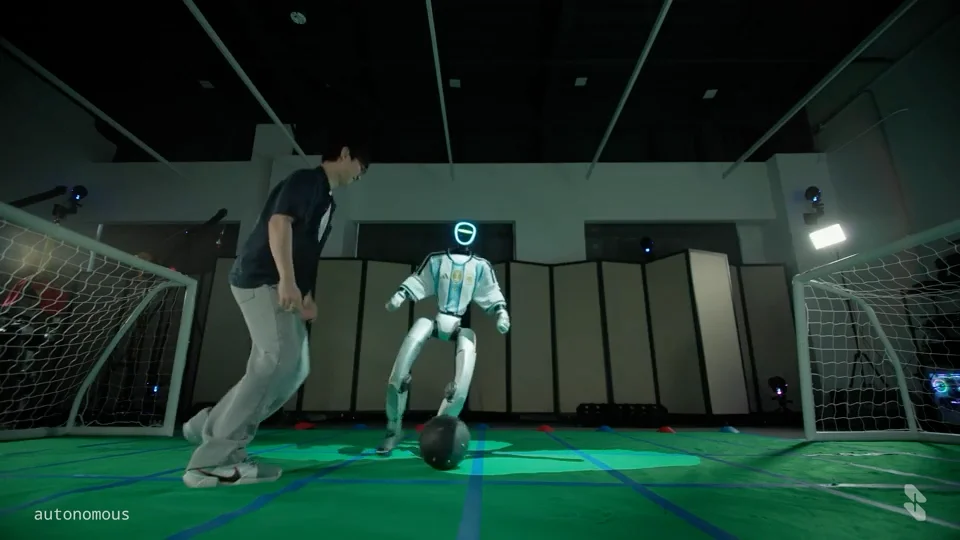
Skild AI reported that its S1 robotics foundation model learned to play soccer on a humanoid body through more than 140 years of accumulated simulated experience. The training followed a two-stage recipe. First, the model learned individual drills such as dribbling and kicking using human motion references and skill-specific rewards. Then it played against progressively stronger copies of itself, a self-play method familiar from game-playing AI. The simulation ran on NVIDIA Isaac Sim with Omniverse libraries, and the resulting policy outputs joint angles 50 times per second.
The behaviors that emerged are the interesting part. The robot learned to dribble past defenders, shield the ball with its body, tackle, and recover from falls, and Skild demonstrated it playing in the real world against both humans and other robots. In early four-agent games, passing and coordination began to appear without being explicitly programmed. Chief executive Deepak Pathak said the method “scales, and we will scale it,” drawing an analogy between self-play in simulation and the “billions of years of physical self-play” that produced biological motor skill.
Humanoids Daily’s reporting is appropriately careful about what has not been shown. Skild has not published its detailed training methods, its simulation-to-hardware transfer techniques, or quantitative comparisons against baselines, and nothing in the announcement establishes that skills learned on a soccer pitch transfer to warehouse or factory work. The commercial claim attached to the announcement, that Skild reached 100 million dollars in annual recurring revenue ten months after its first deployment, is a separate matter from the soccer result.
Still, the result belongs in the same category as the KAIST marathon and the ETH walking hand: learned whole-body control producing robust, adaptive behavior on real hardware. Soccer is a useful benchmark precisely because it is adversarial, contact-rich, and unforgiving of slow reactions. A humanoid that can shield a ball from a human defender and get up after being knocked over is demonstrating dynamic balance and recovery that matter far beyond the game.
Source: Humanoids Daily
Barbara Mazzolai Wants to Build a New Field of Sustainability Robotics
IEEE Spectrum profiled Barbara Mazzolai, associate director for robotics at the Italian Institute of Technology in Genoa, who in July published a manifesto in Nature Machine Intelligence proposing a field she calls sustainability robotics. Her career path is unusual for the discipline. Trained as a biologist at the University of Pisa, she studied environmental management and heavy-metal cycles before moving into robotics in 1999 under Paolo Dario, one of the founders of biomedical robotics, and completing a doctorate in microsystems engineering in 2011.
That biological grounding shows in her robots. She has built soft octopus-inspired machines that demonstrated soft bodies can exert real force, root-inspired robots that grow only at the tip while the base stays fixed, cutting the energy needed to penetrate soil, and seed-inspired biodegradable robots that change shape in response to humidity. Her method is to study an organism deeply enough to extract its underlying principle rather than copy its form. “I’ve always been fascinated by living organisms, [and] by the extraordinary variety of solutions in nature,” she said.
The manifesto rests on three pillars: minimal environmental impact, accessibility across socioeconomic backgrounds worldwide, and symbiotic design that benefits both people and nature. In concrete terms that means building life-cycle thinking into robot design from the start, so that a robot can be reused, recycled, or biodegraded when its useful life ends, and integrating chemical and physical sensors so that robots understand the environments they operate in. “We need to reduce the footprint of our technology,” she said. “It’s really about thinking in a different way.”
In a week whose other stories were about building tens of thousands of humanoids and counting five million factory arms, Mazzolai’s argument is a useful reminder that scale carries costs. The materials debate over PEEK and the actuator supply chain that Apptronik described are, at bottom, questions about what robots are made of and what happens to them afterward. A field that takes those questions seriously at the design stage will be better placed when the volumes the industry is promising actually arrive.
Source: IEEE Spectrum