Robotics Weekly Review 2026-10-04

Week In Review
The week’s most telling stories were about robots being measured in hours rather than seconds. Dyna Robotics ran its new wheeled semi-humanoid, Taku, through an hour-long autonomous laundry workflow that spanned washer, dryer, folding, and shelving with no human touch. Nucleus, a European startup, went further in candor than in autonomy, releasing nearly two hours of unedited factory footage and stating plainly that the work was 60 percent autonomous and 40 percent teleoperated. Both companies have moved from humanoid legs to wheels after listening to customers, and both are treating long, unglamorous, continuous operation as the benchmark that matters. That is a healthier yardstick than the choreographed clip, and it is becoming the norm.
Hardware designed for manufacture rather than mimicry was the second theme. Boston Dynamics unveiled a four-finger Atlas hand that deliberately drops the pinkie, doubles the degrees of freedom to 13, and uses direct-drive joints with no tendons so that it can be built at a rate of 100,000 a year. Across the Pacific, researchers at the National University of Singapore took the opposite approach to the same problem of too many motors, building a continuous artificial muscle in which one shape-memory spring with addressable contact points replaces roughly two dozen actuators. Runway’s Praxis-1 world action model attacks the software side of the same scaling problem, learning robot control primarily from ordinary third-person video rather than scarce robot demonstrations.
Field autonomy continued to mature into fleet operations. ANYbotics launched Shift, a cloud platform that already coordinates more than 200 ANYmal deployments and feeds anomaly detections straight into enterprise maintenance systems. Autonomous Solutions Inc. and SoftBank formed a joint venture for autonomous heavy equipment on large infrastructure projects, backed by $225 million, with a fleet orchestration layer that works across equipment brands. In both cases the robot is a commodity and the orchestration software is the product.
Two biologically inspired machines rounded out the research side. Singapore University of Technology and Design’s ALBATROSS falls from the sky like a maple seed, rights itself on water, and sails away on the same wings, while MIT’s muscle-cell-powered swimmer steers through a maze under flashes of light. And a guest essay in The Robot Report argues that as robot behavior becomes the real innovation, the competitive moat in physical AI will be drawn in the patent office rather than the machine shop.
Items
Boston Dynamics Drops the Pinkie: A Four-Finger Atlas Hand Built for Mass Manufacture

Boston Dynamics has unveiled a redesigned hand for its Atlas humanoid, and the most visible design decision is a subtraction. The new hand has three fingers and a thumb. The pinkie is gone. What the hand gives up in resemblance to a human it gains in degrees of freedom, which rise from seven in the previous generation to 13, including the ability to splay the fingers apart for handling tools.
Alberto Rodriguez, the company’s director of robot behavior, told IEEE Spectrum that “hands are a ruthless design trade-off.” His argument is that competitors chasing humanlike five-finger designs end up sacrificing reliability and manufacturability, the two qualities that matter most once a robot is expected to work shifts rather than film demos. The Atlas hand uses direct-drive actuators embedded in the joints, with no tendons to stretch or fray, and each finger is a unit that can be swapped out when it wears.
The manufacturing ambition is explicit. Rodriguez said the team aims to “make 100,000 of these hands a year,” a target that only makes sense if the hand is cheap, robust, and simple to assemble. The design also leans on reinforcement learning to exploit what Rodriguez called “superhuman extra motions,” joint configurations a human hand cannot reach, while still performing conventional human-centered tasks such as operating a drill or a welding torch.
The broader lesson is that the humanoid form factor does not require slavish anatomical fidelity. A hand that can grip a tool, splay for a wide object, and survive a factory year may be more useful than one that can play the piano. Boston Dynamics is betting that its customers will agree.
Source: IEEE Spectrum
Runway’s Praxis-1 Turns Video Pretraining Into Robot Control
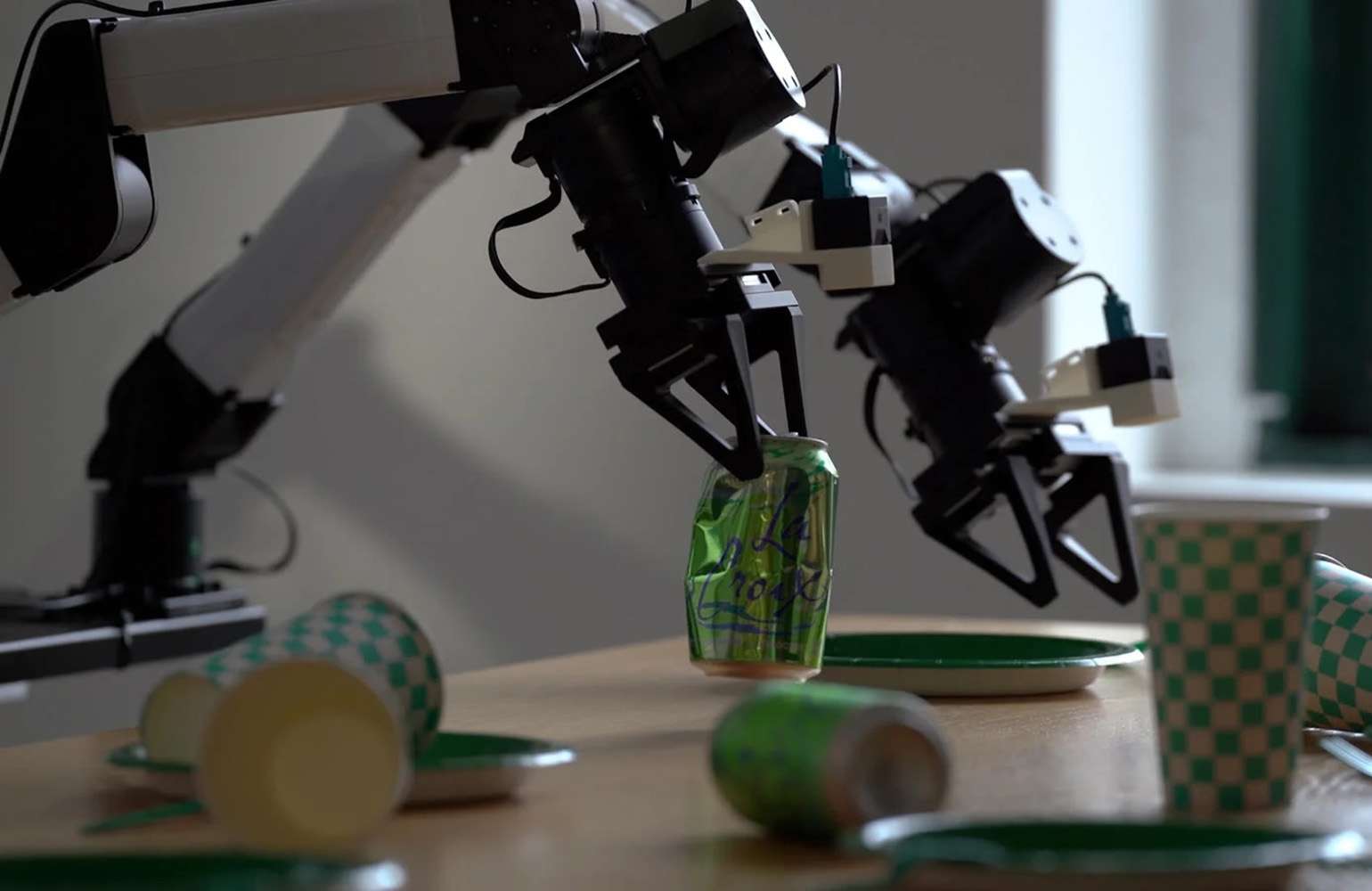
Runway, the Brooklyn company best known for generative video, has introduced Praxis-1, an open-weight “world action model” that learns to control robots primarily from third-person video. The premise is that robot demonstration data is scarce and expensive, while video of people and objects doing things is abundant. A model that already understands how objects behave and how tasks progress from video pretraining should need far less robot-specific data to act in the world.
Runway reports that when it simulates a robot policy inside its world model, the results correlate with real-world outcomes at 0.95, a figure the company says beats approaches based on three-dimensional reconstruction. That matters because the faster and cheaper it is to test a policy in simulation, the more iterations a team can afford before touching hardware. The tasks demonstrated so far run from simple pick-and-place, such as lifting soda cans, to manipulation of deformable objects, such as packing gift bags.
The model is designed to transfer across robot bodies, working on bimanual arms and humanoids with minimal fine-tuning. Early partners testing it on their own hardware include Noble Machines, Standard Bots, and Ultra. Chief technology officer Kamil Sindi framed the scaling argument directly: “performance improves as we scale video, so its ceiling is set by how much video it can learn from.”
Public release with open weights is expected in the coming months. If the video-to-action thesis holds, it would mean that the vast corpus of ordinary video becomes training data for physical work, which would change the economics of teaching robots new tasks.
Source: The Robot Report
Dyna’s Taku Robot Runs an Hour of Laundry Without a Human Touch

Dyna Robotics has revealed Taku, a wheeled semi-humanoid, alongside a new model release called Dyna-2.1, and demonstrated the pair with an hour-long autonomous laundry workflow. The robot moved towels through washing, drying, folding, and shelving, coordinating multiple machines and deciding on its own what to do next. According to the company, no human intervened during the hour.
Taku’s name comes from the Japanese word takumi, meaning master craftsman. The machine has a humanlike upper body with two seven-degree-of-freedom arms, a lower body that folds, and four steerable wheels. The choice of wheels over legs reflects a practical judgment about what commercial facilities need, which is reach, stability, and endurance rather than stairs.
The software is organized in three layers. A reinforcement-learning controller handles physical coordination. An improved version of the Dyna-2 manipulation policy handles the hands-on work. A vision-language model sits on top as an orchestrator, deciding the order of operations and tracking progress through the workflow. The significance of the demo, as Humanoids Daily notes, is not that the robot folded a towel, which has been shown before, but that it managed a complete multi-station workflow with handoffs between machines.
Dyna says customer-site deployment is its immediate priority, which is where the claim will be tested. An hour in a controlled setting is one thing. Repeatability across different laundromats, lighting conditions, and machine models is the standard that commercial customers will apply. The publication is careful to note that the demo remains a company assessment rather than an independently verified result.
Source: Humanoids Daily
Nucleus Publishes Two Hours of Unedited Factory Work and Calls It 60 Percent Autonomous
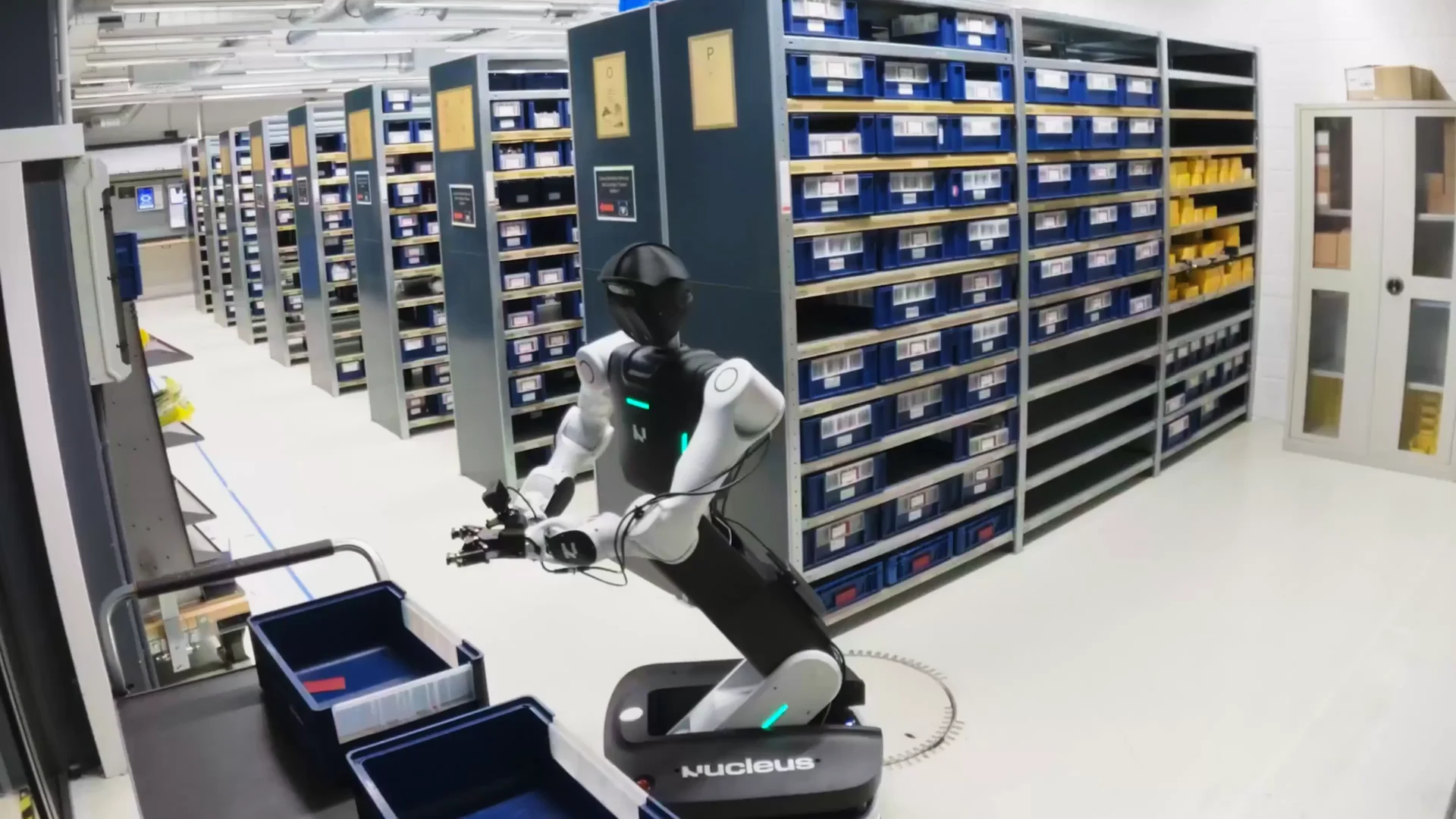
Nucleus, a European robotics startup, has released roughly two hours of unedited footage of its wheeled dual-arm robot performing industrial tasks, and chief executive Melvin Schwarz described the demonstration as “60% autonomous and 40% teleoperated.” That kind of disclosure is unusual in a field where most videos are cut to show only the successes. The footage deliberately includes hesitations and moments where a human stepped in.
The company says it now regularly runs four-to-six-hour shifts in which robots complete jobs from start to finish. Its business model is explicitly hybrid: the robot operates autonomously where it can, and a remote human assists where it cannot. This is the same operating model that robotaxi companies and warehouse robot vendors settled on, and Nucleus is applying it to factory work without pretending the autonomy is complete.
Like several of its peers, Nucleus started with a humanoid platform and switched to a wheeled base after customers told it they cared more about payload, battery life, and safety than about legs. The wheeled dual-arm form factor is quickly becoming the pragmatic default for indoor industrial work.
Humanoids Daily flags the open questions fairly. Schwarz did not specify whether the 60 percent figure refers to elapsed time, task count, or something else. The economics will depend on how many robots a single operator can supervise and on whether intervention frequency falls as tasks become routine. Those are the numbers that will decide whether the hybrid model scales, and Nucleus has at least given observers a baseline to measure against.
Source: Humanoids Daily
ANYbotics Launches Shift to Run Inspection Robot Fleets From the Cloud
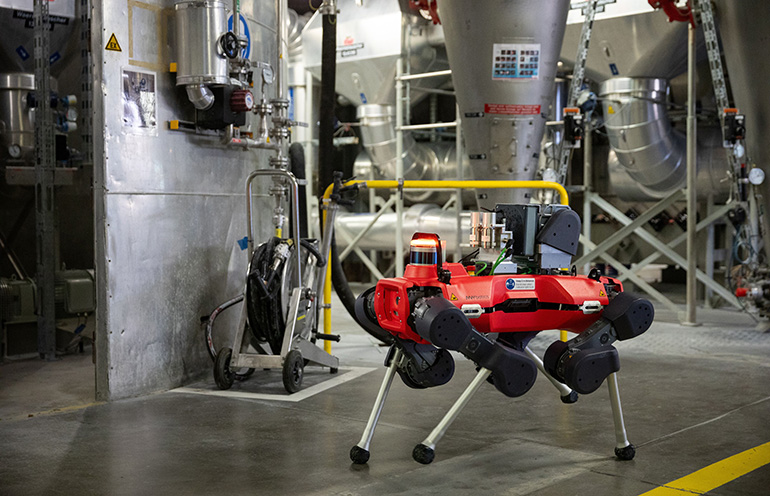
ANYbotics, the Zurich company behind the ANYmal legged inspection robot, has launched Shift, a cloud platform for coordinating multi-robot inspection fleets and turning their findings into maintenance work. The company cites a stark motivation: undetected equipment failures cost Fortune 500 companies roughly $1.4 trillion a year, with a single outage averaging $250,000 an hour.
Shift has four modules. Shift Fleet handles coordination of the robots themselves. Shift Insight fuses thermal, acoustic, visual, and gas sensor data to detect anomalies. Shift Connect pushes those detections into enterprise systems and generates work orders automatically. Shift Maps maintains a digital map of the assets being inspected. The platform connects to SAP, IBM Maximo, GE Vernova APM, Yokogawa distributed control systems, and digital-twin platforms such as Cognite and Oracle through REST APIs and pre-built connectors.
This is not a product launch ahead of deployment. Shift already operates across more than 200 robot deployments executing hundreds of thousands of inspections a month, according to the company. At a Vigier Cement facility, the system completed more than 33,000 autonomous inspections over 16 months.
ANYbotics says it plans to extend fleet management to robots other than ANYmal next year and to help establish common standards for inspection robots. That direction makes the strategy clear: the legged robot was the entry point, and the durable business is the software layer that turns robot observations into maintenance decisions across whatever hardware a plant happens to own.
Source: The Robot Report
ASI and SoftBank Form a $225 Million Venture for Autonomous Construction Fleets
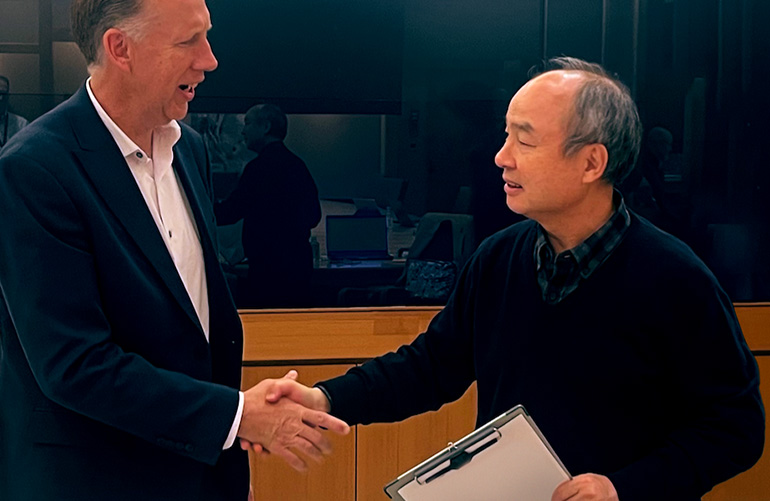
Autonomous Solutions Inc., a Utah company that has worked on vehicle autonomy since 2000, has announced a joint venture with SoftBank Group to commercialize autonomous heavy equipment for large infrastructure projects. SoftBank is putting in $225 million of new funding. The target applications are roadways, airports, railways, and waste management, with autonomous haul trucks, dozers, loaders, and compactors working together on a site.
The technical core is ASI’s Mobius fleet orchestration system, which coordinates mixed fleets of equipment from different manufacturers. Chief executive Mel Torrie described the bottleneck plainly: “skilled equipment operators are hard to find, and coordinating mixed fleets across a big jobsite is a real bottleneck.” Large infrastructure projects, he said, “are being built at a pace and complexity that traditional labor-intensive methods struggle to match.”
The companies describe their approach as “software-defined robotics” with an open architecture, meaning the autonomy layer is retrofitted onto equipment from multiple vendors rather than bundled with one brand of machine. That matters in construction, where fleets are heterogeneous and contractors are unlikely to replace their equipment for the sake of autonomy.
Mining has already shown that autonomous haulage pays off at scale. Construction sites are messier, shorter-lived, and more varied, which is why they have lagged. A well-capitalized venture built around orchestration rather than a single vehicle is a plausible path to closing that gap. Torrie is scheduled to speak at RoboBusiness on October 20 on building the ecosystem for outdoor autonomy.
Source: The Robot Report
One Spring, Many Joints: NUS Builds a Continuous Artificial Muscle for Soft Robots

Soft robots usually need a separate actuator at every joint, which makes them heavy, complex, and hard to scale. Researchers at the National University of Singapore’s College of Design and Engineering, led by Professor Cecilia Laschi, have taken a cue from the octopus and built a continuous artificial muscle instead. A single shape-memory alloy spring runs the length of the arm, with electrical contact points, which the team calls wire-bonding junctions, placed along it. Pass current between two chosen points and only that segment contracts.
The result is localized control along the whole muscle from one component. In a 10-centimeter prototype arm, the continuous design bent to 91 degrees where a conventional stacked design managed 46. Four of the continuous muscles did the work of roughly 24 individual motors, and the arm reached nearly three times the workspace volume of the conventional alternative. The work is published in Science Advances.
To show the idea in use, the team built a drone-carried robotic arm weighing about 450 grams that could bend, grip, and sample liquid using the same actuator, and that could work through a 2-centimeter opening into a confined space. The team sees applications in machinery inspection, assembly, endoscopy, and search and rescue.
Open questions remain around scaling, cooling of the shape-memory alloy, and underwater operation, all of which the group says it will pursue. But the principle of a single addressable muscle rather than a stack of motors is an elegant answer to the actuator-count problem that has held soft robotics back.
Source: TechXplore
ALBATROSS Falls Like a Maple Seed, Then Sails Like a Boat

Researchers at the Singapore University of Technology and Design have built a robot that gets to its work site by falling. ALBATROSS, short for Airborne Lander with Buoyant AuToROtating Sailing Sensor, has rigid wingsails that do two jobs. During descent they autorotate passively, like a maple seed, slowing the fall. Once the robot hits water, it rights itself through its weight distribution and the same wings become sails, driven by the wind.
In field trials the robot was released from 150 meters. The autorotation reduced impact energy by a factor of roughly 18.5 compared with a non-autorotating fall. The design is spare: three actuators and three navigation sensors. On the water it reached a peak sailing speed just under one kilometer per hour and operated for around three hours in reservoir testing. The work is published in Science Robotics.
The appeal is logistical. A monitoring platform that can be dropped from an aircraft and then persist on the water under wind power needs no landing infrastructure, no recovery boat for deployment, and little battery. The authors point to environmental monitoring, climate research, search and rescue, and maritime security as uses.
The limits are honestly stated. Testing so far has been confined to sheltered Singapore reservoirs, and open-sea deployment will require tolerating stronger winds, currents, and waves. Still, borrowing a seed’s descent and a sailboat’s propulsion in one passive structure is the kind of design economy that makes a robot cheap enough to deploy in numbers.
Source: TechXplore
MIT’s Paper-Thin Swimmer Runs on Muscle Cells and Steers With Light

MIT engineers have built a swimming robot the size of a stick of gum that is powered not by a motor but by living muscle. The gel skeleton has two fin-like halves, each coated with a single layer of genetically engineered muscle cells thinner than a human hair. The cells contract when exposed to light, so flashing light on one fin or the other lets the researchers control direction and speed. In the lab, the robot navigated a water maze on command.
Much of the work, published in Advanced Functional Materials, was in the skeleton rather than the cells. The team used gelatin methacrylate and found that a half-millimeter thickness was optimal. Square-bottomed grooves in the gel aligned the muscle cells so they formed a stronger coordinated tissue, and stiffer gel formulations improved alignment and increased force. Associate professor Ritu Raman summarized the outcome: “the robot’s quite strong, given its size.”
The robot swims at about four body lengths per minute. That matches a cow shark and falls far short of an Olympic swimmer’s 65, but it is a meaningful pace for a device whose actuators are grown rather than machined. Biohybrid robots have long promised the efficiency and self-repair of living tissue; the practical problem has been getting cells to produce usable, controllable force on a structure.
Light-addressable muscle on an engineered scaffold is a step toward that. Small, soft, biologically powered swimmers could eventually operate inside the body or in environments where conventional motors and batteries are unwelcome.
Source: TechXplore
Why the Physical AI Race May Be Decided in the Patent Office
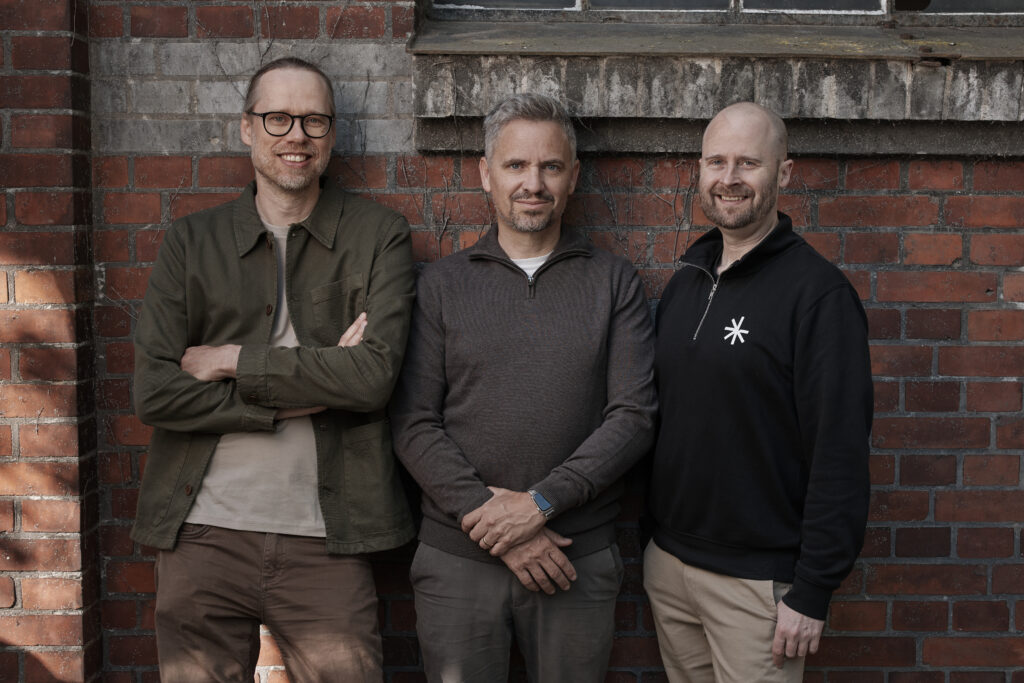
In a guest essay for The Robot Report, Dominic Davies, chief executive and co-founder of the patent platform Lightbringer, argues that competitive advantage in robotics is shifting from hardware to protected behavior. His central line is that “the robot isn’t the innovation; its behavior is.” He points to Boston Dynamics’ 2022 lawsuit against Ghost Robotics, which turned on how a legged robot recovers from a fall rather than on the shape of the machine, as the template for disputes to come.
Davies’ advice to robotics startups is to resist the urge to patent the whole machine and instead identify one or two “crown jewel” innovations that the robot cannot function without. He cites KAIKAKU Robotics, which patented the motion mechanism that lets it move food bowls at speed without spilling, as an example. Around those jewels, he recommends building defensive patent families that raise the cost of designing around them.
Not everything should be patented, in his view. Manufacturing processes that are hard to reverse-engineer may be better kept as trade secrets than published in a filing. He also notes an unresolved question: European patent offices are still working out how to patent swarm behavior that emerges from many interacting robots rather than any single one. Davies argues that AI-native patent tools can cut filing costs by up to 70 percent, which, given that he sells such tools, readers should weigh accordingly.
The essay is a useful corrective to the tendency to judge robotics companies by their hardware. As learned behaviors become the product, the question of who owns a behavior will matter as much as who builds the body it runs on.
Source: The Robot Report