Space Weekly Review 2026-10-24

Week In Review
The week’s defining event was a departure. Japan’s Martian Moons eXploration spacecraft left Tanegashima on an H3 rocket bound for Phobos, carrying a plan to bring the first samples of a Martian moon back to Earth by 2031 (JAXA’s Martian Moons eXploration Mission is on its Way to Mars and Phobos). Mars itself turned out to be livelier than its reputation: a reanalysis of InSight seismic data traced a 2021 marsquake to faults still slipping tens of kilometres beneath Valles Marineris, the largest canyon in the solar system (The Largest Canyon in the Solar System is Still Tectonically Active). Further out, laboratory work on Earth methanogens cultured in simulated Enceladus ocean water showed they grow at pH levels well beyond their known terrestrial limits, strengthening the case that Saturn’s small moon offers a habitable niche around its hydrothermal vents (Microbes on Enceladus?).
Getting to those destinations faster and cheaper is a second thread. NASA placed the contract for the power-conversion system of SR-1 Freedom, the fission-powered spacecraft it intends to send toward Mars in late 2028 with a trio of helicopters aboard (NASA’s SR-1 Freedom Advances with Progress on Nuclear Power Module). A young reentry-capsule company, Inversion, won NASA work to study aerocapture, the technique of using a planet’s atmosphere rather than propellant to brake into orbit (How Inversion and NASA Plan to Unlock Interplanetary Aerocapture). And for staying once you arrive, engineers at the University of Pennsylvania showed that stacks of ordinary Mylar, with a thin ceramic coating, can insulate like a vacuum panel while surviving the rough handling of lunar construction (Everyday Mylar turned into a promising insulator for lunar habitats).
In astronomy, one observatory handed off to another. NASA’s Swift satellite made its final observation after nearly 22 years, having transformed the study of gamma-ray bursts and left an archive of some 7,000 papers’ worth of data (NASA’s Swift Mission Ends, Leaves Behind Scientific Bonanza). Two days earlier the Roman Space Telescope cleared observatory commissioning and moved into science calibration, with some systems already exceeding their requirements (NASA’s Roman Space Telescope Enters Final Commissioning Phase). A statistical study of 100,000 quasars found the fingerprint of supermassive black holes kicked out of their galactic centres by gravitational-wave recoil, confirming a prediction made a decade ago (Supermassive black holes ejected from galactic centers? Quasar survey supports decade-old prediction). And a target list for the privately funded Lazuli Space Telescope, due to launch in 2029 with a mirror larger than Hubble’s, shows how reflected-light imaging could open mature giant planets to direct study (27 Exoplanet Targets for the World’s First Private Space Telescope).
Taken together, the week reads as a field where the instruments of the next decade are being built and tested while the instruments of the last decade keep paying dividends, and where the targets, from Phobos to Enceladus, keep looking more interesting the closer we get to them.
Items
JAXA’s Martian Moons eXploration Mission is on its Way to Mars and Phobos
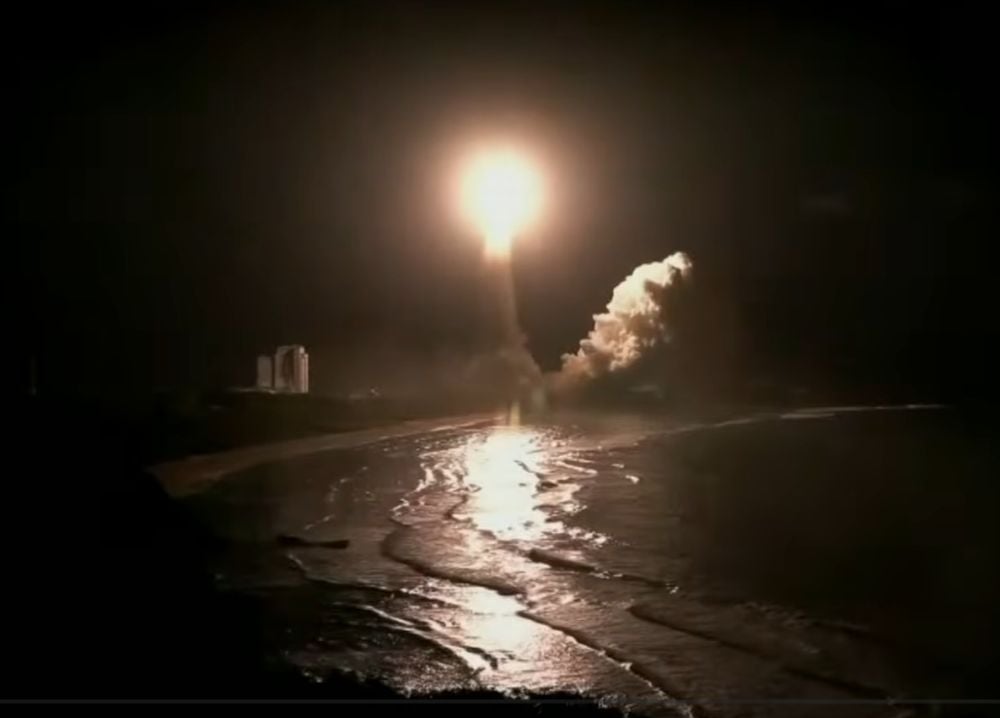
Japan’s Martian Moons eXploration mission, MMX, launched on October 20 at 04:41 Japan Standard Time from the Tanegashima Space Center aboard an H3 heavy-lift rocket, according to Universe Today’s report. The spacecraft is expected to reach Mars in August 2027, spend roughly a month in Martian orbit, and then transfer to an orbit around Phobos, the larger and closer of the planet’s two small moons.
The mission has two parts. The orbiter carries the instruments and the sample-return hardware. Riding along is Idefix, a small rover jointly built by the German and French space agencies, which will be released from an altitude of 40 to 100 metres above the Phobos surface. Phobos’s gravity is so weak that the rover should survive the drop regardless of which way it lands. Idefix will scout the terrain, conduct its own science, and help identify where the orbiter should touch down to collect material.
The sampling itself is planned for 2030. MMX will land on Phobos once or twice and collect at least 10 grams of regolith, then perform flybys of Deimos before heading home. Return to Earth is targeted for 2031, with the sample capsule landing in the Woomera Prohibited Area of South Australia, the same recovery site JAXA used for its Hayabusa and Hayabusa2 asteroid returns in 2010 and 2020.
Those earlier missions matter here. JAXA is the only agency with two successful asteroid sample returns, and MMX extends that heritage to a body orbiting another planet. The scientific prize is settling the origin of the Martian moons. One camp holds that Phobos and Deimos are captured asteroids, another that they coalesced from debris blasted off Mars by a giant impact, and a third that some hybrid is at work. Laboratory analysis of real Phobos material, rather than remote spectra, is the kind of evidence that can close that debate, and the regolith may also carry fragments of Mars itself ejected over billions of years.
Source: Universe Today
NASA’s SR-1 Freedom Advances with Progress on Nuclear Power Module
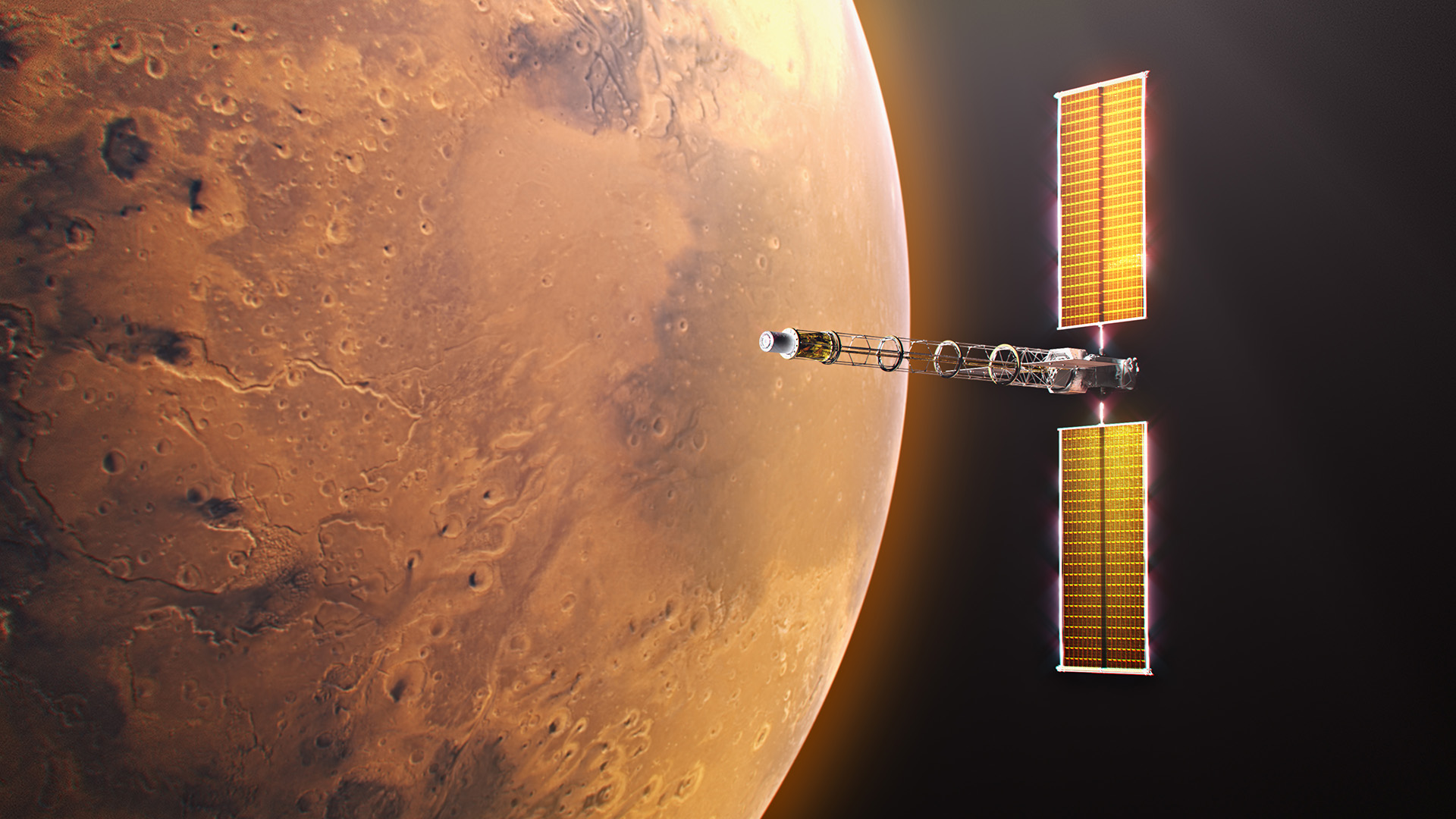
NASA announced on October 20 a set of contract actions intended to keep Space Reactor-1 Freedom on track for a launch in late 2028. SR-1 Freedom is designed to be the first fission-powered spacecraft to travel beyond Earth orbit, and it will demonstrate nuclear electric propulsion in deep space. Sierra Lobo Inc. has been tasked with developing the closed Brayton-cycle power conversion system, the machinery that turns reactor heat into electricity for the thrusters. The work falls under an existing contract at NASA’s Glenn Research Center in Cleveland.
The reactor itself is being designed by the Department of Energy’s Idaho National Laboratory. NASA says the two agencies have built in interagency safety reviews, continuous oversight by a NASA chief safety officer, and formal hazard analysis. The reactor will stay inactive until the spacecraft has left Earth orbit, which is the standard approach for keeping launch risk comparable to that of any other mission.
The payload gives the demonstration a scientific purpose. SR-1 Freedom is to carry SkyFall, a mission of three advanced Mars helicopters descended from the Ingenuity design, to the Red Planet. SkyFall is intended to conduct science, demonstrate exploration techniques, and scout for potential water sources. A nuclear-electric tug that can deliver a multi-helicopter payload to Mars would be a very different kind of vehicle from the chemical stages and solar-electric probes that have carried everything to date.
Program director Steve Sinacore said the contract actions “keep SR-1 Freedom on track and ensure we’re building the strongest possible foundation for NASA’s first fission-powered voyage beyond Earth orbit.” NASA also points to a second use for the same technology: powering its planned Moon Base through the two-week lunar night and in shadowed locations where solar arrays fall short. The same reactor core and power-conversion lineage could, in principle, serve both the surface and the transit.
Source: NASA
Microbes on Enceladus?
In an essay for Centauri Dreams, Alex Tolley works through two recent papers that together sharpen the question of whether Saturn’s moon Enceladus could host life. The first, by Khawaja and colleagues in Nature Astronomy in 2025, reanalysed Cassini data on freshly ejected ice grains from the moon’s plumes and identified multi-carbon organic compounds. Tolley is careful about what that means: every molecule detected “could have also had an abiotic origin, and not one required a known terrestrial biological synthesis route.”
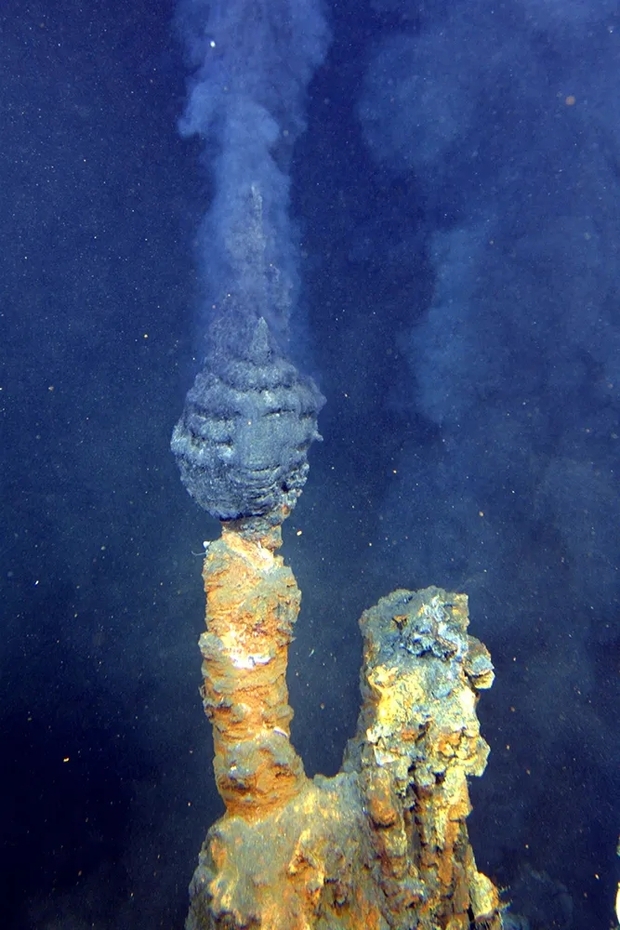
The second paper, by Helmbrecht, Postberg, Khawaja and colleagues in Science Advances this year, is an experiment rather than an observation. The team took Methanothermococcus okinawensis, an archaeal methanogen from Pacific hydrothermal vents near Japan, and cultured it at 65°C in a simulated Enceladus ocean medium of sodium chloride, sodium carbonate and sodium bicarbonate. The organism makes its living from the reaction of carbon dioxide and hydrogen to produce methane and water, exactly the chemistry Cassini inferred from the plume.
The result was that the microbes grew at pH 9 through 11, well beyond the pH 8.5 ceiling previously known for the species. At pH 11 the cells doubled roughly every 126 hours. Carbon-13 labelling confirmed they were genuinely fixing carbon dioxide through methanogenesis, and gene-expression data showed the acetyl-CoA pathway being upregulated to cope with the alkalinity. Enceladus’s ocean is thought to sit at pH 11 to 12, with vent temperatures near 90°C, so the experiment reaches into the relevant regime.
Tolley’s conclusion is deliberately bounded. “What this experiment proved was that a terrestrial organism, not adapted to Enceladus, was able to survive and grow if introduced to Enceladus around a hot vent.” It does not show that life arose there, only that the environment would not exclude it. The practical implication for mission design is that a future plume-sampling spacecraft should look for molecules that have no plausible abiotic route, such as nucleic acids, proteins or lipids, rather than the ambiguous organics found so far.
Source: Centauri Dreams
The Largest Canyon in the Solar System is Still Tectonically Active
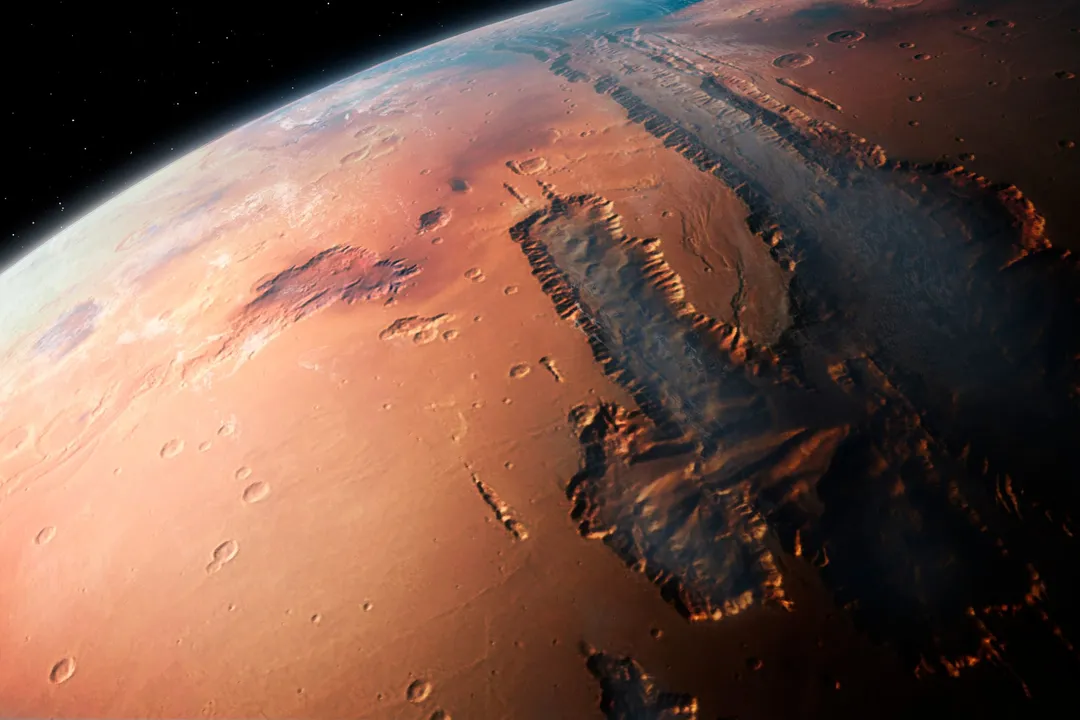
Mars has long been filed under geologically dormant, a world whose volcanoes and faults fell silent long ago. A study published in Nature Communications, led by Jung-Hun Song of Imperial College London with colleagues at Columbia University and the University of Illinois Urbana-Champaign, argues that at least one part of the planet is still moving. The team traced a marsquake recorded by NASA’s InSight lander on August 25, 2021, designated S0976a, to rock slipping along faults some 20 to 40 kilometres beneath Valles Marineris.
The canyon system is enormous by any standard. Universe Today’s report gives its length as 3,900 kilometres, its width as up to 600 kilometres, and its depth as more than 9 kilometres. For comparison, the article cites Earth’s Yarlung Tsangpo Grand Canyon at 505 kilometres long and about 6 kilometres deep. Valles Marineris is thought to be a tectonic rift that opened as the Tharsis volcanic bulge loaded the crust, and the new result says the ancient fault structures beneath it remain unstable under present-day stress.
Ruling out alternatives was part of the work. A seismic signal of that size could in principle come from a meteoroid impact or a large landslide, both of which have been documented on Mars. The researchers combined satellite imagery of the region with modelling of the seismic waveforms to exclude those explanations and leave fault slip as the best fit.
Song framed the broader lesson: the discovery “opens up exciting possibilities for discovering ongoing seismic activity on other planetary bodies that we might otherwise consider geologically inactive.” InSight stopped operating in late 2022, so this result comes from mining its archive. It is a reminder that a single seismometer, carefully placed, can continue to rewrite a planet’s story years after it goes quiet.
Source: Universe Today
Supermassive Black Holes Ejected from Galactic Centers? Quasar Survey Supports Decade-Old Prediction

When two galaxies merge, their central black holes eventually form a binary, spiral together, and coalesce in a burst of gravitational waves. If those waves are emitted asymmetrically, momentum conservation demands that the merged black hole recoil in the opposite direction, like a gun kicking back. Theory has long predicted such kicks, sometimes at millions of kilometres per hour, but finding evidence in real galaxy populations has been difficult.
A team led by Bence Bécsy of the University of Birmingham, with Peter Raffai and Zsolt Frei of Eötvös Loránd University in Budapest and Zoltán Haiman of Columbia University, has now reported statistical evidence in a paper published in Monthly Notices of the Royal Astronomical Society. They analysed roughly 100,000 quasars from the Sloan Digital Sky Survey and looked for a correlation between the inferred velocity of the central black hole and the amount of dust obscuring the quasar.
The prediction, made by Raffai, Haiman and Frei in 2016, was that a recoiling black hole dragging its accretion disk out through the host galaxy would appear more heavily reddened by dust than one sitting quietly at the centre. The data agree. Faster-moving black holes are found preferentially in dustier quasars, and among the most heavily obscured objects the fraction containing the fastest black holes is three times higher than the fraction containing the slowest.
“We have now detected in real observational data the relationship we predicted years ago,” Raffai said. “It is difficult to think of a better example of why being a researcher is so rewarding.” The result is statistical rather than a catalogue of individual runaway black holes, but it supports a picture in which galaxy mergers routinely displace their central engines, which bears on how often black holes grow, how they seed gravitational-wave backgrounds, and why some galaxies seem to lack a central black hole at all.
Source: Phys.org
NASA’s Swift Mission Ends, Leaves Behind Scientific Bonanza
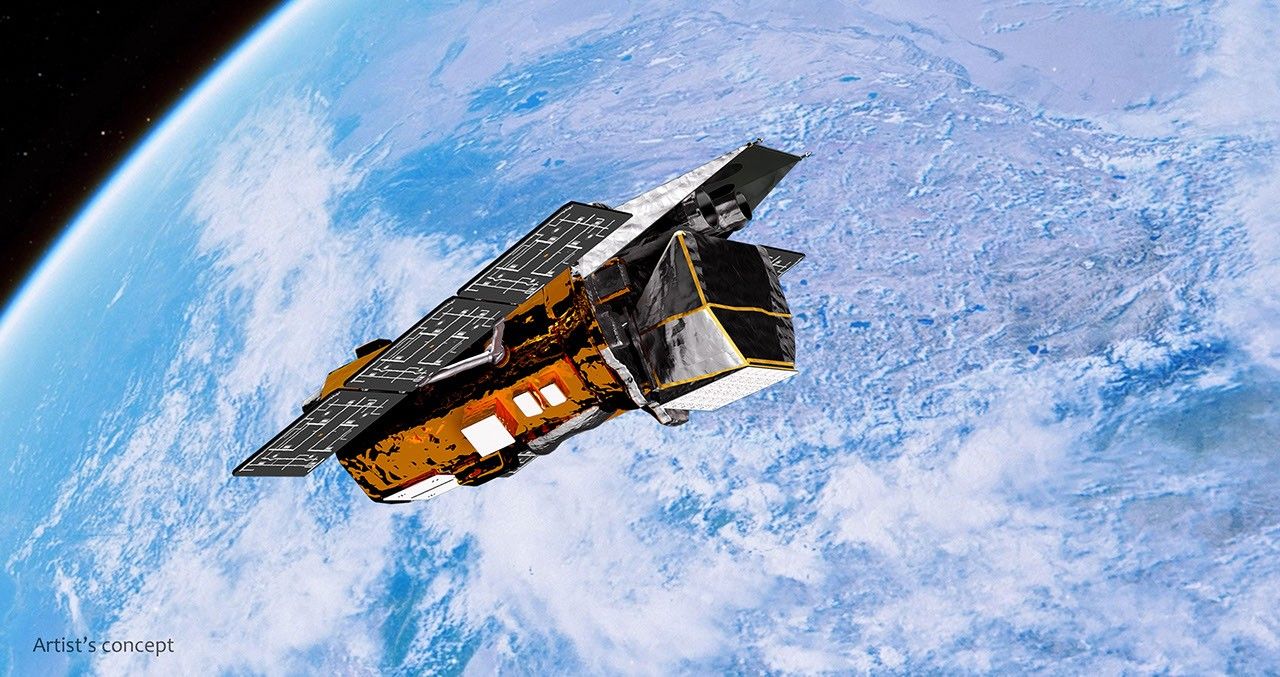
NASA’s Neil Gehrels Swift Observatory made its final science observation on October 20, nearly 22 years after launching on November 20, 2004. Its orbit has decayed to below 171 miles, about 275 kilometres, where atmospheric drag now prevents the spacecraft from holding its telescopes steady on a target. NASA expects re-entry within weeks. The mission was designed for two years.
Swift was built to answer a specific question: what are gamma-ray bursts? These are the most violent explosions known, lasting from milliseconds to minutes, and before Swift their afterglows faded before other telescopes could point. Swift’s defining trick was to detect a burst, localise it, relay the coordinates to observatories worldwide, and slew its own X-ray and ultraviolet telescopes onto the spot, all within about a minute. “This typically took Swift about a minute to do,” said principal investigator S. Bradley Cenko of NASA’s Goddard Space Flight Center.
The numbers accumulated over two decades. NASA counts more than 2,000 gamma-ray bursts detected and more than 1,400 supernovae studied, along with monitoring of black holes tearing stars apart, active galaxies, comets and asteroids, and a full X-ray sky survey. Roughly 7,000 peer-reviewed papers have used Swift data. A single early result stands out: in May 2005 Swift caught GRB 050509B, a burst lasting just 0.03 seconds, and captured 11 X-ray photons from its afterglow. That was the first afterglow ever seen from a short burst, and it confirmed the prediction that such events come from merging neutron stars, more than a decade before gravitational-wave detectors saw one directly.
Shawn Domagal-Goldman, director of NASA’s Astrophysics Division, said Swift “delivered an incredible, lasting return on investment for the nation, designed for a two-year primary mission but productive for more than 10 times as long.” The archive, around 12 terabytes including 1.5 million ultraviolet and optical images, remains publicly available. Swift’s rapid-response model has since been adopted across astronomy, and its data will keep yielding discoveries long after the spacecraft itself is gone.
Source: NASA Science
NASA’s Roman Space Telescope Enters Final Commissioning Phase
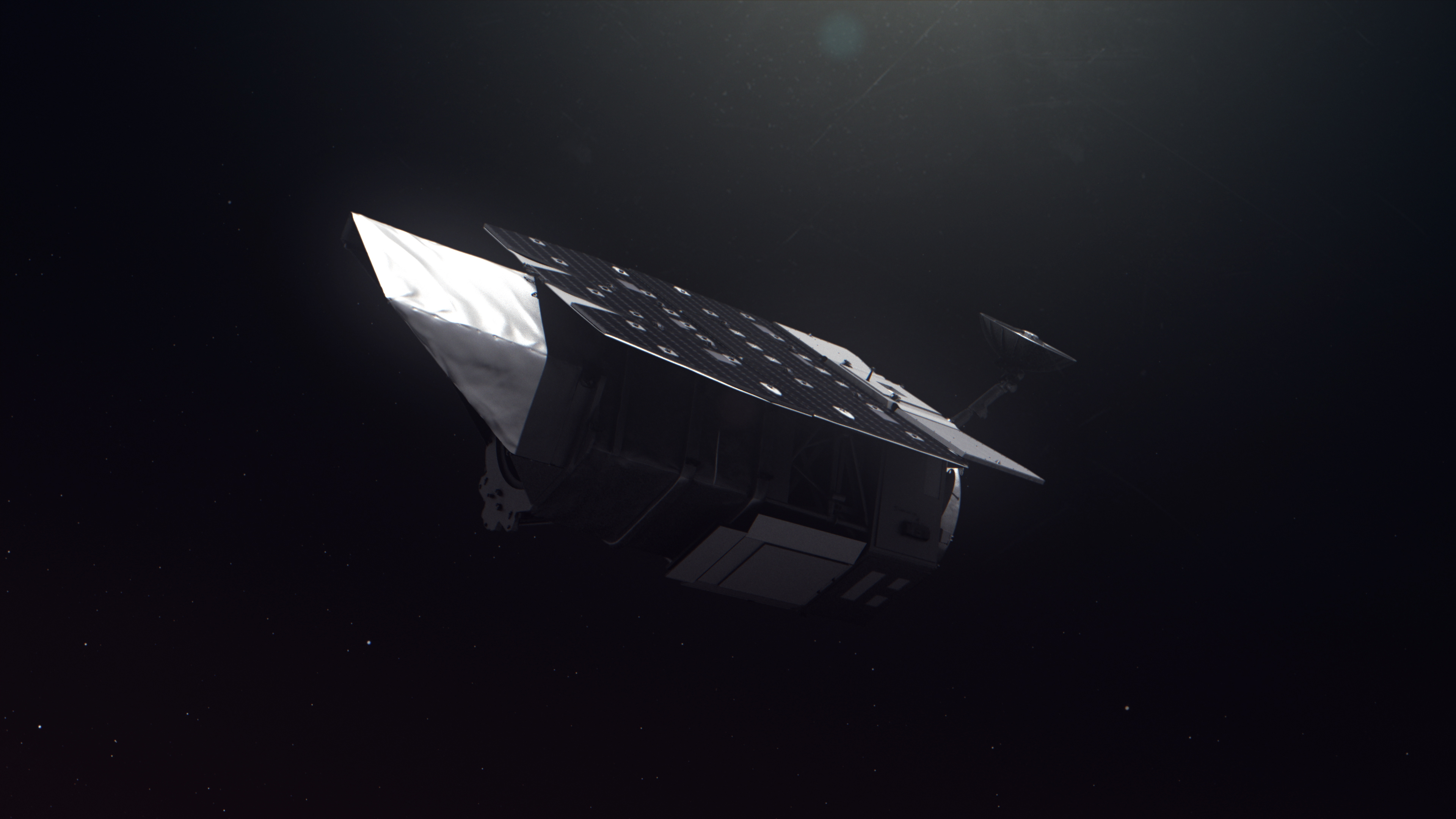
NASA’s Nancy Grace Roman Space Telescope has finished checking out the observatory and its primary instrument and has moved into science commissioning, the final phase before regular operations. NASA’s October 22 update describes the telescope as fully functional. “The telescope can guide and take exposures, data flows appropriately, and we can slew from one place to another,” said Julie McEnery, the mission’s senior project scientist at NASA’s Goddard Space Flight Center.
One worry going in was whether Roman’s fine guidance system would cope with the hardest cases: fields so crowded with stars that picking guide stars is difficult, and nebulae so dusty that few stars are visible at all. Roman’s wide field and its demanding image-quality requirements make steady guiding essential. Test observations in both kinds of region showed the system working as intended. Operations project scientist Tom Barclay said Roman “performs wonderfully in all cases.”
The team is now running calibration observations to characterise how each detector responds and to refine image quality across the field. Early data show the telescope reaching the speed and sensitivity it was built for, capable of recording objects 100 million times fainter than the human eye can see. NASA notes that some systems are exceeding their requirements, which could open scientific capabilities beyond the original specifications.
Roman’s job is survey astronomy at scale: imaging large swaths of sky in the infrared to map dark energy through the distribution of galaxies, to find thousands of exoplanets by microlensing, and to catalogue transients and lensed galaxies by the thousand. With commissioning nearly complete, the question shifts from whether the telescope works to how the community will use the flood of data.
Source: NASA Science
27 Exoplanet Targets for the World’s First Private Space Telescope
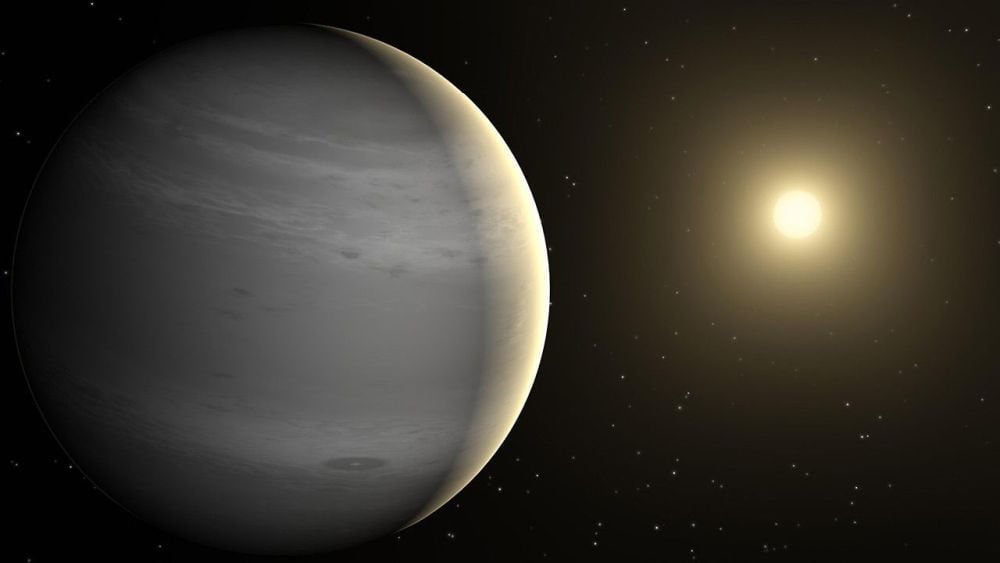
The Lazuli Space Telescope, funded by former Google chief executive Eric Schmidt and slated for launch in 2029, would be the first privately funded space telescope of its class. Universe Today reports a 3-metre primary mirror, larger than Hubble’s 2.4 metres, and three instruments: a wide-field optical imager, an integral field spectrograph, and the ExtraSolar Coronagraph for blocking starlight to reveal planets.
A paper posted to arXiv by Logan Pearce of the University of Michigan and Ewan Douglas of the University of Arizona’s Steward Observatory lays out the first target list for the coronagraph’s exoplanet campaign: 27 giant planets chosen for reflected-light imaging. The choice of reflected light, rather than the thermal glow that ground-based imagers rely on, is the interesting part. Young giant planets are hot and bright in the infrared, which is why nearly every directly imaged exoplanet so far is young. Older planets cool and fade. But a planet reflects starlight regardless of its age, so in the words of the authors, “reflected light imaging enables detection and characterization of planets decoupled from age.”
Working at visible and near-infrared wavelengths of 0.5 to 2 microns also lets the coronagraph see planets at smaller angular separations from their stars than longer-wavelength instruments can manage. The trade-off is time. Exposures of 10 to 100 hours per target are expected, so the authors prioritised planets whose orbits are already well constrained from radial-velocity or astrometric data, allowing observations to be scheduled when each planet is at its most favourable position.
Named targets include 55 Cancri d, a Jupiter analogue in a nearby multi-planet system; HD 181433 d, on a highly eccentric orbit; and Beta Pictoris b, one of the first planets ever directly imaged. A privately built telescope with Hubble-class aperture and a dedicated exoplanet coronagraph would be a new kind of actor in astronomy, and this target list is the first concrete sign of what it intends to do with its time.
Source: Universe Today
How Inversion and NASA Plan to Unlock Interplanetary Aerocapture
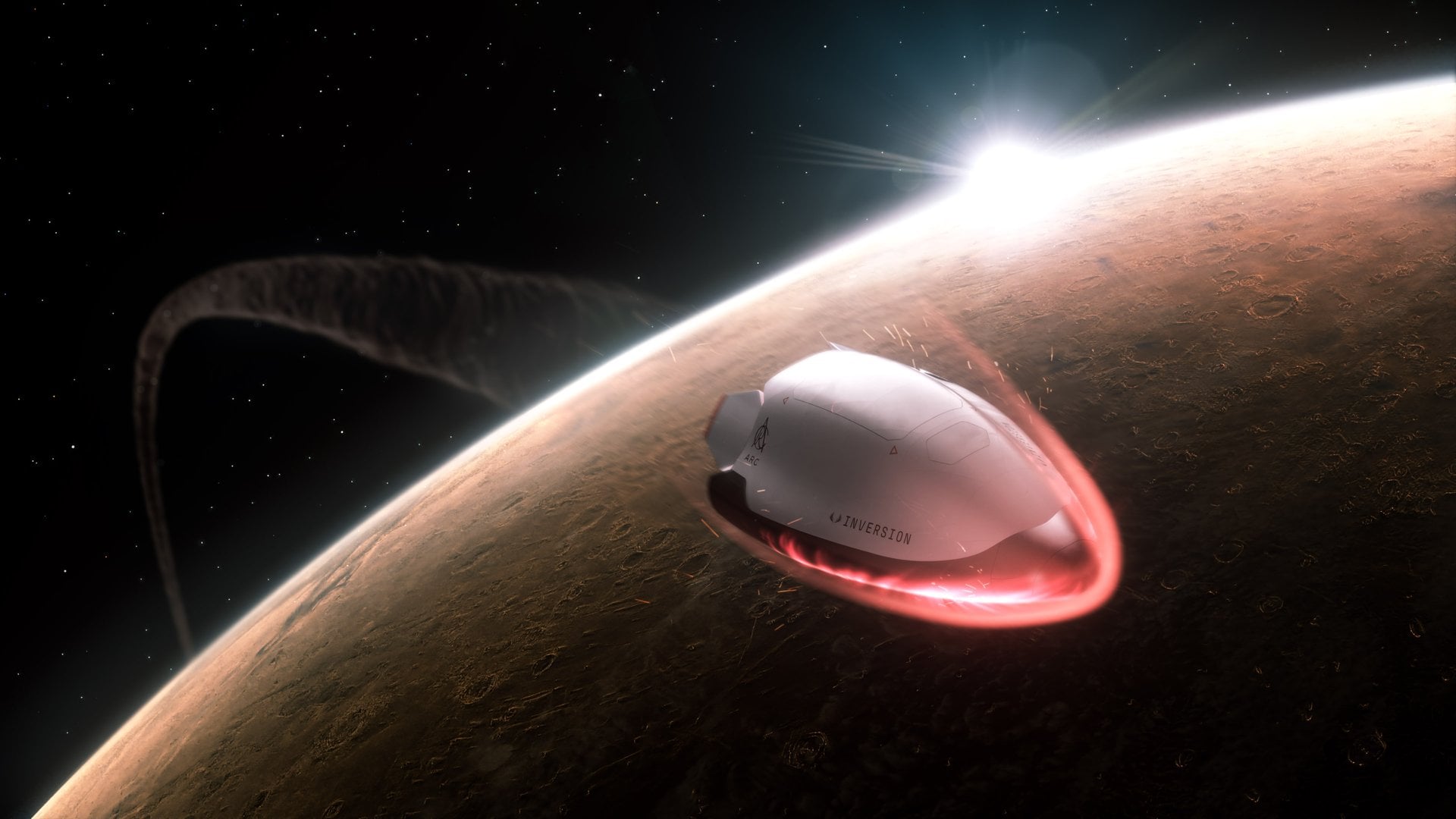
Every spacecraft that has ever entered orbit around another planet has done so by firing an engine, and that burn costs propellant that must be launched from Earth and carried the whole way. Aerocapture replaces the burn with a single dip through the target’s upper atmosphere, using drag to shed enough speed to be captured. The concept has been studied for decades and never flown operationally. Universe Today reports that NASA has contracted Inversion, a California startup founded by former SpaceX and ABL Space engineers, to advance it.
Inversion’s business is reentry capsules. Its Arc vehicle is designed to deliver time-critical cargo from orbit to a chosen point on Earth, and it already incorporates the ingredients aerocapture needs: chemical propulsion for orbital manoeuvring, cold-gas thrusters for fine attitude control, and aerodynamic flaps for steering during atmospheric flight. Chief executive Justin Fiaschetti said the company designed Arc with thermal management as the priority, which is the hard part of any vehicle that must survive repeated passes through hot, fast air.
Under the NASA work, Inversion is to demonstrate the mission design, aerodynamics, trajectory analysis and vehicle definition for an aerocapture flight. The near-term demonstrations would take place in Earth orbit, where a vehicle can be flown into the upper atmosphere and back out to test guidance and heating without leaving home. The article notes that Inversion flew its first prototype, Ray, within four years of founding, though NASA has not committed to any particular timeline for the aerocapture effort.
If the technique works, the payoff is largest at destinations with thick atmospheres and long travel times. Mars, Venus and Titan are the obvious candidates. A probe that arrives without needing to carry a large capture stage can carry more instruments instead, or can be launched on a smaller rocket, or can arrive on a faster trajectory that a chemical burn could not afford to cancel.
Source: Universe Today
Everyday Mylar Turned Into a Promising Insulator for Lunar Habitats

Insulating a habitat on the Moon poses a problem that existing materials do not solve. Aerogels insulate superbly but crumble under load. The multilayer insulation blankets wrapped around spacecraft block radiant heat well but cannot bear compression or survive rough handling. A lunar building needs something that does both. Engineers at the University of Pennsylvania report in ACS Applied Materials & Interfaces that stacks of ordinary Mylar, the plastic of food wrap and emergency blankets, can get there.
The team, led by Igor Bargatin with first author Danielle Levin, built what they call hybrid layered insulating film stacks: hundreds of Mylar sheets layered together, some coated with a thin film of aluminium oxide. In vacuum, the alumina-coated stacks reached thermal conductivities comparable to high-performance vacuum insulation. Mechanically, samples survived 10 consecutive compression cycles at about 20 megapascals, which the report likens to 200 pounds pressed onto a fingertip, while keeping their insulating performance.
A detail from the heat-transfer modelling explains why the approach works. Commercial Mylar contains microscopic “antiblocking” particles added during manufacturing to stop sheets sticking together. Those particles turn out to control the conductive contact between layers, and therefore the heat path through the stack. One unexpected result was that medium-thickness films with an alumina coating performed as well as thinner films, overturning the team’s initial assumption that thinner would always be better.
The caveats are about scale. Current samples are about one square centimetre and take hours to assemble by hand with tweezers. Habitat-scale use would require metre-sized sheets, probably made by continuously coating large Mylar rolls, and the material’s behaviour under repeated bending and physical damage at that size remains to be tested. The authors also see uses in rovers, spacesuits and electronics that must operate for long periods in vacuum. The appeal is that the raw material is cheap, abundant and already made by the kilometre.
Source: Phys.org